40 Traditional Dishes to Look For in Chile
-
 Loading...
 - Liam Walsh
- 29 Jun 2022
- 134 Views
- 0 Like
- 0 Comment
WHAT IS TRADITIONAL CHILEAN FOOD?
Chilean food can best be described as a fusion of Spanish influences with local Mapuche culture and ingredients. Thanks to its diverse geography and oxygen-rich waters, it’s home to a wide range of agricultural products and a unique variety of fish and seafood.
Since colonial times, Chilean lunches have been the biggest and most important meal of the day. It typically starts with a fish, meat, or poultry dish followed by a stew with choclo and potatoes. Three types of bread often accompany meals which usually end with dessert and herbal tea to aid in digestion.
Between the late 19th and early 20th centuries, the Chilean government actively encouraged immigration. This led to the arrival of immigrants from countries like Germany, Italy, France, the UK, Croatia, Belgium, and Greece. They left an indelible imprint on the local cuisine and helped steer the course of Chilean gastronomy.
THE BEST OF CHILEAN CUISINE
This article on Chilean food has been organized by category to make it easier to digest. Click on a link to jump to any section of the guide.
STARTERS / SIDES / SNACKS
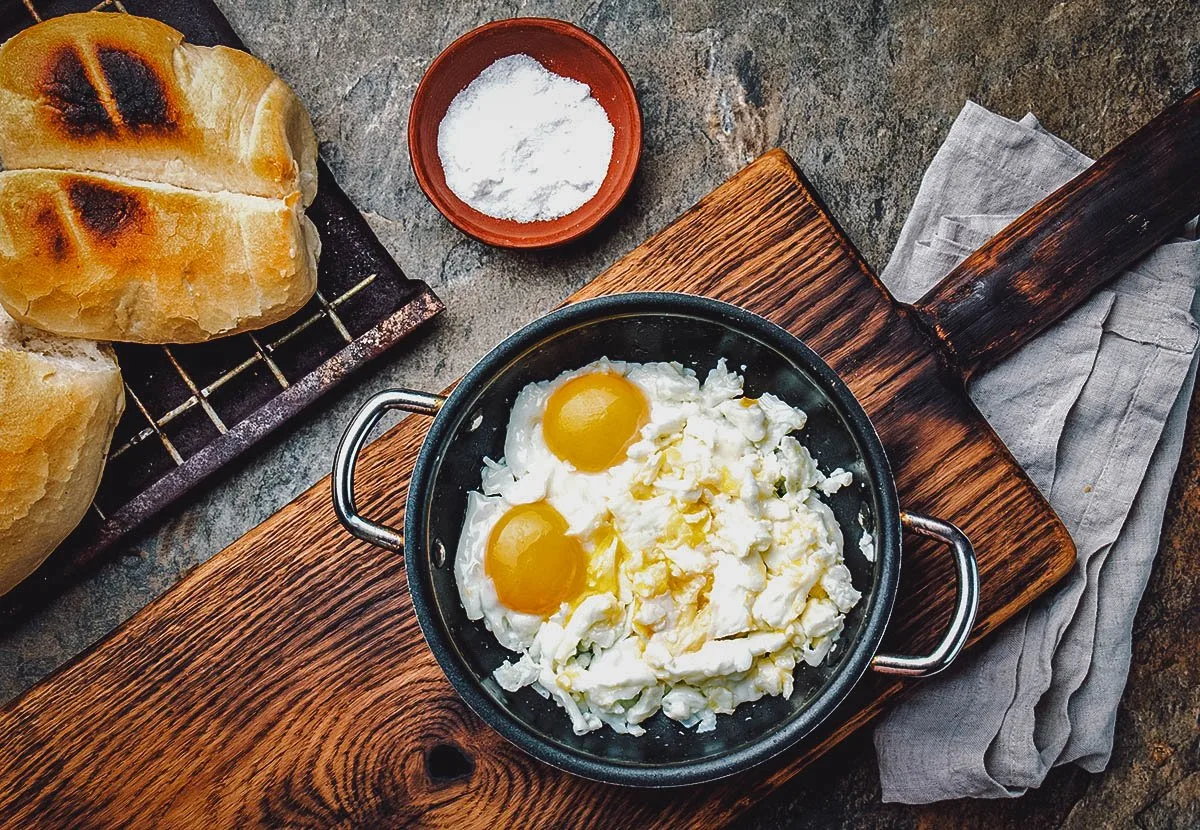
1. Huevos Revueltos
What better way to start your day in Chile than with a breakfast of huevos revueltos or Chilean scrambled eggs? It’s a popular breakfast dish in the Chilean countryside where it’s often served with fresh tomatoes and pan amasado (Chilean kneaded bread).
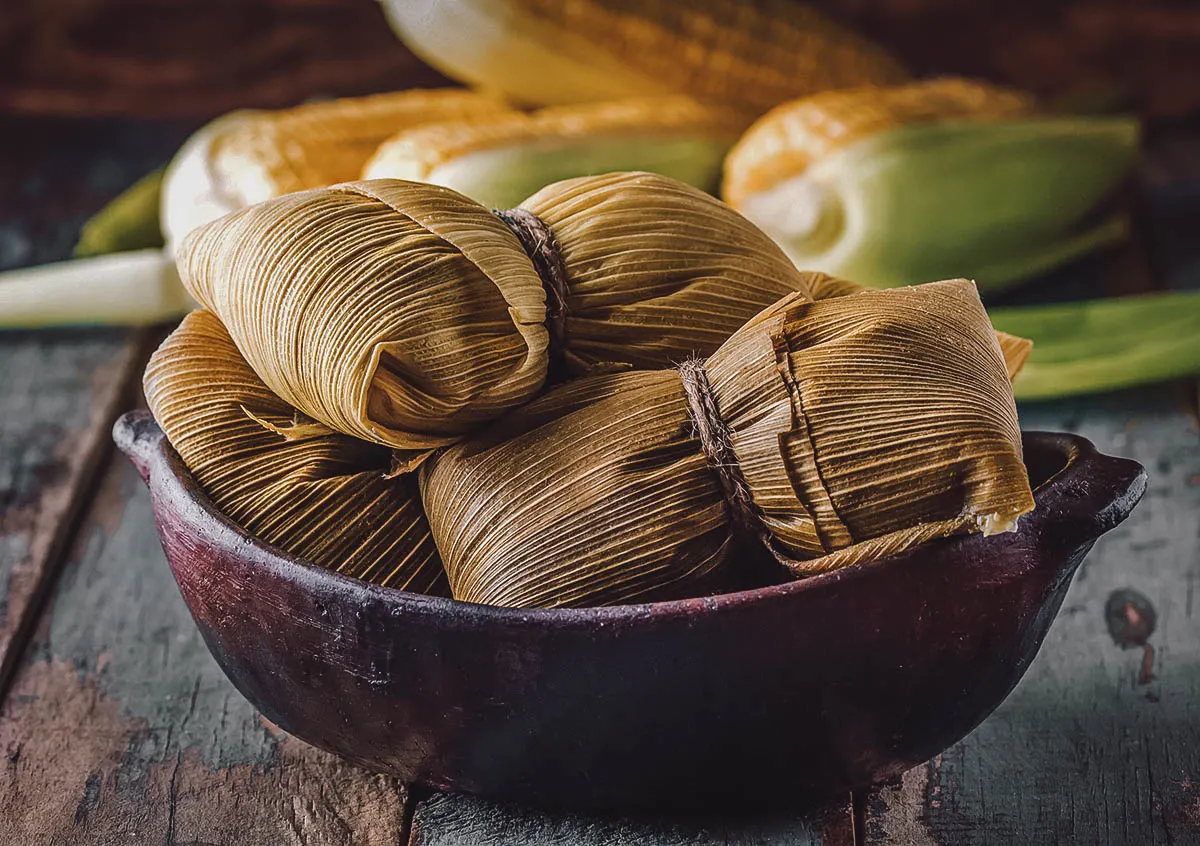
2. Humitas
Humitas refers to an ancient pre-Hispanic Andean dish consumed in Chile, Bolivia, Ecuador, Peru, and northwest Argentina. Similar to tamales, it consists of mashed corn mixed with basil, onion, aji verde (green chili pepper), butter or lard, and spices. The mixture is wrapped in fresh corn husks and either steamed or boiled.
Chilean humitas are typically plain in taste but they can be seasoned to be more savory, sweet, or sweet and sour. They’re often enjoyed as is or paired with a side or ensalada chilena or pebre salsa.
3. Papa Rellena
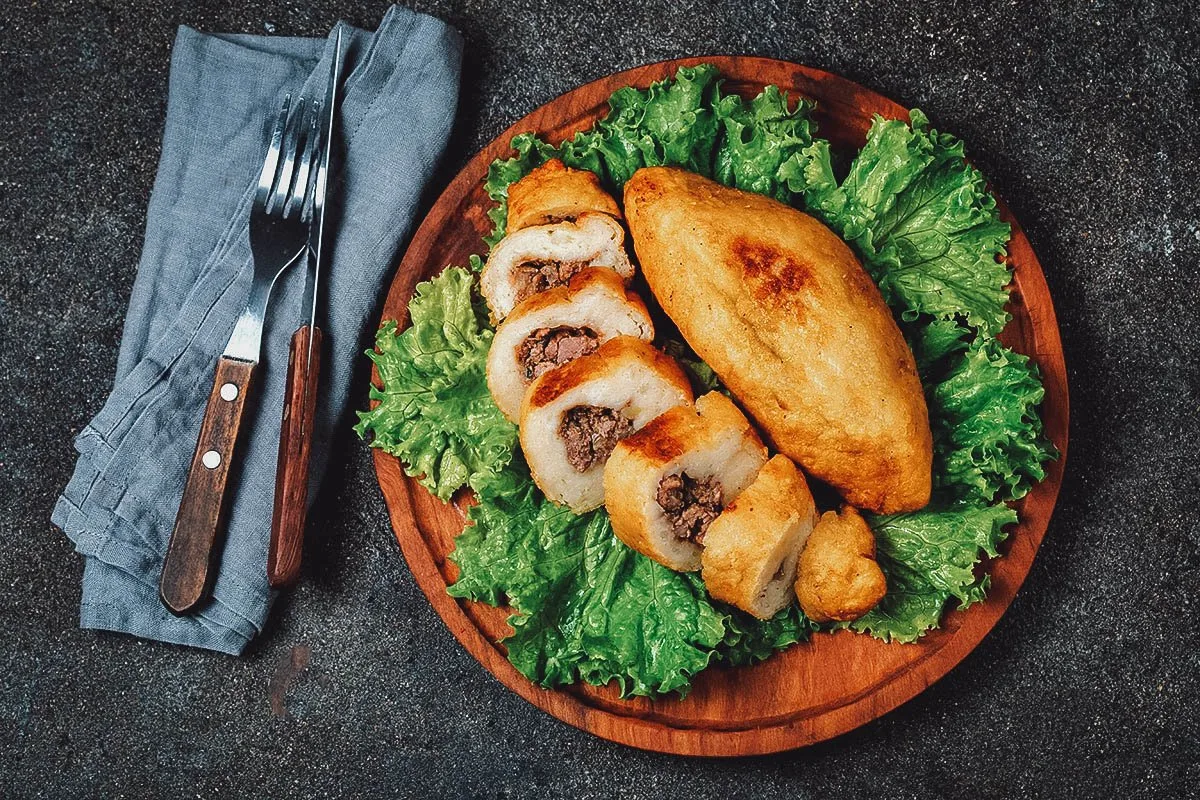
Papa rellena refers to a type of croquette popular in the cuisines of many Latin American countries like Chile, Bolivia, Peru, Ecuador, Colombia, and the Dominican Republic. It consists of an oblong-shaped mass of potato dough filled with spiced ground beef, onions, olives, and hard-boiled eggs.
Papa rellena, a type of Chilean croquette made with ground beef and mashed potatoes
4. Niños Envueltos
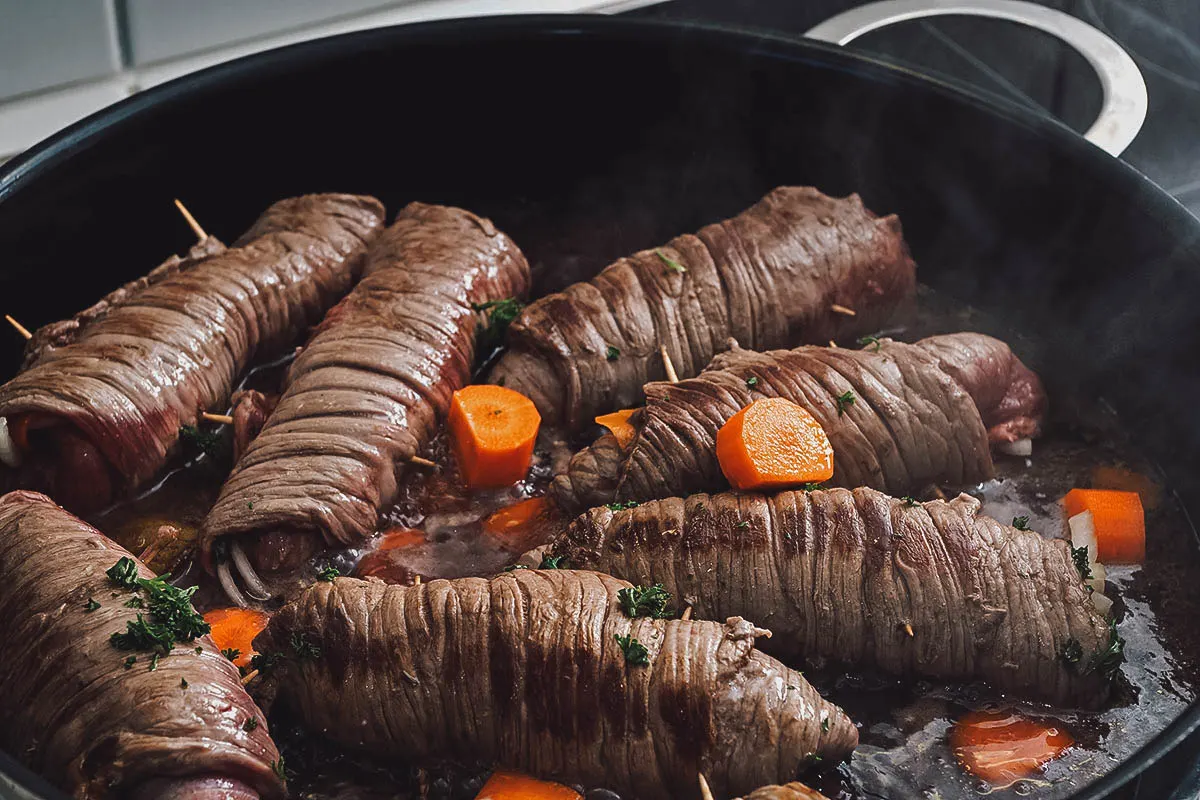
Niños envueltos literally means “wrapped children” and can refer to both Chilean steak rolls (pictured below) or stuffed cabbage rolls. The former is made with pieces of steak wrapped around a filling of vegetables, while the latter consists of ground meat and rice wrapped inside cabbage leaves.
Chilean steak rolls are especially popular among children. Recipes vary from household to household but they’re typically made with flank steaks stuffed with chard leaves, zucchini, and carrots. The steaks are rolled and held together with toothpicks before being browned in a pan and stewed with tomato sauce, mushrooms, and vegetables.
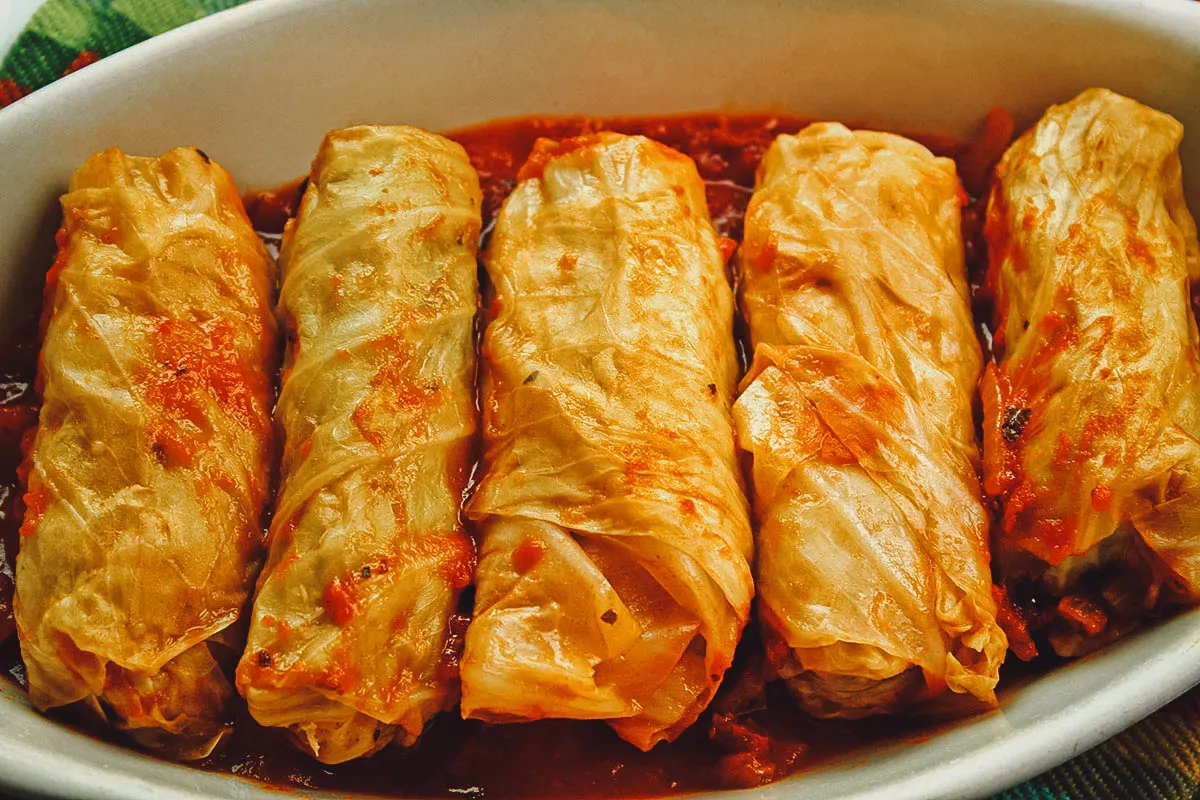
People familiar with Balkan food may recognize this variation of niños envueltos as the Chilean version of sarma. It’s a form of wrapped dolma that’s popular in the cuisines of many countries throughout the Balkans, Central Europe, the South Caucasus, and the Middle East.
Like sarma, niños envueltos are made with blanched cabbage leaves wrapped around a filling of ground beef, rice, garlic, onions, herbs, and spices. The rolls are formed into cylinders and cooked in tomato sauce.
5. Chochoca
Chochoca (or chochoyeco, trotroyeco, trutru) refers to a Chilean festival dish originally from Chiloé. It consists of a dough made with potatoes and flour wrapped around a metal cylinder that resembles a large rolling pin. Like roast pig, the cylinder is rotated slowly for about thirty minutes to roast the dough over hot charcoal.
When cooked, the chochoca is sliced into pieces and eaten on its own or filled with chicharrones. As you can imagine, it isn’t the type of dish that’s typically made at home, but reserved for festive occasions like fiestas and food fairs. Read More...