5 Tips for Beautiful Kit Lens Portrait Photography
-
 Loading...
 - Alice Harrice
- 21 Feb 2023
- 62 Views
- 0 Like
- 0 Comment
Photographers love to disparage kit lenses. “Your kit lens is garbage” is a common phrase in photography circles – yet in my view, kit lenses can actually produce great results, especially when it comes to portrait photography. While there are certainly benefits to upgrading glass as your budget allows, there is so much you can do with your kit lens if you know how to use it.
So if all you own is a kit lens, or if you simply want to learn how your kit lens can become your best friend, then let’s dive right in, starting with:
1. Ensure plenty of subject-background separation

Portrait photographers love to produce a creamy, blurry background that’ll rid an image of distractions while beautifully complementing the main subject. The easiest way to create such an effect is by dialing in an ultra-wide aperture, such as f/1.8 or f/1.4 – but kit lenses are generally incapable of going past f/3.5 or even f/5.6, which won’t blur the background as much as you might desire.
Fortunately, if you’re using a lens with a narrow maximum aperture, all is not lost! You simply need to understand the way depth of field (i.e., the area of the image that is blurred versus in focus) works, then adjust your shooting approach accordingly.
You see, while the aperture does heavily influence background blur, another way to increase the strength of this bokeh effect is by positioning your main subject far from the background. The more distant the background, the more it’ll blur, and the better your result.
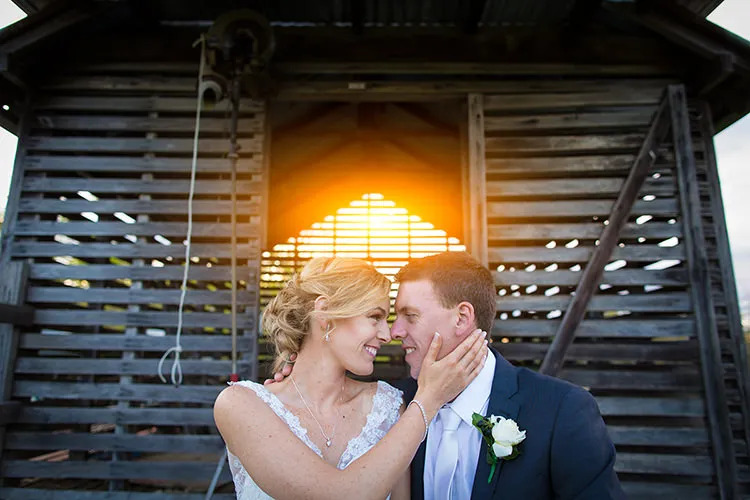
Take a look at this next portrait shot. It was captured at f/4.5, but because my subject was far away from the grass and the fence, the background blur is very nice:

And if I had asked my subject to move even farther away from the background, the effect would’ve been even stronger.
Of course, this approach only works if you have enough room for your subject to move away from the background. Therefore, do your best to avoid shooting kit lens portraits in cramped surroundings.
Pro tip: Make sure you’re on a level with your subject when you press the shutter button. If you shoot from too high, you may end up including nearer background elements such as the grass directly behind the subject, which won’t look especially blurred. (However, it’s important to note that this can also be a strategy for improving the background; see Tip 3.)