9 Winter Hiking Tips (You Don't Have to Freeze!)
-
 Loading...
 - Facundo Gonzalez
- 20 Jul 2022
- 94 Views
- 0 Like
- 0 Comment
Just because it’s cold outside doesn’t mean you need to stop hiking. But it’s cold, dark and slippery out there, so you need to be prepare. In this post I’ve got my top top winter hiking tips.
Hiking is a year-round activity for me and I’ve been winter hiking for over a decade. (If there’s enough snow I’ll wear snowshoes, but really snowshoeing is mostly just hiking with weird things on your feet.)
Know the Forecast and Trail Conditions
Before I leave, I pick a destination based on the weather forecast and conditions. Checking the weather is something I do all year long. But in the winter, I also check trail conditions since harsh weather can do a number on the trails. I want to know if there is ice, how much snow there is, and if there are any washouts or other issues with the trail.
For trail conditions I like to check a local online hiking forums for the area as well as the website of the park I plan to visit.
For snow conditions I use the closest ski resort forecast to my destination from snow-forecast.com since it will provide conditions and forecasts for various elevations. But watch out for artificially inflated snowpack numbers from man-made snow!
Be Prepared
I always carry The Ten Essentials when hiking and it’s even more important to do so in the winter.
I supplement my regular first aid kit and emergency supplies with some chemical hand warmers and a bright headlamp with fresh batteries (in addition to the small emergency light I always carry).
I also add in sunscreen and lipbalm because the snow reflects light and no one likes sunburns and chapped lips.
I also carry the super tiny Petzl E+Lite headlamp in my first aid kit as a backup emergency light. It’s tiny and has a battery that lasts up to 10 years. A couple years ago I met a family of tourists at dusk who had no lights. I was glad to have my E+Lite to lend to them for the walk down.
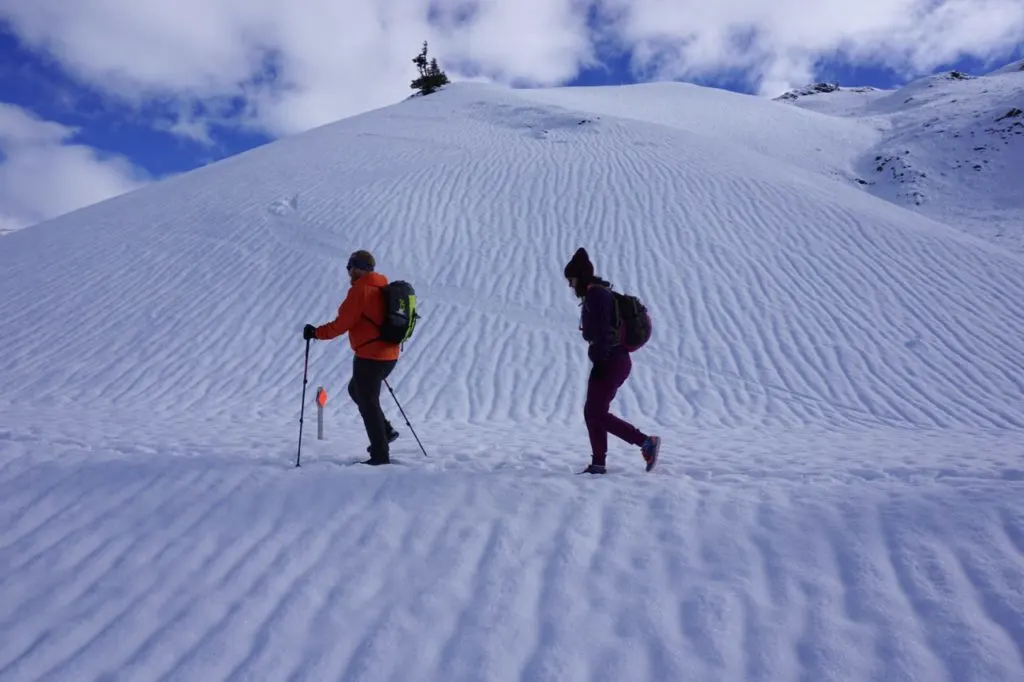
Be Avalanche Safe
Avalanches are no joke.
If you plan to regularly travel on snow into avalanche terrain take an avalanche course
I learned SO much when I took avalanche training and it changed the way I look at mountains.
Bring the Right Gear for the Conditions (And Know How to Use It)
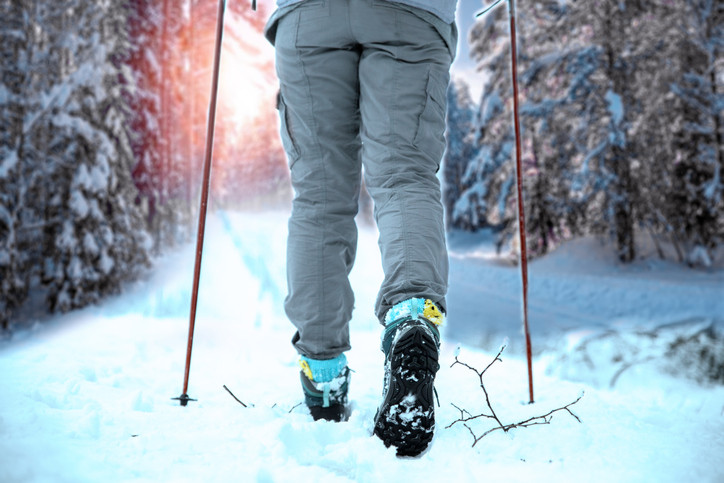
If there is lots of deep snow I wear my snowshoes. But sometimes there isn’t that much snow or it’s so packed down that snowshoes aren’t necessary. That’s why I always pack my lightweight mini-crampons, also known as microspikes. They are great for packed snow, icy trails or steeper slopes.
Most winter accidents involving hikers occur when someone slips and falls on a steep icy or snowy slope. Snowshoes are great for providing flotation in deep snow, but they aren’t great at gripping steep slopes. Microspikes can be much safer!
Gear I recommend: I wear MSR Lightning Ascent Snowshoes since they provide good grip on icy slopes. If you’re looking for something a little less expensive, any I recommend any MSR snowshoes. I used the budget-priced MSR Evos for years. They’re not as light, but they grip just as well.
For mini-crampons I like the Kahtoola Microspikes. They are pointy enough to grip most moderate ice and the rubber straps stretch to fit both my trail runners and my bigger backpacking boots.
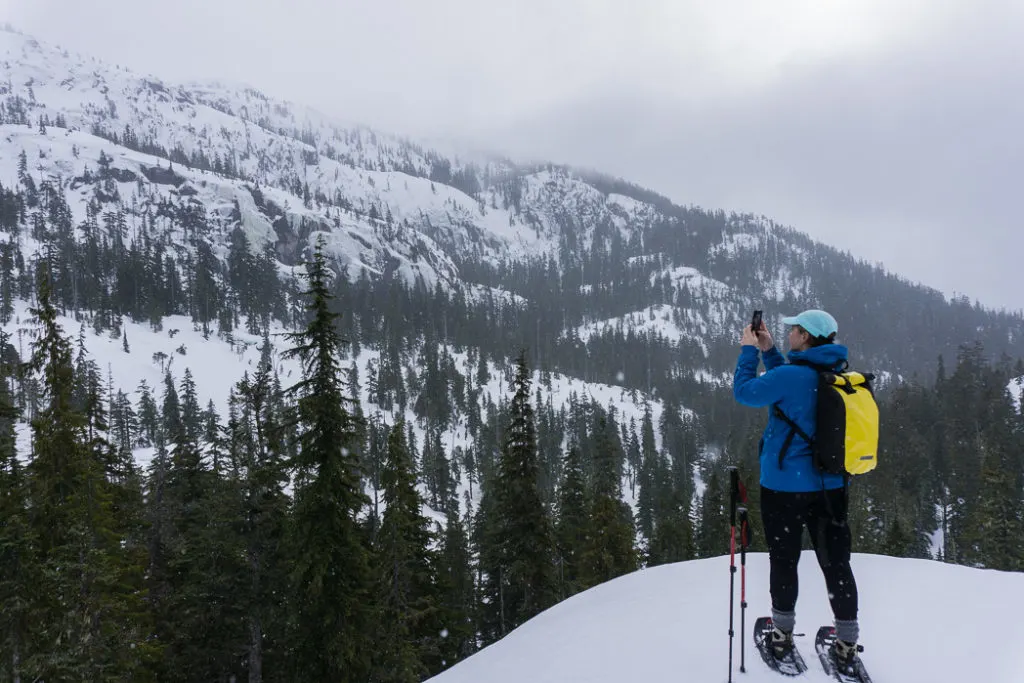
Layer Up, BUT “Be Bold, Start Cold”
A common winter hiking tip is to dress in layers. The trick is to avoid sweating since once you stop you’ll be wet and cold. Read More...