Home Upload Photo Upload Videos Write a Blog Analytics Messaging Streaming Create Adverts Creators Program
Bebuzee Afghanistan Bebuzee Albania Bebuzee Algeria Bebuzee Andorra Bebuzee Angola Bebuzee Antigua and Barbuda Bebuzee Argentina Bebuzee Armenia Bebuzee Australia Bebuzee Austria Bebuzee Azerbaijan Bebuzee Bahamas Bebuzee Bahrain Bebuzee Bangladesh Bebuzee Barbados Bebuzee Belarus Bebuzee Belgium Bebuzee Belize Bebuzee Benin Bebuzee Bhutan Bebuzee Bolivia Bebuzee Bosnia and Herzegovina Bebuzee Botswana Bebuzee Brazil Bebuzee Brunei Bebuzee Bulgaria Bebuzee Burkina Faso Bebuzee Burundi Bebuzee Cabo Verde Bebuzee Cambodia Bebuzee Cameroon Bebuzee Canada Bebuzee Central African Republic Bebuzee Chad Bebuzee Chile Bebuzee China Bebuzee Colombia Bebuzee Comoros Bebuzee Costa Rica Bebuzee Côte d'Ivoire Bebuzee Croatia Bebuzee Cuba Bebuzee Cyprus Bebuzee Czech Republic Bebuzee Democratic Republic of the Congo Bebuzee Denmark Bebuzee Djibouti Bebuzee Dominica Bebuzee Dominican Republic Bebuzee Ecuador Bebuzee Egypt Bebuzee El Salvador Bebuzee Equatorial Guinea Bebuzee Eritrea Bebuzee Estonia Bebuzee Eswatini Bebuzee Ethiopia Bebuzee Fiji Bebuzee Finland Bebuzee France Bebuzee Gabon Bebuzee Gambia Bebuzee Georgia Bebuzee Germany Bebuzee Ghana Bebuzee Greece Bebuzee Grenada Bebuzee Guatemala Bebuzee Guinea Bebuzee Guinea-Bissau Bebuzee Guyana Bebuzee Haiti Bebuzee Honduras Bebuzee Hong Kong Bebuzee Hungary Bebuzee Iceland Bebuzee India Bebuzee Indonesia Bebuzee Iran Bebuzee Iraq Bebuzee Ireland Bebuzee Israel Bebuzee Italy Bebuzee Jamaica Bebuzee Japan Bebuzee Jordan Bebuzee Kazakhstan Bebuzee Kenya Bebuzee Kiribati Bebuzee Kuwait Bebuzee Kyrgyzstan Bebuzee Laos Bebuzee Latvia Bebuzee Lebanon Bebuzee Lesotho Bebuzee Liberia Bebuzee Libya Bebuzee Liechtenstein Bebuzee Lithuania Bebuzee Luxembourg Bebuzee Madagascar Bebuzee Malawi Bebuzee Malaysia Bebuzee Maldives Bebuzee Mali Bebuzee Malta Bebuzee Marshall Islands Bebuzee Mauritania Bebuzee Mauritius Bebuzee Mexico Bebuzee Micronesia Bebuzee Moldova Bebuzee Monaco Bebuzee Mongolia Bebuzee Montenegro Bebuzee Morocco Bebuzee Mozambique Bebuzee Myanmar Bebuzee Namibia Bebuzee Nauru Bebuzee Nepal Bebuzee Netherlands Bebuzee New Zealand Bebuzee Nicaragua Bebuzee Niger Bebuzee Nigeria Bebuzee North Korea Bebuzee North Macedonia Bebuzee Norway Bebuzee Oman Bebuzee Pakistan Bebuzee Palau Bebuzee Panama Bebuzee Papua New Guinea Bebuzee Paraguay Bebuzee Peru Bebuzee Philippines Bebuzee Poland Bebuzee Portugal Bebuzee Qatar Bebuzee Republic of the Congo Bebuzee Romania Bebuzee Russia Bebuzee Rwanda Bebuzee Saint Kitts and Nevis Bebuzee Saint Lucia Bebuzee Saint Vincent and the Grenadines Bebuzee Samoa Bebuzee San Marino Bebuzee São Tomé and Príncipe Bebuzee Saudi Arabia Bebuzee Senegal Bebuzee Serbia Bebuzee Seychelles Bebuzee Sierra Leone Bebuzee Singapore Bebuzee Slovakia Bebuzee Slovenia Bebuzee Solomon Islands Bebuzee Somalia Bebuzee South Africa Bebuzee South Korea Bebuzee South Sudan Bebuzee Spain Bebuzee Sri Lanka Bebuzee Sudan Bebuzee Suriname Bebuzee Sweden Bebuzee Switzerland Bebuzee Syria Bebuzee Taiwan Bebuzee Tajikistan Bebuzee Tanzania Bebuzee Thailand Bebuzee Timor-Leste Bebuzee Togo Bebuzee Tonga Bebuzee Trinidad and Tobago Bebuzee Tunisia Bebuzee Turkey Bebuzee Turkmenistan Bebuzee Tuvalu Bebuzee Uganda Bebuzee Ukraine Bebuzee United Arab Emirates Bebuzee United Kingdom Bebuzee Uruguay Bebuzee Uzbekistan Bebuzee Vanuatu Bebuzee Venezuela Bebuzee Vietnam Bebuzee World Wide Bebuzee Yemen Bebuzee Zambia Bebuzee Zimbabwe
Blog Image

A 14,000-year-old genome sheds light on the evolution and extinction of a Pleistocene vulture

Abstract

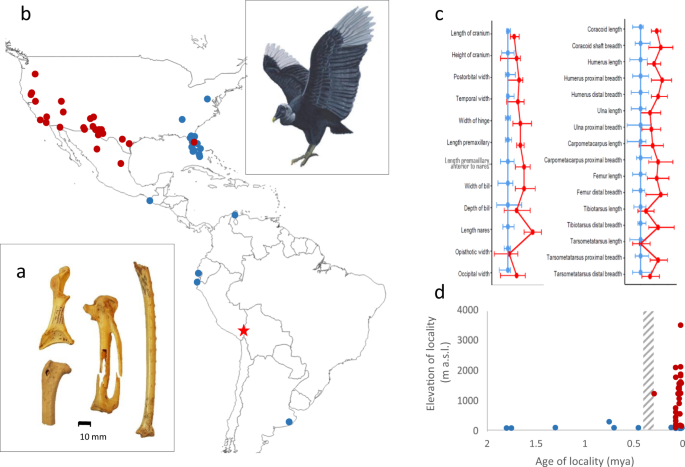
The New World Vulture [Coragypsoccidentalis (L. Miller, 1909) is one of many species that were extinct by the end of the Pleistocene. To understand its evolutionary history we sequenced the genome of a 14,000 year old [Coragypsoccidentalis found associated with megaherbivores in the Peruvian Andes. occidentalis has been viewed as the ancestor, or possibly sister, to the extant Black Vulture Coragyps atratus, but genomic data shows occidentalis to be deeply nested within the South American clade of atratusCoragyps atratus inhabits lowlands, but the fossil record indicates that occidentalis mostly occupied high elevations. Our results suggest that occidentalis evolved from a population of atratus in southwestern South America that colonized the High Andes 300 to 400 kya. The morphological and morphometric differences between occidentalis and atratus may thus be explained by ecological diversification following from the natural selection imposed by this new and extreme, high elevation environment. The sudden evolution of a population with significantly larger body size and different anatomical proportions than atratus thus constitutes an example of punctuated evolution.

Introduction

Paleogenomics, i.e., the genome-scale sequencing of specimens that are many thousands of years old, has facilitated the study of evolutionary processes at the genetic level in populations that are long gone and has become a valuable complement to the fossil record. Through genetic data, we can clarify phylogenetic relationships of extinct species, test biogeographic and evolutionary hypotheses, and study factors that have led to the extinction of ancient populations and species. Much paleogenomic work of the last decades (e.g., refs. ) has focused on the dynamics and demography of the many species and populations that went extinct at the end of the Pleistocene as a consequence of drastic environmental change and increased hunting pressure. These studies have benefitted from the fact that many extinctions took place in temperate regions where the chance of finding fossils with preserved DNA is particularly good.

The Pliocene and Pleistocene evolution of large herbivores megafauna, such as proboscideans, edentates, camelids, and horses, sparked the co-evolution of various specialized predators, scavengers, parasites, etc., many of which went extinct along with the megaherbivores at the end of the Pleistocene. In the Americas alone, this was the fate of more than thirty species of mammalian and avian predators and scavengers. For example, among the New World Vultures (Cathartidae), only 5 out of 11 genera survived into the Holocene. Herein, we combine genetic and paleontological data to gain insights into the evolution and extinction of one of these fossil birds, the New World Vulture [Coragypsoccidentalis (Miller 1909). We argue that this bird co-evolved with the mammalian megaherbivores during the ice age and that its extinction at the end of the Pleistocene coincides with the extinction of these large herbivores. Read More…

Previous Post

Hubble Captures 2 Galaxies Overlapping to Form a Stunning Interstellar 'Snail'

Next Post

The History of The Sun Could Be Hidden On The Moon. Here's Why

Comments