A closer look at Cyamudongo forest and its role in mitigating climate change

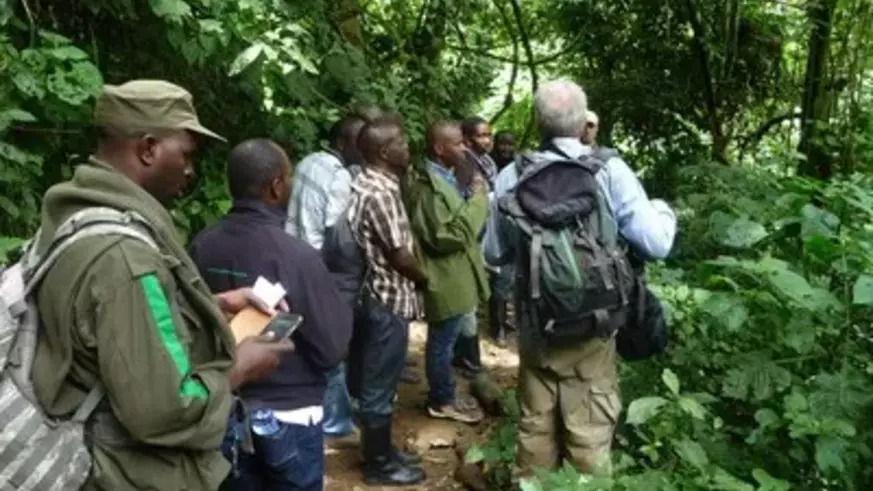
Cyamudongo forest is small and fragmented-only 19 square kilometres of Nyungwe national park and it is located in the Southwest of Rwanda.
Its vegetation is very thick and dark, home to over 30 species of chimpanzees and is unique for sheltering some endemic species of plants that are not found in Nyungwe national park like Orchid Polystachia blue chertiae which was discovered over 10 years ago.
The forest is among protected areas that have been restored in Rwanda and are playing a big role in mitigating climate change effects and building resilience to its effects, Jeanne d’Arc Mujawamariya, the Minister for Environment said.
She was speaking during a dialogue on ‘climate Change and the Biodiversity Nexus’ at the recently concluded Africa Protected Areas Congress (APAC).
Much effort has been spent to improve the condition of protected and conserved areas, for instance, restoring critical habitats that include Volcanoes national park, Akagera national park, Lake Kivu, Cyamudongo forest, and Gishwati-Mukura national park and its landscape.
Protected areas help maintain and adapt to climate change; opportunities range from safeguarding biodiversity, preventing the spread of diseases, providing local economic success, enhancing climate resilience, food and water security as well as ensuring ecosystem services, Mujawamariya said, highlighting the role of Cyamudongo forest.
Apparently, the forest survived because the community would not farm on steep mountains and it is now surrounded by tea plantations and eucalyptus trees.
Before being fragmented, Cyamudongo forest was connected to Nyungwe national park and after deforestation and poaching, the forest remained isolated.
Although it is still isolated from Nyungwe national park, it is still part of it according to officials. Read More…