A Complete Faq To Disc Brakes
-
 Loading...
 - Saira Mehta
- 10 Jun 2022
- 279 Views
- 0 Like
- 0 Comment
The Basics of Discs
What is a disc brake?

A disc brake is a braking system where the brake pads are contained in a caliper and create friction against a disc (rotor) that is attached directly to the wheel. This friction between the two surfaces slows the wheel.
Disc brakes are the most common braking system on modern cars and motorbikes. Disc brakes have been around on bicycles for a decent amount of time – as early as the 1950s, in fact. Mountain biking really brought discs to popularity in the early 2000s, and they’ve been the standard braking system there for over twenty years.
In concept, disc-brake calipers aren’t all that different from rim-brake calipers, either, except that the caliper bodies are much smaller, and the pads are made of much harder materials than the various rubbery compounds used in rim brakes.
What are the advantages of disc brakes?
Similar to the brakes found in modern cars or motorbikes, disc brakes are widely thought to provide more consistent braking control versus a rim-based brake. Moving the braking surface away from the rim means that the rim no longer needs to serve the double duty of handling braking heat, retaining the tyre, and resisting friction-based wear. And doing so allows the braking surface to be made from consistently-surfaced steel or a similar effective heat-managing material, which in turn means the brake pads can be made from a harder and more durable material, too.
The consistent surface of the disc brake goes a long way to not having pulsing or similar tight spots in the braking. Similarly, the rotor is further away from the muck and spray of the tires in wet weather, and being far smaller, it’s quicker for the braking surface to clear itself of unwanted elements. By contrast, your stopping distance with a rim brake is greatly increased because the larger circumference of a rim needs to be cleaned off by the pads before maximum friction is achieved.
Hydraulic brakes introduce other leverage and friction-based advantages that allow for less effort from the rider. They are also a sealed system that won’t degrade as a result of dust and grit, and similarly, they offer automatic adjustment as the brake pads wear.
Lastly, there are the system benefits. Disc brakes help to open up clearance for wider tyres and unique rim shapes. The rims, no longer needing to handle braking duties, can be made lighter and/or more aerodynamic. Frame designs no longer need to be symmetrical to accommodate the mounting of rim brakes. And engineers can now play with the flex in the areas of the frame that were previously required to be stiff for secure rim brake performance.
What are the disadvantages of disc brakes?
There are a few notable disadvantages to disc brakes.
Firstly, hydraulic disc brake technology is obviously more complicated and intricate than a mechanical rim brake system. This, of course, introduces its own setup and servicing idiosyncrasies (covered later on), and when done wrongly can lead to excessive braking noise, brake rub, or poor performance.

Similarly, disc brake technology has more components to it and therefore, is more expensive. And at least on drop-bar bicycles, disc brakes typically introduce a small weight penalty, too.
There’s also the aerodynamic argument – I’ll return to this point.
Mechanical versus hydraulic disc brakes: what’s the difference?

A mechanical disc brake is much like a traditional rim brake, using a mechanical brake lever and cable that is connected to the brake caliper. When the brake lever is pulled, it pulls a cable that then actuates a lever that pushes a single brake pad, flexing the rotor enough for it to get squeezed between the moving brake pad and a fixed one. Some mechanical disc brakes, such as the TRP Spyre, work by pushing both brake pads simultaneously against the rotor.
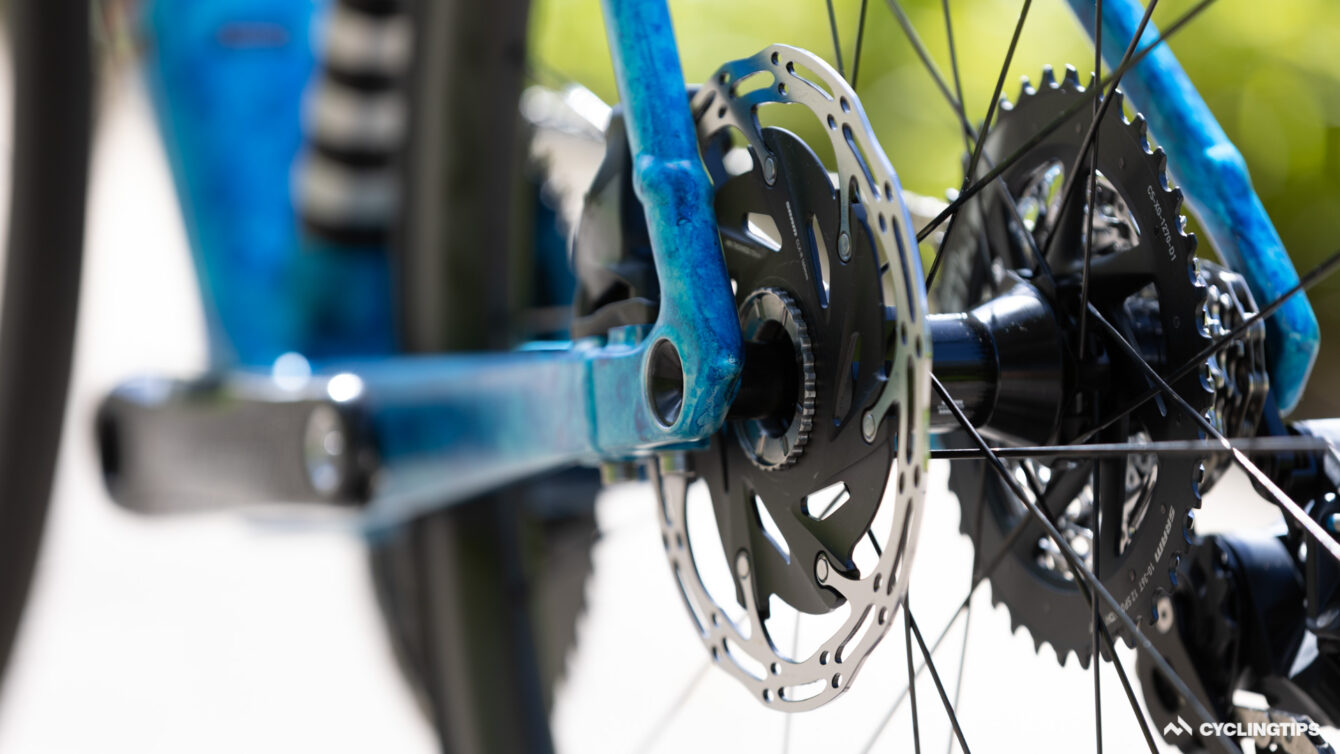
A hydraulic brake (pictured at the top of the article) is more like what a modern car would use, where fluid is used to transfer force. Here, fluid is stored in a reservoir called the master cylinder, which resides inside the brake lever body. When the lever is pulled, it pushes a piston that forces fluid out of the master cylinder and through the brake hose to the caliper. That fluid then pushes the caliper pistons (to which the pads are attached) against either side of the rotor.
Why are hydraulic brakes more common than mechanical brakes?
Mechanical brakes are simple, easy to repair, and highly reliable, and as such are often the choice for touring and bike-packing use. However, the cables and housing are less efficient at transferring power from the lever to the caliper, they’re more susceptible to contamination, and they have to be manually adjusted as the pads wear.
By contrast, hydraulic disc brakes automatically compensate for pad wear, they’re generally lighter as a system, and they’re fully sealed from the elements. Additionally, the hydraulic design produces less mechanical friction in the system, and impressive force amplification can be engineered in, too, meaning a light effort at the lever equates to a whole lot of braking force generated at the wheel. Meanwhile, recent trends in high-end dropbar and mountain bike designs require the flexible nature of hydraulic hoses for more intricate concealed cable routing.
More importantly, the biggest players of the industry are deeply invested in the development and sale of hydraulic disc brakes, while these big brands typically only offer mechanical disc bakes as a budget entry-level option.
Can I turn a mechanical brake lever into a hydraulic one?

No, but you can connect a mechanical brake lever to a semi-hydraulic brake. Options are limited for this, but both TRP and Yokozuna offer such a thing. Both of these feature a hydraulic caliper where the fluid master cylinder is in the caliper body itself. Your mechanical brake lever pulls a mechanical cable, which pulls on the piston rod at the caliper. It’s still a compromise, with cable friction losses and increased weight as issues. But if you’re looking for improved braking performance on your mechanical disc-equipped bike, or looking to re-use some existing mechanical brake lever/shifters on a new bike, it’s a viable option.
Meanwhile, a number of more entry-level Giant road and gravel bikes offer another example, where a mechanical road shifter/brake lever is connected to a stem-mounted hydraulic master cylinder. The mechanical cable from the brake lever connects directly to this master cylinder, which then has a hydraulic hose that connects to a hydraulic disc brake caliper. This system aims to offer performance near to that of a full hydraulic brake system but at a lower price point. In reality, these semi-hydraulic systems do perform better than a mechanical brake, but carry an additional weight penalty and don’t ease service requirements. Read More...