A neural network can help archaeologists decipher and even date ancient texts
-
 Loading...
 - Gael Galban
- 19 Sep 2022
- 74 Views
- 0 Like
- 0 Comment
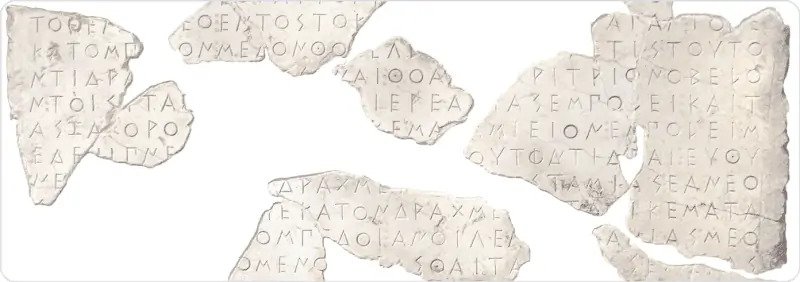
A new algorithm can restore damaged texts with 62% accuracy — but when coupled with historian expertise, its accuracy increases to over 80%. The algorithm can also date ancient texts to within 30 years, helping researchers put texts from Antiquity into their historical context.
In 1799, Napoleon’s campaign in north Africa triggered a surge in interest in ancient Egypt. Napoleon even set up a corp of “savants” that would study and retrieve (read: loot) artifacts of interest from Egypt. Among these artifacts was a large black stone — a granodiorite with three different writings on it. This turned out to be a decree about Pharaoh Ptolemy V written in three different texts: Ancient Egyptian hieroglyphs, Egyptian Demotic script, and Ancient Greek. This stone, which would go on to be named the “Rosetta Stone” was the breakthrough researchers were looking for to be able to translate the Ancient Egyptian language. Prior to the discovery of the Rosetta Stone, no one had understood ancient Egyptian since before the fall of the Roman Empire.
Unfortunately, we can’t always find a Rosetta Stone to help us decipher things. To make matters even worse, even when the ancient language is known, the texts and inscriptions are often damaged or incomplete. Read More...