A victory for political inclusion in Paraguay
-
 Loading...
 - charlie lucas
- 13 Sep 2022
- 59 Views
- 0 Like
- 0 Comment
A cornerstone of the country’s three decades of electoral stability, the 1996 Code introduced democratic rules and dynamics for elections at all levels, which effectively helped bring the constitutional mandates of the EMB, the Superior Tribunal for Electoral Justice (TSJE, by its acronym in Spanish), to fruition. However, a product of its time, it failed to grant persons with disabilities the political rights that are commonplace now, especially after the UN Convention on Persons with Disabilities of 2006, to which Paraguay is a party state since 2008.
Fortunately, that is about to change.
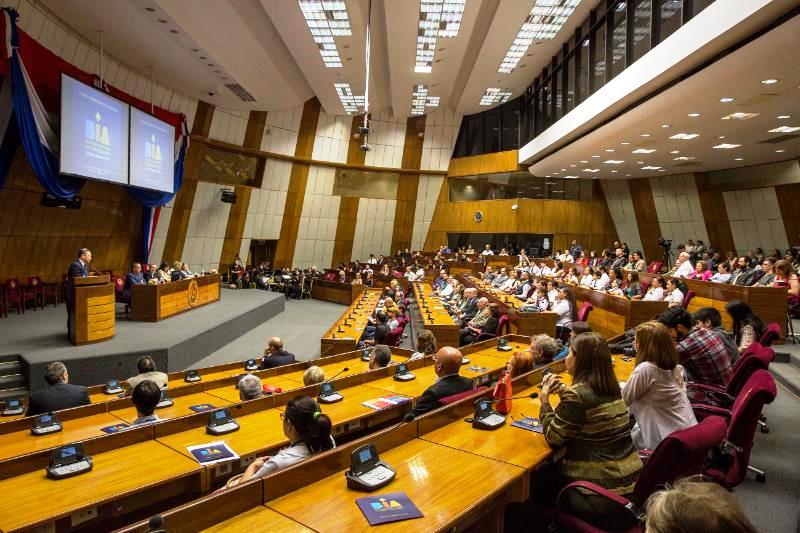
As an outcome of the cooperation agreement between the Institute’s Paraguay Programme and the Parliamentary Front Against Corruption, a political block in the Chamber of Deputies, a set of reforms to the Electoral Code was introduced to address the issue. The reforms, part of the EU EOM 2018 recommendations, expand accessibility affordances for persons with physical disabilities, promote inter-institutional cooperation on the matter, and, most notably, grant persons with hearing disabilities the right to vote, which was explicitly prohibited in the original text of the Code.
The reform was approved in August 2022 by both chambers of Congress and is now pending promulgation by the Executive branch. The cooperation agreement with the Parliamentary Front is a component of the project “Consolidation of Paraguayan Democracy II” funded by the European Union and includes other joint efforts and legal reforms. Read More…