Algeria Asks Graduate Workers to Give Up Degrees to Get Secure Jobs
-
 Loading...
 - Lakshmi Gupta
- 08 Aug 2022
- 66 Views
- 0 Like
- 0 Comment
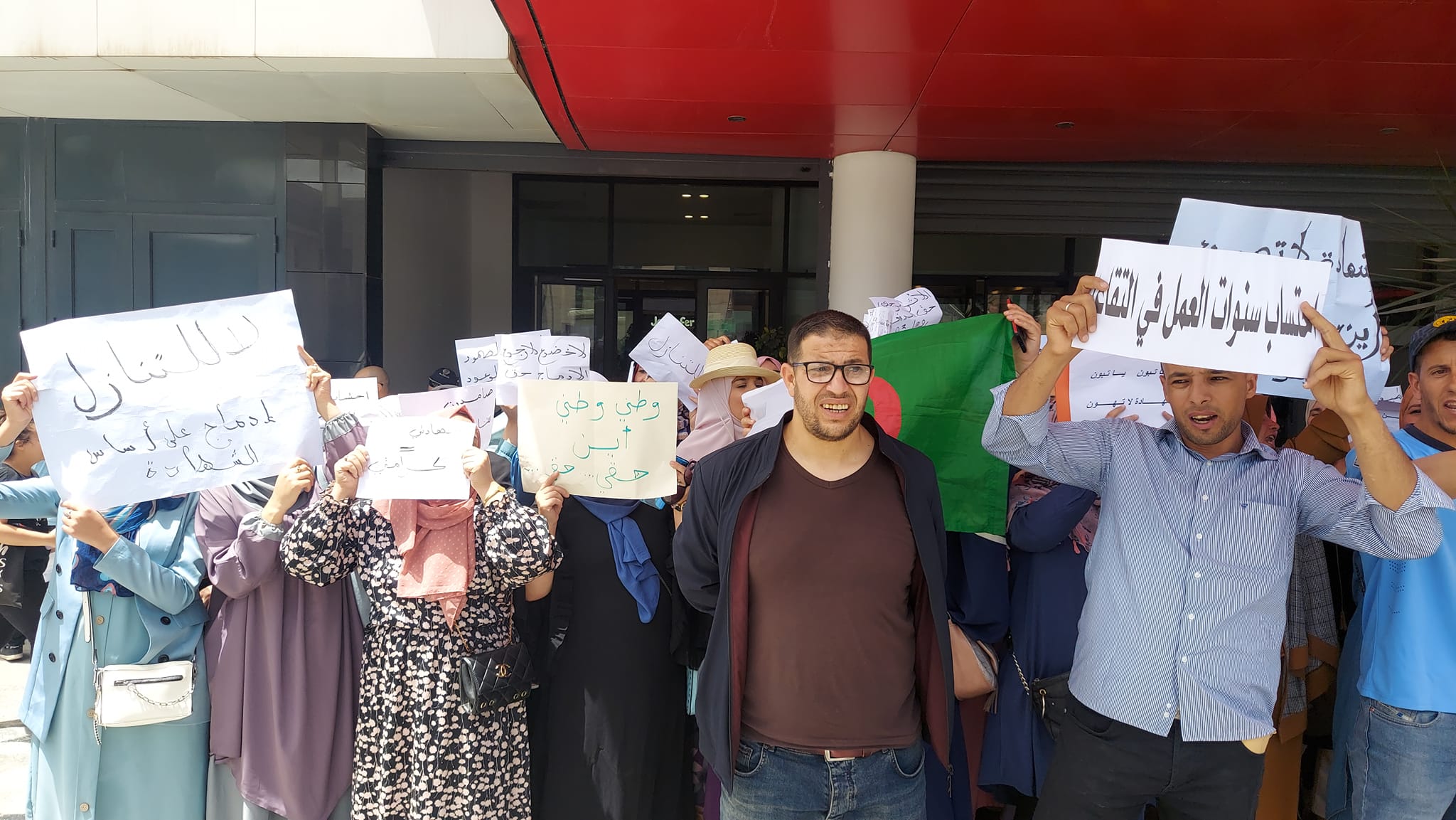
An Algerian government decision that requires graduate workers hired on “pre-employment contracts” to waive their degrees in exchange for the guarantee of a permanent job has provoked controversy.
Officials say the government has for years been trying to stop the costly programme, under which university graduates get jobs on contracts paid for by the state and later transition to a permanent job.
The new decision requiring graduate workers hired on such contracts to waive their degrees in exchange for permanent employment means that in effect they will be accepting jobs at levels beneath their qualifications.
Students are split in their reactions to the new condition.
Mehdi Kadri, a graduate of the University of Blida 2 Lounici Ali, at El Affroun, southwest of Algiers, told Al-Fanar Media: “Our university studies cannot be wasted for the sake of a government plan to silence us and get rid of the pre-employment contracts. We will continue the struggle until this condition is dropped.”
Kadri, who has a master’s degree in history, has been organising sit-ins in front of government offices to demand that the condition be dropped, and that graduates be employed at a level that respects their degrees.
Pre-Employment Contracts
“Our university studies cannot be wasted for the sake of a government plan to silence us and get rid of the pre-employment contracts. We will continue the struggle until this condition is dropped.”
Algeria adopted the pre-employment contract policy ten years ago. It was intended to give temporary jobs to graduates of universities, institutes, and public schools until they could transition into a permanent job.
Ramzi Benseraj, a human resources expert, told Al-Fanar Media that the pre-employment contracts stipulate that graduates between the ages of 19 and 35 can take a temporary job in the public or private sector, so long as Algeria’s Employment Directorate pays a monthly stipend to the employer for a specified period.
He said the monthly grants start out between 8,000 and 12,000 Algerian dinars (worth about $54 to $82 at current exchange rates) and can later be increased to 18,000 Algerian dinars ($123). By comparison, Algeria’s minimum wage is 20,000 dinars ($137) a month.
Under the contracts, university graduates can be employed for a fixed term, or for open periods, before being integrated into a permanent job.
Benseraj added that there was no clear provision in the law regarding such contracts that obliges Algerian institutions to guarantee young workers jobs.
“Their fate remains unknown to them,” he said, and in many cases, the contract term expires without the job converting to a permanent one.
“This makes these young people vulnerable to various psychological disorders and social instability throughout the contract period, which usually lasts for three years,” said Benseraj. “Moreover, the monthly grant does not meet their needs.”
Early Hopes Meet a New Condition
After years of waiting to discover whether they will be permanently employed, graduate workers are now learning that the government wants them to give up their university degrees as a condition for getting a permanent job at a lower level than their education would entitle them to.
Bouthaina Rehrah, a media and communication graduate from the University of Mohamed Lamine Debaghine–Setif 2, told Al-Fanar Media: “We initially believed that all pre-employment contracts ended with automatic employment after working the contracted years. We offered what we have to achieve the goals of the institution we are working for. Then we hear of this new condition.” Read More...