Home Upload Photo Upload Videos Write a Blog Analytics Messaging Streaming Create Adverts Creators Program
Bebuzee Afghanistan Bebuzee Albania Bebuzee Algeria Bebuzee Andorra Bebuzee Angola Bebuzee Antigua and Barbuda Bebuzee Argentina Bebuzee Armenia Bebuzee Australia Bebuzee Austria Bebuzee Azerbaijan Bebuzee Bahamas Bebuzee Bahrain Bebuzee Bangladesh Bebuzee Barbados Bebuzee Belarus Bebuzee Belgium Bebuzee Belize Bebuzee Benin Bebuzee Bhutan Bebuzee Bolivia Bebuzee Bosnia and Herzegovina Bebuzee Botswana Bebuzee Brazil Bebuzee Brunei Bebuzee Bulgaria Bebuzee Burkina Faso Bebuzee Burundi Bebuzee Cabo Verde Bebuzee Cambodia Bebuzee Cameroon Bebuzee Canada Bebuzee Central African Republic Bebuzee Chad Bebuzee Chile Bebuzee China Bebuzee Colombia Bebuzee Comoros Bebuzee Costa Rica Bebuzee Côte d'Ivoire Bebuzee Croatia Bebuzee Cuba Bebuzee Cyprus Bebuzee Czech Republic Bebuzee Democratic Republic of the Congo Bebuzee Denmark Bebuzee Djibouti Bebuzee Dominica Bebuzee Dominican Republic Bebuzee Ecuador Bebuzee Egypt Bebuzee El Salvador Bebuzee Equatorial Guinea Bebuzee Eritrea Bebuzee Estonia Bebuzee Eswatini Bebuzee Ethiopia Bebuzee Fiji Bebuzee Finland Bebuzee France Bebuzee Gabon Bebuzee Gambia Bebuzee Georgia Bebuzee Germany Bebuzee Ghana Bebuzee Greece Bebuzee Grenada Bebuzee Guatemala Bebuzee Guinea Bebuzee Guinea-Bissau Bebuzee Guyana Bebuzee Haiti Bebuzee Honduras Bebuzee Hong Kong Bebuzee Hungary Bebuzee Iceland Bebuzee India Bebuzee Indonesia Bebuzee Iran Bebuzee Iraq Bebuzee Ireland Bebuzee Israel Bebuzee Italy Bebuzee Jamaica Bebuzee Japan Bebuzee Jordan Bebuzee Kazakhstan Bebuzee Kenya Bebuzee Kiribati Bebuzee Kuwait Bebuzee Kyrgyzstan Bebuzee Laos Bebuzee Latvia Bebuzee Lebanon Bebuzee Lesotho Bebuzee Liberia Bebuzee Libya Bebuzee Liechtenstein Bebuzee Lithuania Bebuzee Luxembourg Bebuzee Madagascar Bebuzee Malawi Bebuzee Malaysia Bebuzee Maldives Bebuzee Mali Bebuzee Malta Bebuzee Marshall Islands Bebuzee Mauritania Bebuzee Mauritius Bebuzee Mexico Bebuzee Micronesia Bebuzee Moldova Bebuzee Monaco Bebuzee Mongolia Bebuzee Montenegro Bebuzee Morocco Bebuzee Mozambique Bebuzee Myanmar Bebuzee Namibia Bebuzee Nauru Bebuzee Nepal Bebuzee Netherlands Bebuzee New Zealand Bebuzee Nicaragua Bebuzee Niger Bebuzee Nigeria Bebuzee North Korea Bebuzee North Macedonia Bebuzee Norway Bebuzee Oman Bebuzee Pakistan Bebuzee Palau Bebuzee Panama Bebuzee Papua New Guinea Bebuzee Paraguay Bebuzee Peru Bebuzee Philippines Bebuzee Poland Bebuzee Portugal Bebuzee Qatar Bebuzee Republic of the Congo Bebuzee Romania Bebuzee Russia Bebuzee Rwanda Bebuzee Saint Kitts and Nevis Bebuzee Saint Lucia Bebuzee Saint Vincent and the Grenadines Bebuzee Samoa Bebuzee San Marino Bebuzee São Tomé and Príncipe Bebuzee Saudi Arabia Bebuzee Senegal Bebuzee Serbia Bebuzee Seychelles Bebuzee Sierra Leone Bebuzee Singapore Bebuzee Slovakia Bebuzee Slovenia Bebuzee Solomon Islands Bebuzee Somalia Bebuzee South Africa Bebuzee South Korea Bebuzee South Sudan Bebuzee Spain Bebuzee Sri Lanka Bebuzee Sudan Bebuzee Suriname Bebuzee Sweden Bebuzee Switzerland Bebuzee Syria Bebuzee Taiwan Bebuzee Tajikistan Bebuzee Tanzania Bebuzee Thailand Bebuzee Timor-Leste Bebuzee Togo Bebuzee Tonga Bebuzee Trinidad and Tobago Bebuzee Tunisia Bebuzee Turkey Bebuzee Turkmenistan Bebuzee Tuvalu Bebuzee Uganda Bebuzee Ukraine Bebuzee United Arab Emirates Bebuzee United Kingdom Bebuzee Uruguay Bebuzee Uzbekistan Bebuzee Vanuatu Bebuzee Venezuela Bebuzee Vietnam Bebuzee World Wide Bebuzee Yemen Bebuzee Zambia Bebuzee Zimbabwe
Blog Image

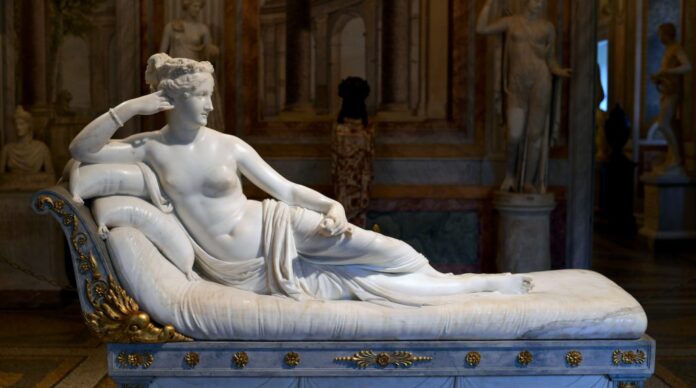
Antonio Canova's Sexy Sculpture of Napoleon's Sister Led to a Scandal

A sexy sculpture of Napoleon’s sister by Antonio Canova became a reason for a scandal. Here are 3 facts that elevate it above sensationalism.

The sculpture of Pauline Borghese as the goddess Venus caused so much controversy that it was locked in a wooden box for decades.

Pauline Borghese modestly remarked about Venus the Victorious, an 1808 marble portrait by Antonio Canova depicting her as a victorious goddess of love that every veil must fall before Canova. The comment, which seemed to suggest that she had posed nude for the sculptor, immediately caused a sensation, although the scandal for Napoleon Bonaparte’s sister and Prince Camillo Borghese’s new fiancée was nothing new.

In 1805, when Antonio Canova began sculpting, Borghese was 25 years old. She was in her second marriage, after her first husband, General Charles Leclerc died of an illness in Santo Domingo. Napoleon sent the couple to a Caribbean island under the guise of military service, hoping to dispel rumors of his sister’s various romantic misdeeds in Europe.

Her marriage to the respected Borghese family, which took place just eight months after Leclerc’s death, further stirred up polite society. Camillo Borghese commissioned the sculpture in 1804. Despite the fact that the new marriage was already strained, Borghese was fascinated by the beauty of his wife and wanted the sculpture of the famous Antonio Canova to be exhibited privately. It should also be noted that Pauline and Camillo broke up before the sculpture was completed.

Antonio Canova, known for his level-headed character, generally disliked commissions for portraits and at first hoped to depict Pauline as Diana, the virgin goddess of the hunt. Pauline Borghese, perhaps better understanding her public persona, instead insisted on the goddess of love.

Venus Victrix, which is still on display in the Galleria Borghese in Rome, depicts Pauline lying on a sofa, topless, hair tousled, filled with jewelry, and looking away as if someone is only who entered the room.

This year marks the 200th anniversary of Antonio Canova’s death, so on Valentine’s Day, we decided to take a closer look at the portrait of Pauline Borghese.

Here are three fascinating facts that may change your mind about it.

A Portrait of Political Power
While the resting Venus may not seem like political propaganda at first glance, a close reading of the details of the sculpture hints at an alliance between the two most powerful families in Europe. Pauline Borghese holds a small apple in her left hand, an allusion to the myth of the Judgment of Paris, in which the mortal Paris, known for his justice, chooses Venus as the most beautiful goddess of Olympus, rewarding her with an apple.

Although the Borghese family did not appear in Rome until the 16th century, the family adopted the symbol of Venus, whose son Aeneas is said to have founded the city, as part of his ancestral mythology. In this sense, the image of Venus emphasized the long-standing political legitimacy of the family, supporting the alliance of Bonaparte and bringing the myth to life in the body of Pauline Borghese.

For the Bonaparte family, which was expanding its holdings across Europe, Borghese mythology strengthened the imperial claim to power. While at the turn of the 19th century Venus Victrix was read in the sense of “conquering men’s hearts”, the ancient motif originally had militaristic associations as a romanized version of the Greek Aphrodite Areia.

Antonio Canova Cast Her in Plaster
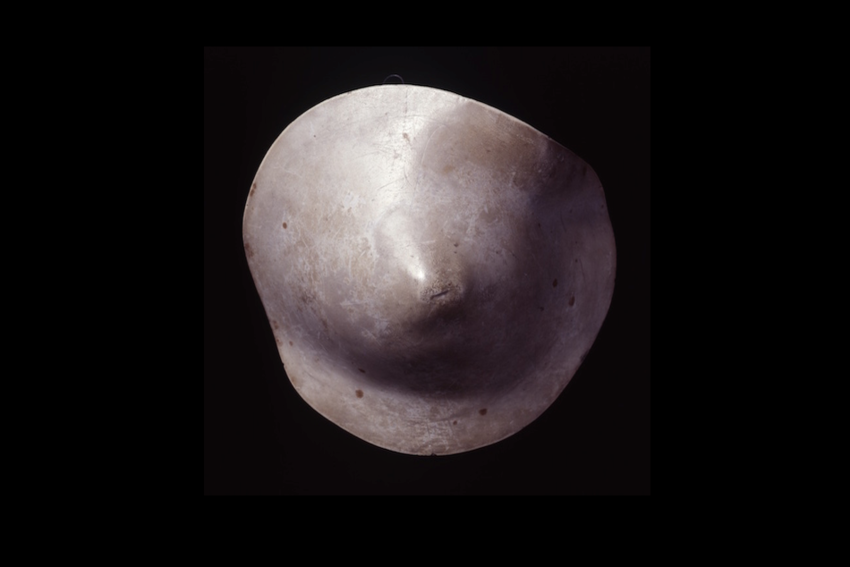
While any nude couple art of Pauline Borghese would have shocked the public, Canova’s sculpture was criticized in a very specific way: it was too realistic. Read More…
Previous Post

Salima Ayadi explores her Algerian heritage in ‘My Silk Road'

Next Post

National Gallery of Canada launches an Indigenous ways and decolonisation department

Comments