White Supremacy Or A Fetish For Minimalism? The Met Confronts The ‘Conspiracy' To Deprive Ancient Greek Sculpture Of Color
-
 Loading...
 - Zada Adami
- 15 Sep 2022
- 78 Views
- 0 Like
- 0 Comment
“There are few subjects in the field of ancient art that have aroused such heated and prolonged controversy as polychromy in Greek sculpture,” observed the curator Gisela Richter in 1944, preparing visitors to the Metropolitan Museum of Art for the most shocking exhibition of the year. On the walls of the classical galleries, Richter hung a set of watercolor studies by a research fellow named Lindsley F. Hall, each depicting a sculpture from the ancient Greek collections subtlely embellished with muted colors.
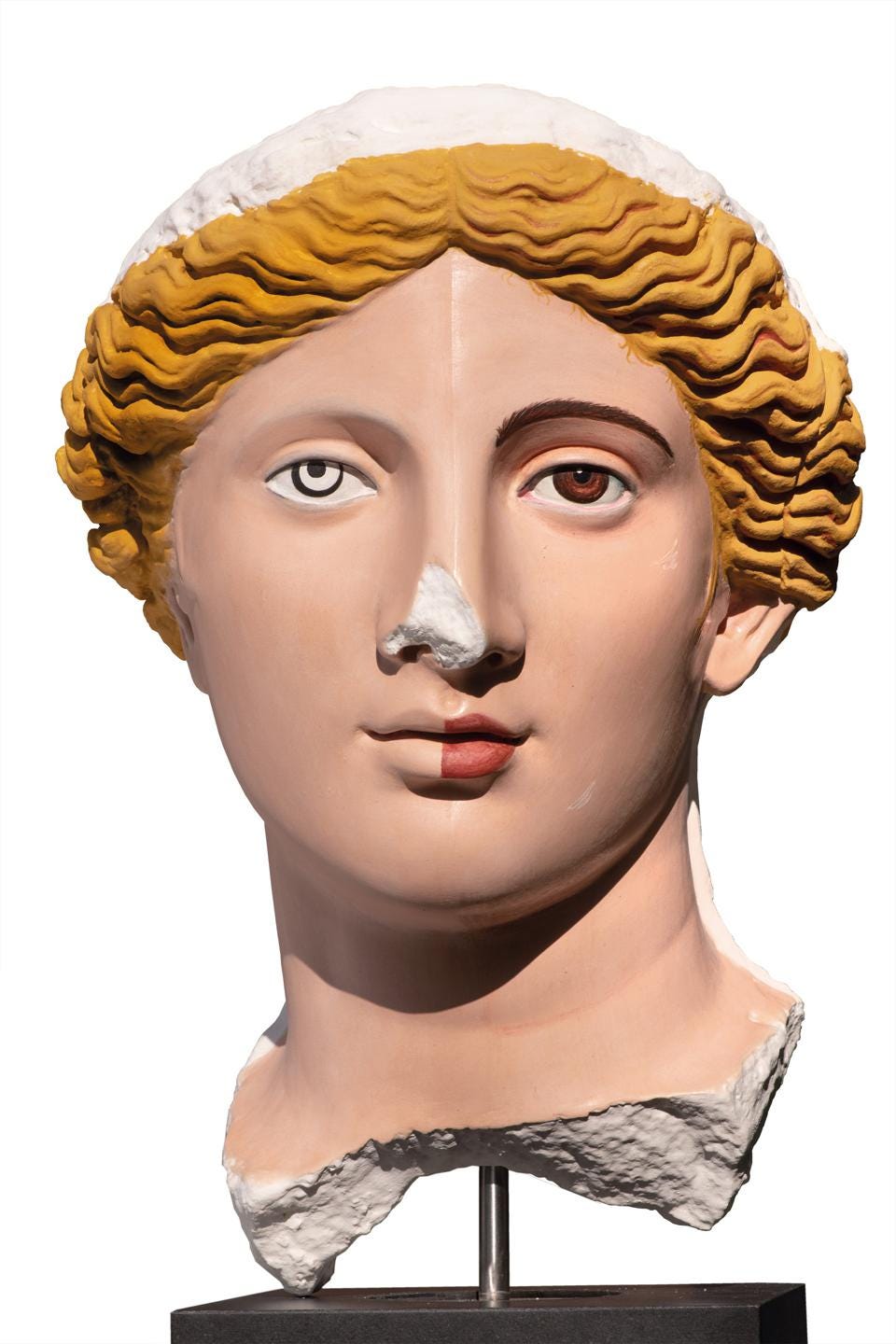
Nearly eighty years have passed since Richter’s exhibition. Scientific analysis has not only validated the work of Richter and Hall but shown that the ancient color palette was considerably bolder than either dared imagine. Yet Richter’s statement, published in the April 1944 edition of the museum’s scholarly Bulletin, could plausibly be printed today as the Met introduces a new generation to Greek polychromy with Chroma: Ancient Sculpture in Color.
"Those guardians of good taste – intellectual people – they can’t manage it,” the classical archaeologist Vinzenz Brinkmann recently told the BBC. “The clash is too hard.”
Brinkmann and his wife, Ulrike Koch-Brinkmann, have provided much of the scholarly groundwork for the Met exhibition. Their scientific and historical research have animated the field for the past four decades, taking up where Richter and Hall left off by supplementing scholarship with life-size models that show what ancient Greeks might have encountered at the agora or acropolis. Numerous examples in the Met’s classical galleries provide visitors with an experience that is as electrifying as it is educational. Read More...