Home Upload Photo Upload Videos Write a Blog Analytics Messaging Streaming Create Adverts Creators Program
Bebuzee Afghanistan Bebuzee Albania Bebuzee Algeria Bebuzee Andorra Bebuzee Angola Bebuzee Antigua and Barbuda Bebuzee Argentina Bebuzee Armenia Bebuzee Australia Bebuzee Austria Bebuzee Azerbaijan Bebuzee Bahamas Bebuzee Bahrain Bebuzee Bangladesh Bebuzee Barbados Bebuzee Belarus Bebuzee Belgium Bebuzee Belize Bebuzee Benin Bebuzee Bhutan Bebuzee Bolivia Bebuzee Bosnia and Herzegovina Bebuzee Botswana Bebuzee Brazil Bebuzee Brunei Bebuzee Bulgaria Bebuzee Burkina Faso Bebuzee Burundi Bebuzee Cabo Verde Bebuzee Cambodia Bebuzee Cameroon Bebuzee Canada Bebuzee Central African Republic Bebuzee Chad Bebuzee Chile Bebuzee China Bebuzee Colombia Bebuzee Comoros Bebuzee Costa Rica Bebuzee Côte d'Ivoire Bebuzee Croatia Bebuzee Cuba Bebuzee Cyprus Bebuzee Czech Republic Bebuzee Democratic Republic of the Congo Bebuzee Denmark Bebuzee Djibouti Bebuzee Dominica Bebuzee Dominican Republic Bebuzee Ecuador Bebuzee Egypt Bebuzee El Salvador Bebuzee Equatorial Guinea Bebuzee Eritrea Bebuzee Estonia Bebuzee Eswatini Bebuzee Ethiopia Bebuzee Fiji Bebuzee Finland Bebuzee France Bebuzee Gabon Bebuzee Gambia Bebuzee Georgia Bebuzee Germany Bebuzee Ghana Bebuzee Greece Bebuzee Grenada Bebuzee Guatemala Bebuzee Guinea Bebuzee Guinea-Bissau Bebuzee Guyana Bebuzee Haiti Bebuzee Honduras Bebuzee Hong Kong Bebuzee Hungary Bebuzee Iceland Bebuzee India Bebuzee Indonesia Bebuzee Iran Bebuzee Iraq Bebuzee Ireland Bebuzee Israel Bebuzee Italy Bebuzee Jamaica Bebuzee Japan Bebuzee Jordan Bebuzee Kazakhstan Bebuzee Kenya Bebuzee Kiribati Bebuzee Kuwait Bebuzee Kyrgyzstan Bebuzee Laos Bebuzee Latvia Bebuzee Lebanon Bebuzee Lesotho Bebuzee Liberia Bebuzee Libya Bebuzee Liechtenstein Bebuzee Lithuania Bebuzee Luxembourg Bebuzee Madagascar Bebuzee Malawi Bebuzee Malaysia Bebuzee Maldives Bebuzee Mali Bebuzee Malta Bebuzee Marshall Islands Bebuzee Mauritania Bebuzee Mauritius Bebuzee Mexico Bebuzee Micronesia Bebuzee Moldova Bebuzee Monaco Bebuzee Mongolia Bebuzee Montenegro Bebuzee Morocco Bebuzee Mozambique Bebuzee Myanmar Bebuzee Namibia Bebuzee Nauru Bebuzee Nepal Bebuzee Netherlands Bebuzee New Zealand Bebuzee Nicaragua Bebuzee Niger Bebuzee Nigeria Bebuzee North Korea Bebuzee North Macedonia Bebuzee Norway Bebuzee Oman Bebuzee Pakistan Bebuzee Palau Bebuzee Panama Bebuzee Papua New Guinea Bebuzee Paraguay Bebuzee Peru Bebuzee Philippines Bebuzee Poland Bebuzee Portugal Bebuzee Qatar Bebuzee Republic of the Congo Bebuzee Romania Bebuzee Russia Bebuzee Rwanda Bebuzee Saint Kitts and Nevis Bebuzee Saint Lucia Bebuzee Saint Vincent and the Grenadines Bebuzee Samoa Bebuzee San Marino Bebuzee São Tomé and Príncipe Bebuzee Saudi Arabia Bebuzee Senegal Bebuzee Serbia Bebuzee Seychelles Bebuzee Sierra Leone Bebuzee Singapore Bebuzee Slovakia Bebuzee Slovenia Bebuzee Solomon Islands Bebuzee Somalia Bebuzee South Africa Bebuzee South Korea Bebuzee South Sudan Bebuzee Spain Bebuzee Sri Lanka Bebuzee Sudan Bebuzee Suriname Bebuzee Sweden Bebuzee Switzerland Bebuzee Syria Bebuzee Taiwan Bebuzee Tajikistan Bebuzee Tanzania Bebuzee Thailand Bebuzee Timor-Leste Bebuzee Togo Bebuzee Tonga Bebuzee Trinidad and Tobago Bebuzee Tunisia Bebuzee Turkey Bebuzee Turkmenistan Bebuzee Tuvalu Bebuzee Uganda Bebuzee Ukraine Bebuzee United Arab Emirates Bebuzee United Kingdom Bebuzee Uruguay Bebuzee Uzbekistan Bebuzee Vanuatu Bebuzee Venezuela Bebuzee Vietnam Bebuzee World Wide Bebuzee Yemen Bebuzee Zambia Bebuzee Zimbabwe
Blog Image

Ants: Master manipulators for biodiversity, or sweet treats

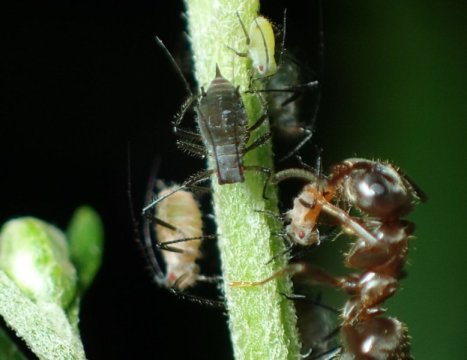
The top three aphids (small green and two large blackish green) are green morphs, and the lower two aphids (small red with an ant and a large brownish green) are red morphs. Credit: Photo by Ryota Kawauchiya. (Watanabe S. et al., Scientific Reports, Febru

Symbiotic ants manipulate aphid reproduction rates to achieve a specific mix of green and red aphids, maintaining the inferior green aphids which produce the ants' favorite snack.

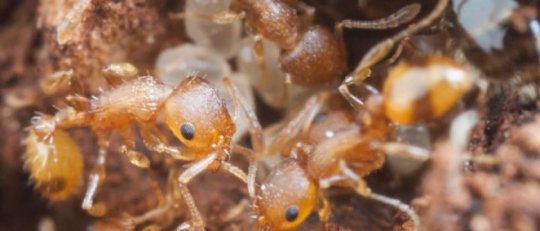
Ants and aphids coexist in a symbiotic relationship that benefits both species. Ants protect aphids from predators, such as lady bugs and wasps, and aphids secrete nutritious honeydew for ants to eat.

The aphid species Macrosiphoniella yomogicola comes in two "morphs" with distinct colors: red and green. When there is more than one physical trait of the same species, it is called polymorphism. Typically, competition for survival would lead to one morph dominating and the others disappearing from the gene pool. However, this rule can be broken in a few circumstances, including if an ant benefits from maintaining a mixture of color morphs.

Previously, Associate Professor Eisuke Hasegawa of Hokkaido University and his colleagues had determined that Lasius japonicus ants prefer the nutrient-rich honeydew produced by green morphs. They also found that ants were most attracted to and most vigorously protected colonies with 65% green and 35% red aphids.

In a new study published in the journal Scientific Reports, Hasegawa and his students, including Saori Watanabe, investigated how population growth of aphid morphs differs with or without the presence of ants. They found that ants actively manipulate morph populations by improving the reproduction rate of the inferior morph.

In field experiments without the ants' presence, the red morphs had a much higher and superior reproduction rate than green morphs. Thus, red aphids should dominate. However, when ants were introduced to the experiment, the green morph reproduction rate equalized with the red morphs.

The experimental evidence matches what researchers find in the wild: red and green morphs coexisting on the same plant shoots attended by ants.

What remains a mystery is this: if the ants prefer the green morphs' honeydew, why keep the red morphs around at all? Hasegawa explains, "We theorize that the red morphs are able to provide a benefit that the green morphs can't, such as suppressing the development of lower buds on host plants. This might help both the red and green aphids survive and reproduce throughout more of the year, which could maximize long-term harvest of honey-dew from the green aphids."

"In this case, the ants invest in a future benefit by sacrificing the present benefit," the researchers hypothesize. They plan to test this hypothesis next.


Previous Post

Massive reserves of mercury hidden in permafrost

Next Post

Shoals of sticklebacks differ in their collective personalities

Comments