Home Upload Photo Upload Videos Write a Blog Analytics Messaging Streaming Create Adverts Creators Program
Bebuzee Afghanistan Bebuzee Albania Bebuzee Algeria Bebuzee Andorra Bebuzee Angola Bebuzee Antigua and Barbuda Bebuzee Argentina Bebuzee Armenia Bebuzee Australia Bebuzee Austria Bebuzee Azerbaijan Bebuzee Bahamas Bebuzee Bahrain Bebuzee Bangladesh Bebuzee Barbados Bebuzee Belarus Bebuzee Belgium Bebuzee Belize Bebuzee Benin Bebuzee Bhutan Bebuzee Bolivia Bebuzee Bosnia and Herzegovina Bebuzee Botswana Bebuzee Brazil Bebuzee Brunei Bebuzee Bulgaria Bebuzee Burkina Faso Bebuzee Burundi Bebuzee Cabo Verde Bebuzee Cambodia Bebuzee Cameroon Bebuzee Canada Bebuzee Central African Republic Bebuzee Chad Bebuzee Chile Bebuzee China Bebuzee Colombia Bebuzee Comoros Bebuzee Costa Rica Bebuzee Côte d'Ivoire Bebuzee Croatia Bebuzee Cuba Bebuzee Cyprus Bebuzee Czech Republic Bebuzee Democratic Republic of the Congo Bebuzee Denmark Bebuzee Djibouti Bebuzee Dominica Bebuzee Dominican Republic Bebuzee Ecuador Bebuzee Egypt Bebuzee El Salvador Bebuzee Equatorial Guinea Bebuzee Eritrea Bebuzee Estonia Bebuzee Eswatini Bebuzee Ethiopia Bebuzee Fiji Bebuzee Finland Bebuzee France Bebuzee Gabon Bebuzee Gambia Bebuzee Georgia Bebuzee Germany Bebuzee Ghana Bebuzee Greece Bebuzee Grenada Bebuzee Guatemala Bebuzee Guinea Bebuzee Guinea-Bissau Bebuzee Guyana Bebuzee Haiti Bebuzee Honduras Bebuzee Hong Kong Bebuzee Hungary Bebuzee Iceland Bebuzee India Bebuzee Indonesia Bebuzee Iran Bebuzee Iraq Bebuzee Ireland Bebuzee Israel Bebuzee Italy Bebuzee Jamaica Bebuzee Japan Bebuzee Jordan Bebuzee Kazakhstan Bebuzee Kenya Bebuzee Kiribati Bebuzee Kuwait Bebuzee Kyrgyzstan Bebuzee Laos Bebuzee Latvia Bebuzee Lebanon Bebuzee Lesotho Bebuzee Liberia Bebuzee Libya Bebuzee Liechtenstein Bebuzee Lithuania Bebuzee Luxembourg Bebuzee Madagascar Bebuzee Malawi Bebuzee Malaysia Bebuzee Maldives Bebuzee Mali Bebuzee Malta Bebuzee Marshall Islands Bebuzee Mauritania Bebuzee Mauritius Bebuzee Mexico Bebuzee Micronesia Bebuzee Moldova Bebuzee Monaco Bebuzee Mongolia Bebuzee Montenegro Bebuzee Morocco Bebuzee Mozambique Bebuzee Myanmar Bebuzee Namibia Bebuzee Nauru Bebuzee Nepal Bebuzee Netherlands Bebuzee New Zealand Bebuzee Nicaragua Bebuzee Niger Bebuzee Nigeria Bebuzee North Korea Bebuzee North Macedonia Bebuzee Norway Bebuzee Oman Bebuzee Pakistan Bebuzee Palau Bebuzee Panama Bebuzee Papua New Guinea Bebuzee Paraguay Bebuzee Peru Bebuzee Philippines Bebuzee Poland Bebuzee Portugal Bebuzee Qatar Bebuzee Republic of the Congo Bebuzee Romania Bebuzee Russia Bebuzee Rwanda Bebuzee Saint Kitts and Nevis Bebuzee Saint Lucia Bebuzee Saint Vincent and the Grenadines Bebuzee Samoa Bebuzee San Marino Bebuzee São Tomé and Príncipe Bebuzee Saudi Arabia Bebuzee Senegal Bebuzee Serbia Bebuzee Seychelles Bebuzee Sierra Leone Bebuzee Singapore Bebuzee Slovakia Bebuzee Slovenia Bebuzee Solomon Islands Bebuzee Somalia Bebuzee South Africa Bebuzee South Korea Bebuzee South Sudan Bebuzee Spain Bebuzee Sri Lanka Bebuzee Sudan Bebuzee Suriname Bebuzee Sweden Bebuzee Switzerland Bebuzee Syria Bebuzee Taiwan Bebuzee Tajikistan Bebuzee Tanzania Bebuzee Thailand Bebuzee Timor-Leste Bebuzee Togo Bebuzee Tonga Bebuzee Trinidad and Tobago Bebuzee Tunisia Bebuzee Turkey Bebuzee Turkmenistan Bebuzee Tuvalu Bebuzee Uganda Bebuzee Ukraine Bebuzee United Arab Emirates Bebuzee United Kingdom Bebuzee Uruguay Bebuzee Uzbekistan Bebuzee Vanuatu Bebuzee Venezuela Bebuzee Vietnam Bebuzee World Wide Bebuzee Yemen Bebuzee Zambia Bebuzee Zimbabwe
Blog Image

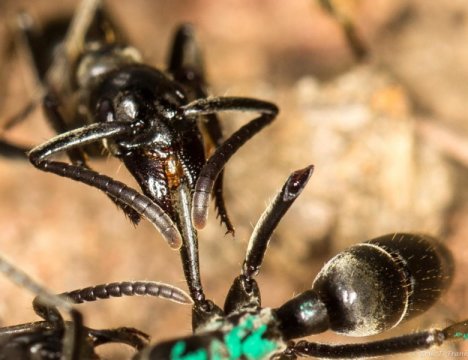
Medical care for wounded ants

A Matabele ant treats the wounds of a mate whose limbs were bitten off during a fight with termite soldiers. Credit: Erik T. Frank

The African Matabele ants (Megaponera analis) tend to the wounds of their injured comrades. And they do so rather successfully: Without such attendance, 80 percent of the injured ants die; after receiving "medical" treatment, only 10 percent succumb to their injuries.

Erik T. Frank, Marten Wehrhan and Karl Eduard Linsenmair from Julius-Maximilians-Universität Würzburg (JMU) in Bavaria, Germany, made this astonishing discovery. Their results have been published in the journal Proceedings of the Royal Society B. No other insects are known to dress the wounds of their comrades. The JMU biologists even believe that such behaviour is unique in the entire animal kingdom.

Ants go on high-risk raids

Matabele ants have a high risk of getting injured every day: The insects, which are widely distributed in Sub-Saharan Africa, set out to raid termites two to four times a day. Proceeding in long files of 200 to 600 animals, they raid termites at their foraging sites, killing many workers and hauling the prey back to their nest where they are ultimately eaten.

However, the ants meet fierce resistance from the well-armoured termite soldiers that are very adept at using their powerful jaws to fend off the attackers. Injury and mortality among the ants occur during such combats. For example, the ants frequently lose limbs that are bitten off by termite soldiers. When an ant is injured in a fight, it calls its mates for help by excreting a chemical substance which makes them carry their injured comrade back to the nest. Erik T. Frank already described this rescue service in 2017.

But the Würzburg biologists dug deeper: What happens once the injured ants are back in the nest? The ants treat the open wounds of their injured fellows by "licking" them intensively, often for several minutes. "We suppose that they do this to clean the wounds and maybe even apply antimicrobial substances with their saliva to reduce the risk of bacterial or fungal infection," Frank explains.

Severely injured ants are left behind on the battlefield

The team from the JMU Biocentre uncovered more exciting details about the emergency rescue service of the Matabele ants. Badly injured ants missing five of their six legs, for example, get no help on the battleground. The decision who is saved and who is left behind is made not by the rescuers but by the injured ants themselves.

Slightly injured ants keep still and even pull in their remaining limbs to facilitate transport. Their badly injured counterparts in contrast struggle and lash out wildly. "They simply don't cooperate with the helpers and are left behind as a result," Frank says. So the hopeless cases make sure that no energy is invested in rescuing them.

Slightly injured ants keep still

When Matabele ants are only slightly injured, they move much more slowly than normal once potential helpers are near. This behaviour probably increases their chances of being noticed by the other ants rushing back to the nest in a column. Or it may be that ants can localize the "save-me-substance" more easily in resting ants.

More questions arise

The new insights give rise to new questions: How do ants recognize where exactly a mate was injured? How do they know when to stop dressing the wounds? Is treatment purely preventive or also therapeutic, after an infection has occurred?

Erik T. Frank will continue to tackle these and other questions at the University of Lausanne in Switzerland where he has been doing postdoc research since February 2018. He recently completed his doctoral thesis at JMU.

Previous Post

Rock art: Life-sized sculptures of dromedaries found in

Next Post

Comes naturally? Using stick insects, scientists explore natural selection, predictability

Comments