Argentine Court rules Napalpà Massacre a crime against humanity
-
 Loading...
 - Maria Acosta
- 20 May 2022
- 288 Views
- 0 Like
- 0 Comment
An Argentine federal court in the northern city of Resistencia Thursday found that the 1924 killing of indigenous communities constituted a crime against humanity. Although none of the perpetrators is still alive to face the consequences, the ruling is considered to be of historical proportions.
The court determined it had been “proven” that the Argentine State was responsible for crimes against humanity against the native Qom and Moqoit communities in what is now the province of Chaco.
The plaintiffs and the prosecutors agreed in classifying the Massacre as “aggravated homicide” and also as a crime of “reduction to servitude”, both classified as crimes against humanity committed within the framework of a process of genocide of the indigenous peoples.
As analysts have pointed out, it was a “trial for the truth” since it featured no defendants. Recorded testimony from the survivors and their descendants was used as evidence.
“The particularity of this trial is not only to produce a historical truth but also to make changes that humanize the Judiciary,” said Chaco Secretary of Human Rights and Gender Silvana Pérez, who acted as plaintiff in the case.
In her view, Napalpí was “a model that is not far from concentration camps or clandestine detention centers.”
Indigenous reductions are “a space of social control and disciplining through an education of submission, rejection, and discrimination, in which the right to life was violated, but also the right to culture, to freedom, to language, in short, to dignity,” she went on.
Attorney Diulio Ramírez, who also represented the plaintiffs' request for reparations, explained how the Nation “murdered and reduced to servitude” communities that accompanied historical processes led by national heroes such as Generals José de San Martín, Manuel Belgrano, and Martín Güemes. Ramírez also claimed members of these communities had fought in the 1982 Malvinas War.
“The native peoples who were victims of events such as the Napalpí Massacre were the same ones who accompanied San Martin and Belgrano, who integrated the guerrillas of Güemes in the gaucho war, and of José Artigas, that is to say, the 'Indian' contributed to the liberation of our country and South America”, he reflected.
“Closer in time we can say that we have 48 Qom and Wichi soldiers and 52 Mapuche soldiers who participated in Malvinas and gave their blood for this country, but the Nation paid them very badly,” he underlined.
Plaintiffs and prosecutors agreed to classify the Massacre as “aggravated homicide” and also as a crime of “reduction to servitude”, both deemed crimes against humanity committed within the framework of a process of genocide of the indigenous peoples.
Qom historian Juan Chico authored two books on the Massacre: “La voz de la sangre” and “Las Voces del Napalpí”. He was expected to testify, but he died last year of COVID-19.
Emiliano Núñez of the Instituto del Aborigen Chaqueño listed the reparatory measures sought, which include that this trial is a part of the educational curriculum, the creation of study centers on the history of native peoples and the conformation of a space of memory where the Napalpí reduction took place.
“We understand that everything has been said. The witnesses showed us in different ways and facets what happened. The reduction of Indians was created by the Argentine State with the aim of culminating the process of occupation of the territory and exploitation of the indigenous people in poor conditions and piecework,” Prosecutor Federico Carniel argued.
“The responsible party is none other than the State, both the national and the provincial intervention. And two norms of the criminal code of the time are at stake: the crime of servitude and the crime of homicide, which we understand should be classified as a crime against humanity in the process of genocide,” he concluded.
The prosecutor overlooked the fact that in 1924 Chaco was not a province. It was a national territory ruled by authorities appointed by the federal government in Buenos Aires. Chaco became a province in 1951 under the name of “Provincia Presidente Perón,” which was changed back to Chaco after the 1955 coup d'état.
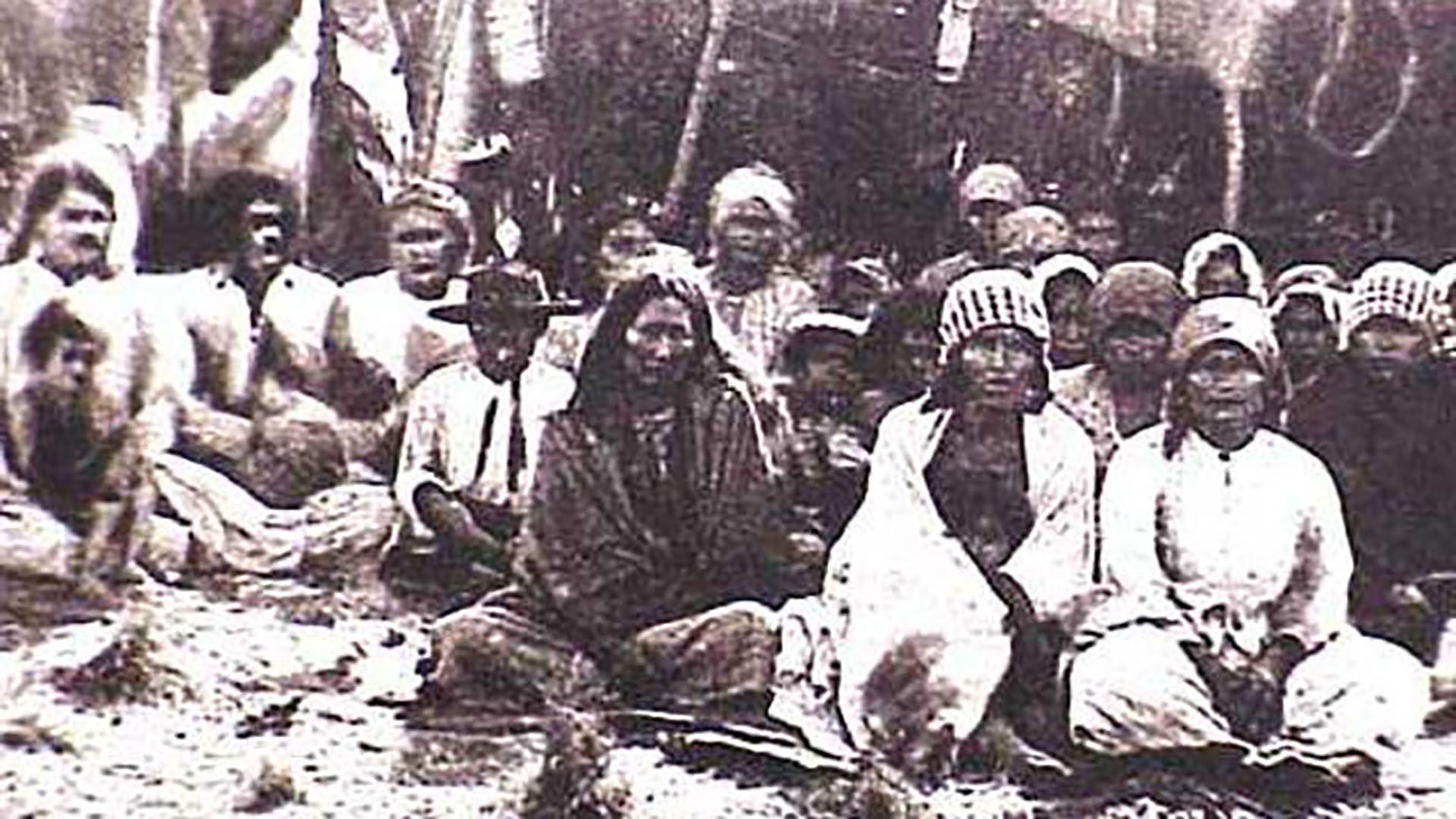
The Napalpí Massacre was the shooting of more than 400 members of the Qom and Moqoit ethnic groups by state forces and settlers of the then-national territory of Chaco, on July 19, 1924.
The massacre was committed by police forces, with the participation of civilians, under Governor Fernando Centeno, who reported to President Marcelo de Alvear of the Radical Civic Union (UCR).
The testimonies made contributions on the functioning of and its disciplining objective towards
The indigenous communities of the area were confined in the reduction of Napalpí and were exploited as a labor force. Their working and living conditions led to protests that were quashed July 19, 1924, by an armed group of police officers and settlers and presumably members of the National Army. Argentine press reports claim Gendarmería troops were involved. Read More...