Astronomers Detect Closest Example Yet Of Black Hole Devouring Star
-
 Loading...
 - Mia Vergara
- 01 May 2023
- 71 Views
- 0 Like
- 0 Comment
Once every 10,000 years or so, the center of a galaxy lights up as its supermassive black hole rips apart a passing star. This “tidal disruption event” happens in a literal flash, as the central black hole pulls in stellar material and blasts out huge amounts of radiation in the process.
Astronomers know of around 100 tidal disruption events (TDE) in distant galaxies, based on the burst of light that arrives at telescopes on Earth and in space. Most of this light comes from X-rays and optical radiation.
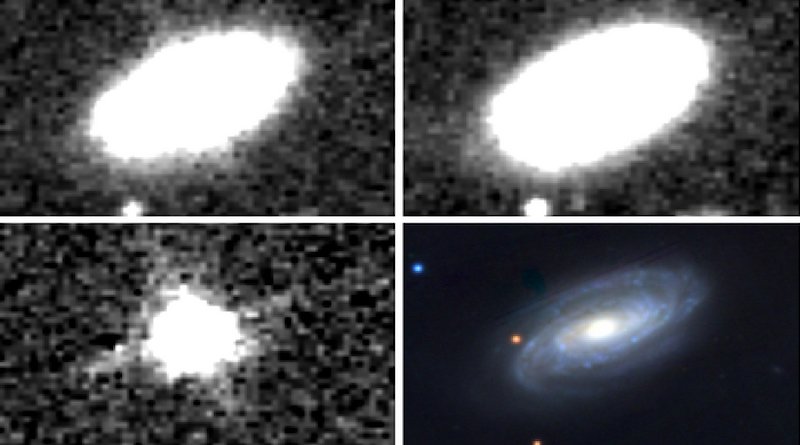
MIT astronomers, tuning past the conventional X-ray and UV/optical bands, have discovered a new tidal disruption event, shining brightly in infrared. It is one of the first times scientists have directly identified a TDE at infrared wavelengths.
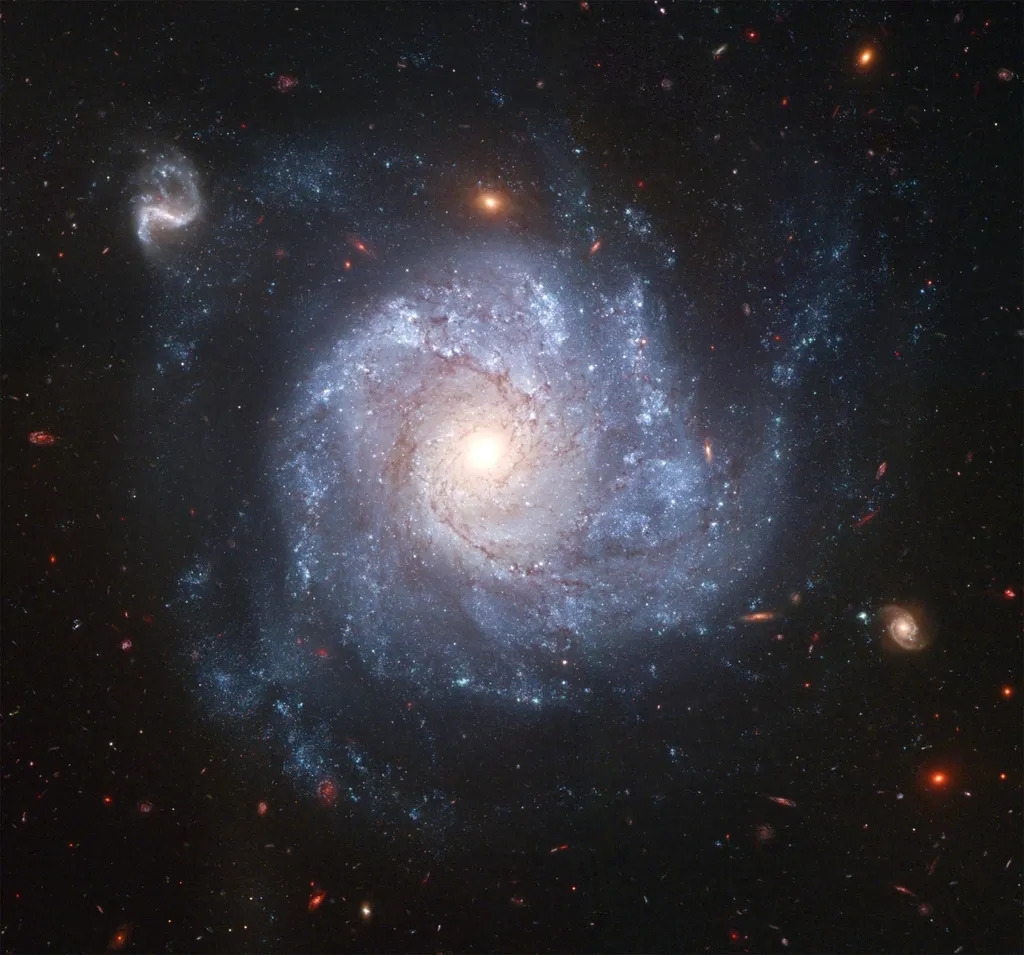
What’s more, the new outburst happens to be the closest tidal disruption event observed to date: The flare was found in NGC 7392, a galaxy that is about 137 million light-years from Earth, which corresponds to a region in our cosmic backyard that is one-fourth the size of the next-closest TDE.
This new flare, labeled WTP14adbjsh, did not stand out in standard X-ray and optical data. The scientists suspect that these traditional surveys missed the nearby TDE, not because it did not emit X-rays and UV light, but because that light was obscured by an enormous amount of dust that absorbed the radiation and gave off heat in the form of infrared energy.
The researchers determined that WTP14adbjsh occurred in a young, star-forming galaxy, in contrast to the majority of TDEs that have been found in quieter galaxies. Scientists expected that star-forming galaxies should host TDEs, as the stars they churn out would provide plenty of fuel for a galaxy’s central black hole to devour. But observations of TDEs in star-forming galaxies were rare until now. Read More..