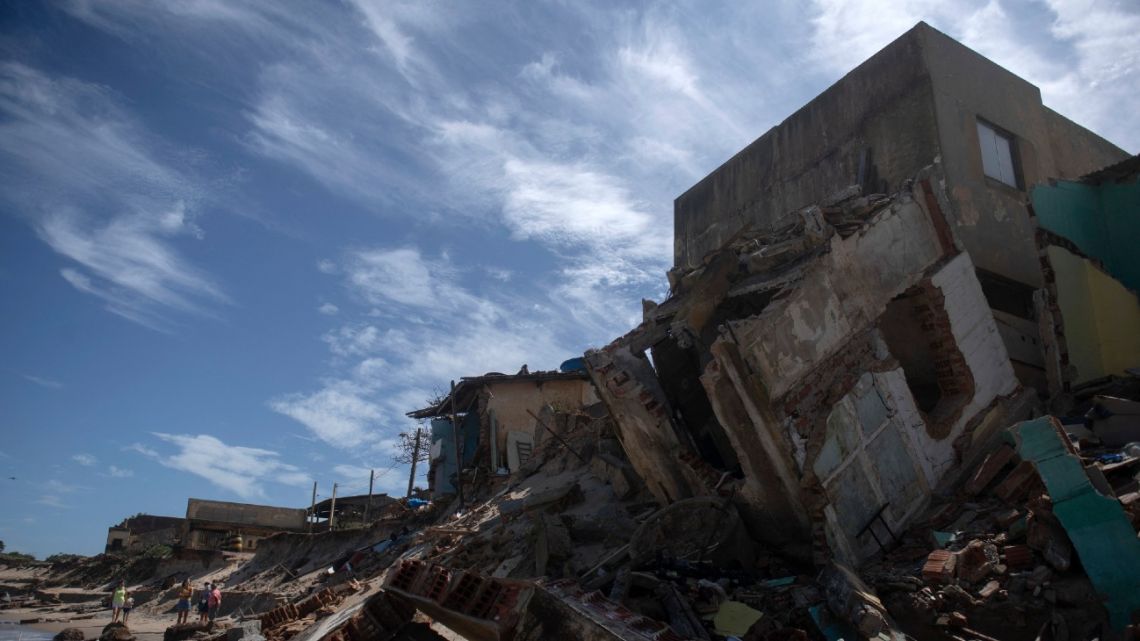
Atafona: the Brazil resort town disappearing into the sea
-
 Loading...
 - Lynne Jameson
- 23 Feb 2022
- 409 Views
- 0 Like
- 0 Comment
Vultures roam the sand in the Brazilian resort town of Atafona amid the ruins of the latest houses destroyed by the sea, whose relentless rise has turned the local coastline into an apocalyptic landscape.
The Atlantic Ocean advances an average of six metres (nearly 20 feet) a year in this small town north of Rio de Janeiro, which has long been prone to extreme erosion – now exacerbated by climate change.
The sea has already submerged more than 500 houses, turning the once idyllic coastline into an underwater graveyard of wrecked structures.
One of the next to lose his home will be João Waked Peixoto.
Walking through the jumbled rubble of what was once his neighbours' house, he looks at what is left: a fragment of a blue-painted room strewn with tattered magazines, a bicycle and other remnants of life.
"When will we have to leave? That's an unknown," he says. "The sea advanced three or four meters in 15 days. Our wall might not last until next week."
Waked Peixoto's grandfather built the house as a vacation home, a beachfront getaway with large rooms and a garden.
During the coronavirus pandemic, Waked Peixoto and his family moved in full-time.
But it now looks inevitable the house will be swallowed by the sea.
"It will be a shame to lose this house, because it holds so many memories of my whole family," he says.
Extreme erosion
Atafona, a town of some 6,000 people, has long suffered from extreme erosion. It is part of the four percent of coastlines worldwide that lose five meters or more every year.
The problem is being exacerbated by global warming, which is causing sea levels to rise and making currents and weather patterns more extreme, says geologist Eduardo Bulhões of Fluminense Federal University.
But Atafona has had a "chronic problem" for decades, he says.
The Paraíba do Sul river, whose mouth is in Atafona, has shrunk because of mining, agriculture and other activities that drain it upstream. Read More...