Australia has a new left-leaning government: Here's what you need to know
-
 Loading...
 - jackson sienna
- 23 May 2022
- 295 Views
- 0 Like
- 0 Comment
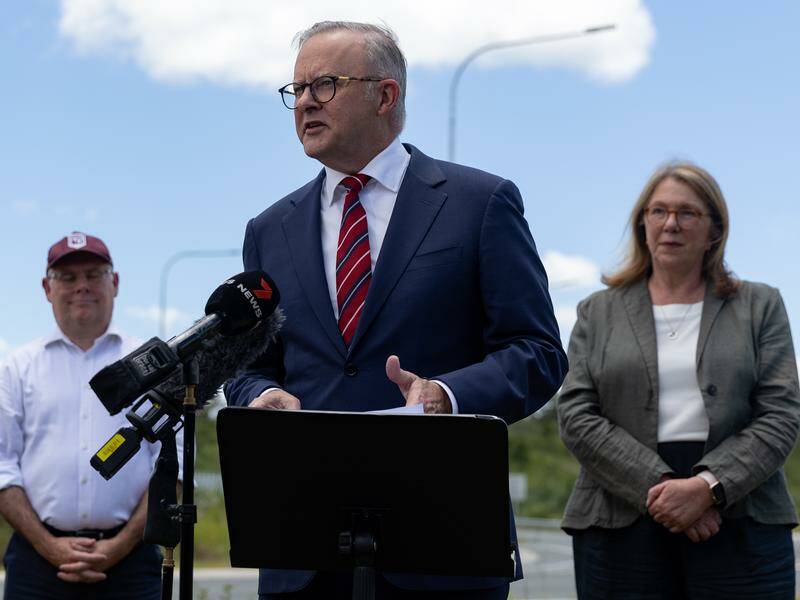
New Labor Prime Minister Anthony Albanese was sworn in on Monday before his departure to Japan for his first meeting with allies including US President Joe Biden.
For much of its history, Australian politics has been dominated by the two major parties: the Liberals on the center-right and Labor on the center-left. But this election threw all the balls up in the air, tossing more than a few to minor parties and Independents who were fed-up with the two-party system.
Here's what we learned.
Australia's coming in from the climate cold
Election results showed a strong swing towards Independents who campaigned on issues relating to the climate.
The candidates -- many first-time entrants to politics -- were seeking cuts to emissions of up to 60% -- more than twice as much as promised by the ruling conservative coalition (26-28%) and also more than Labor (43%). Known as teal candidates, they targeted traditionally blue Liberal seats with more green-leaning policies.
"Millions of Australians have put climate first. Now, it's time for a radical reset on how this great nation of ours acts upon the climate challenge," said Amanda McKenzie, CEO of the research group the Climate Council, on Saturday's election result.
Australia has long been known as the "lucky country," partly due to its wealth of coal and gas, as well as minerals like iron ore, which have driven generations of economic growth.
But it's now sitting on the frontier of a climate crisis, and the fires, floods and droughts that have already scarred the country are only expected to become more extreme as the Earth warms.
The ruling conservative government had been called a climate "holdout" by the United Nations Secretary-General after outlining a plan to get to net zero by 2050 by creating massive new gas projects. Incumbent Scott Morrison had said he would back a transition from coal to renewable energy, but had no plans to stop new coal projects.
Labor Party leader Anthony Albanese promised to end the "climate wars," a reference to the infighting that has frustrated any efforts to push for stronger action on climate over the past decade and even cost some prime ministers their jobs.
Labor has pledged to reach emission net zero by 2050, partly by strengthening the mechanism used to pressure companies to make cuts.
But research institute Climate Analytics says Labor's plans aren't ambitious enough to keep the global temperature rise within 1.5 degrees Celsius, as outlined in the Paris Agreement.
Labor's policies are more consistent with a rise of 2 degrees Celsius, the institute said, marginally better than the coalition's plan.
To speed up the transition to renewable energy, Labor plans to modernize Australia's energy grid and roll out solar banks and community batteries. But despite its net zero commitment, Labor says it'll approve new coal projects if they're environmentally and economically viable. Read More…