Awesome High-Speed Sports Photography Tips and Tricks
-
 Loading...
 - Penelope Reynolds
- 14 Jul 2022
- 110 Views
- 0 Like
- 0 Comment
Capturing a bullet piercing through an apple, glass shattering mid-air, a balloon popping, a droplet breaking the surface tension of water, or a lightning bolt lighting up a dark, stormy sky, are just some of the most fascinating photos that this photography type has produced over the years.
But do you capture a subject that moves from point A to point B in a quarter of a second? How do you make sure that you don’t miss the best part of a high-speed event? How can you avoid blurry images and overexposed shots?
Sports photographers who find the methods of high-speed photography useful to their field have asked the same questions.
In this article, we’ll focus on sports photography and how the techniques of high-speed photography can help beginners and professionals come up with smart and practical tips to capture the most glorious moments in sports.
Sports Photography Tips Using High-Speed Photography Techniques
Sports photography, from its name, focuses on capturing live sports events. It means that the subjects move unpredictably, and they move fast. You are also going to deal with erratic light conditions.
In this section, we’ll talk about some of the techniques used in high-speed photography that you can apply in capturing sports photos.

1. Composition
Almost all sports events are held in large stadiums. Remember that you will be dealing with the chaos of the crowd and the unpredictability of the players’ movement. How will you be able to deliver photos with good composition?
High-speed photographers face the same problems and they counter similar uncertainties of these unpredictabilities through smart, careful planning.
Plan a shooting position where you can set up your tripod and fix your camera to a specific spot where you can catch the main game highlights. Your spot should be near enough to get a clear shot of the action but far enough to get out of the way from foot traffic.
To get a good composition, you must be familiar with the sports and their signature moves and formation. That way, you can anticipate actions and events. More importantly, make sure your location allows you to focus on your subject’s faces, their actions, or their equipment.

2. Lens, Focus, and Background
Telephoto and zoom lenses really come in handy, especially for sports events held in large outdoor spaces. For starters, activate a narrow depth of field to focus on the players. Also, practice panning to give your subjects room for movement and possibilities of actions.
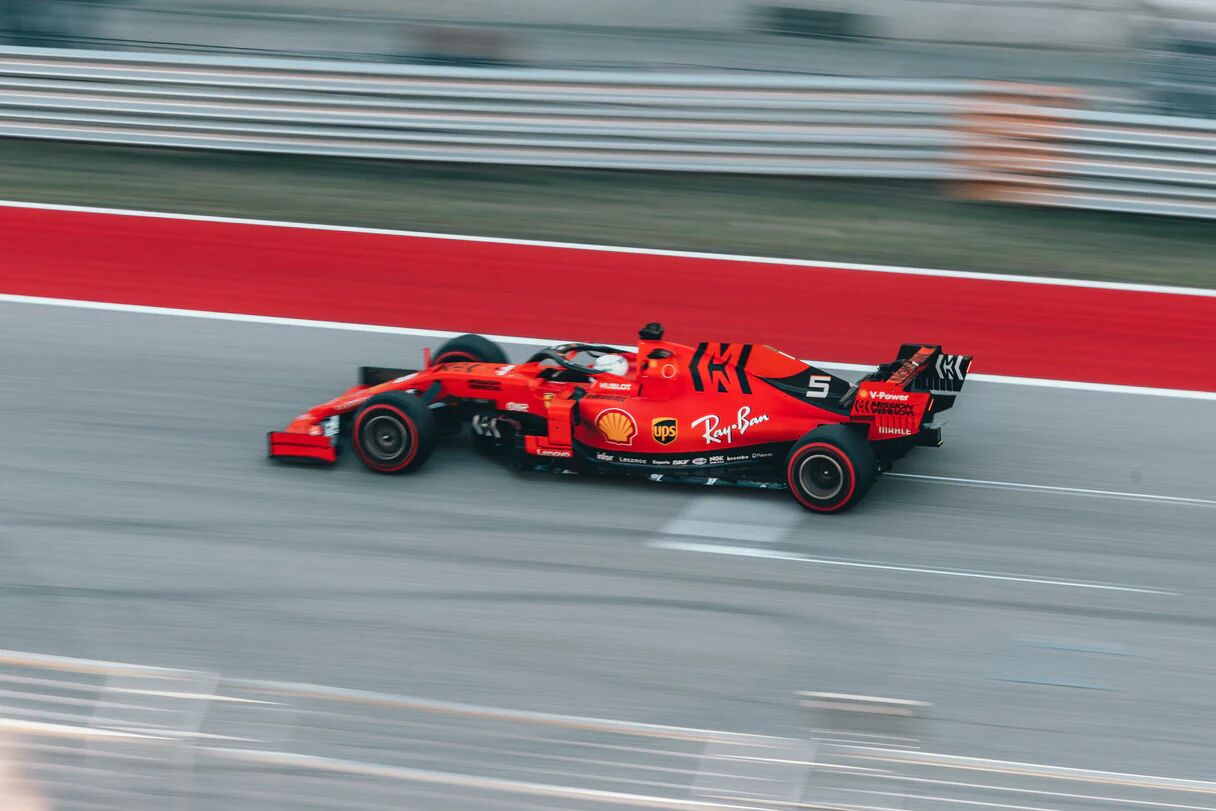
To get interesting backgrounds, you can use the colorful palettes from a blurred-out crowd. There are other elements that you can use, such as LED screens, jumbotrons, flashing scoreboards, and other equipment that will create a more dynamic image. You can also use motion blur to your advantage, to convey a sense of speed.
If you want to capture more unique photos and get away from the cliche, you should try playing around with the composition, angle, and subject matter. You may experiment with black and white photography to add drama and intensity to your images.

3. Shutter Speed
The shutter speed determines the success or failure of high-speed sports photography. You may have the right camera equipment, the best composition in mind, and the correct settings for the lighting, but are you fast enough to click the shutter to capture a millisecond event?
Humans don’t have fast enough reflexes for our brain to signal our body to move and predicting movement can only do so much. The good news is that high-speed photographers can tell you a thing or two about overcoming these challenges using the MIOPS high-speed camera trigger.

4. Using MIOPS Smart Camera Trigger for High-Speed Sports Photography
As established in earlier sections, sports photography and high-speed photography have many things in common. One of these is their dependence on how fast you can activate your camera’s shutter to capture extremely fast events and movements. Both can accomplish this using external camera triggers.
The MIOPS Smart+ camera trigger, aside from providing a remote trigger function to DSLR cameras, features different capturing modes and built-in sensors that make capturing complex, unpredictable, and intimidating sports images possible. Read More…