BBC UN appeal: Stop Iran harassing Persian service staff
-
 Loading...
 - Monike Theodote
- 12 Mar 2021
- 1226 Views
- 0 Like
- 0 Comment
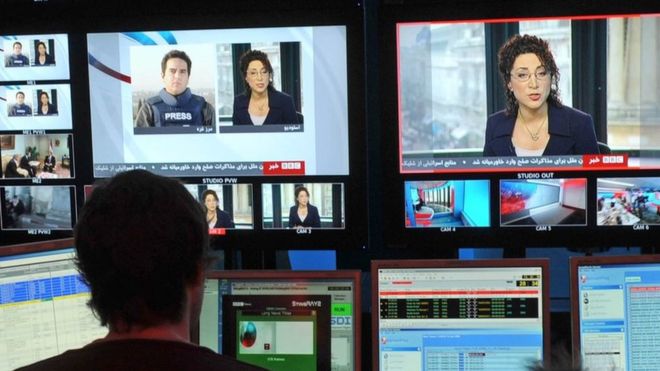
The BBC is making an unprecedented appeal to the UN to stop Iran from harassing its Persian service staff in London and their families in Iran.
It says Iran has stepped up a campaign of intimidation, including threats, arrests of relatives and travel bans.
Iran began targeting the BBC's Persian service after the disputed 2009 presidential election, when Tehran accused foreign powers of interference.
The appeal will be made at a meeting of the UN Human Rights Council in Geneva.
Fear of arrest
In October last year BBC Persian journalists gathered at a memorial service for someone most had never met. They were there to support a colleague whose father had just died in Iran. He had received a call a week before to say his father had been taken ill.
In usual circumstances he might have jumped on a plane and rushed to the hospital to be with his father.
But BBC Persian staff are unable to travel back to Iran for fear of arrest, so the best he could do was to contact his father via the Skype messaging service.
A week later his father died. Unable to attend the real memorial service in Iran where people who knew his father could share their grief and memories, our colleague had to make do with the compassion of workmates over pastries in a room in Central London.
It is an all too familiar story for BBC Persian, where more than 30 staff have lost parents and been unable to say goodbye in the past decade.
Criminalised by the Iranian government as subversives or foreign spies, BBC Persian journalists live in dread of that phone call - the one that tells them a family member is ill or dying, or that someone they know and love has been called in for questioning.
Death threats
Another BBC Persian journalist received demands via Skype that she stop working for the broadcaster - or at least agree to spy on her colleagues - in return for the freedom of her 27-year-old sister.
The sister was taken by security agents during a night raid on her father's home in Tehran, and was held in Iran's notorious Evin prison.
"When I said no, they kept my sister in solitary confinement for 17 days," she said. She recorded the conversations with the intelligence agents.
Another young female presenter at BBC Persian television was sent an anonymous email demanding that she too stop working for the corporation. Those making the demands said they knew which school her 10-year-old son attended.
A senior producer's elderly mother was called in for questioning in Tehran by one of the many intelligence agencies.
She was told that her son could have a car accident in London if he continued working for the BBC. She took the threat very seriously - as did the counter-terrorism police in London, who immediately made arrangements for his protection.
More than 20 Persian service journalists or family members have received death threats - a number of which have warranted police protection in the UK.
After years of harassment and persecution of its staff, the BBC is now appealing to the international community by taking its complaint directly to the UN.
"The BBC is taking the unprecedented step of appealing to the United Nations because our own attempts to persuade the Iranian authorities to end their harassment have been completely ignored," said BBC Director General Tony Hall.
The call comes after the latest move by Iran to escalate its campaign against BBC Persian service journalists.
It has accused 152 current and former staff and contributors of "conspiracy against national security" and initiated criminal investigations. Iran has also slapped an asset freeze on many of the journalists.
UN Secretary General Antonio Guterres has called on Iran to cease all legal action against the BBC staff and their families, and against "independent journalism, whether affiliated to the BBC or not".
An estimated 18 million Iranians, a quarter of the population of Iran, regularly use the BBC's Persian service online, on radio or on satellite television. Some 12 million people regularly watch its TV programmes, which include news, current affairs and entertainment.
"Iranians are turning to BBC Persian in huge numbers because they cannot get reliable and impartial news and analysis from the Iranian media which is heavily censored," said Rozita Lotfi, head of BBC Persian.
In 2009, in the aftermath of the presidential elections, millions of Iranians took to the streets claiming their votes had been stolen.
Allegations of fraud led to months of unrest, which the authorities blamed on the US, the UK and other Western governments - and the BBC.
The BBC correspondent in Tehran at the time, Jon Leyne, was expelled along with other journalists working for the international media. Iran's harassment has continued ever since.
In October 2017, the UN's special rapporteurs on freedom of expression and the human rights in Iran wrote to Iranian Foreign Minister Mohammad Javad Zarif raising the issue of BBC Persian staff.
They asked him to explain what evidence underpinned the accusation of conspiracy against national security brought against the journalists. They also asked him to explain how working for the BBC amounted to a threat to national security. More than four months later, the letter remains unanswered.
So far, Iran has not responded to the accusations of harassment. Where British diplomats have raised the issue, their Iranian counterparts have said they are investigating.
"This is not just about the BBC as we are not the only media organisation to have been harassed or forced to compromise when dealing with Iran," said Tony Hall.
"In truth, this story is much wider: it is a story about fundamental human rights."