Belgian Climate Scientists Grow Pears That Could Shape The Future Of Cultivation
-
 Loading...
 - Bruce Stevens
- 14 Oct 2024
- 53 Views
- 0 Like
- 0 Comment
In the heart of Belgium’s pear-growing region in Limburg, a groundbreaking experiment is underway that could shape the future of European fruit cultivation. Within 12 transparent domes perched atop a nature park, researchers are simulating the climate of 2040 to assess how global warming will impact the growth and quality of pears.
The project, led by Francois Rineau, an associate professor at the University of Hasselt, aims to understand how increased heatwaves, erratic rainfall patterns, and overall temperature rises will affect European fruit production. "We expect more droughts, floods, and higher temperatures," said Rineau, explaining the importance of preparing growers for these challenges.
Early Results: Resilience with Caveats
The first harvest from 2023 has provided cautious optimism. While climate simulations suggest that Belgian pears may not experience severe declines in quality, there are notable shifts in the ecosystem's behavior. In warmer conditions, the growing season starts earlier, and the ecosystem appears to absorb more CO2, indicating a shift in environmental dynamics.
However, the scientists emphasize that a single year of data isn’t enough to capture the full spectrum of unpredictable climate events, such as extreme heat or storms, which could significantly disrupt future harvests. The three-year experiment, which includes three harvest cycles, aims to provide a more comprehensive picture.
The Impact of Warmer Climates on Pears
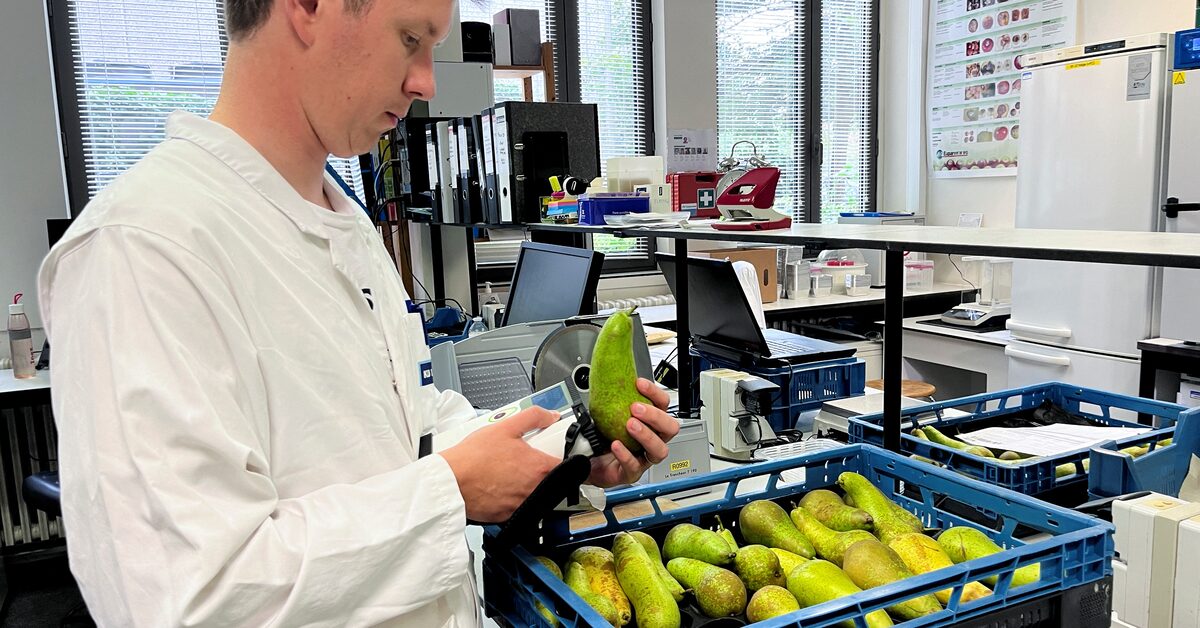
Dorien Vanhees, a researcher at the Flanders Centre of Postharvest Technology (VCBT), is studying the characteristics of pears grown under 2040 climate conditions. "With higher temperatures, pears tend to be softer and contain more sugar," Vanhees noted.
This is a mixed result for growers. While sweeter fruit may appeal to consumers, softer pears pose challenges for long-term storage, reducing the quantity available for sale. As European pear growers have already faced difficulties from floods, hailstorms, and drought, the trend toward softer fruit raises further concerns about sustainability and profitability.
A New Reality for European Growers
This experiment highlights how climate change is already affecting fruit production patterns across Europe. As unpredictable weather events increase, the industry will need to adopt new strategies, including advanced irrigation and adjusted storage techniques, to maintain yield and quality.
With two more harvests remaining in the study, the researchers hope to offer more insights into how European fruit growers can adapt to a warming climate. The future of Belgian pears—and the industry as a whole—may depend on such innovative research, ensuring that agriculture remains resilient in the face of a changing environment.