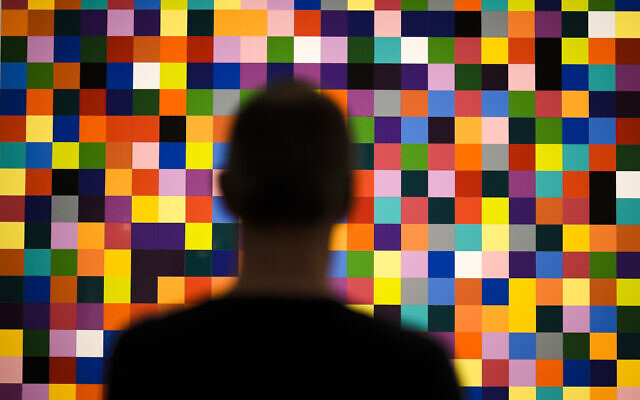
Berlin museum displays works by artist who grapples with Germany’s Nazi past
-
 Loading...
 - Ahmad Salah
- 17 Apr 2023
- 76 Views
- 0 Like
- 0 Comment
Basis of Gerhard Richter paintings are 4 abstract photos secretly taken in 1944 by Jewish prisoners at Auschwitz-Birkenau extermination camp, who risked their lives doing so
A new show of works by one of Germany’s most famous living artists, Gerhard Richter, opened at Berlin’s Neue Nationalgalerie museum on Friday.
“Gerhard Richter. 100 Works for Berlin” shows for the first time the long-term loan from the artist’s foundation. At the center of the exhibition is Richter’s 2014 series “Birkenau,” the result of the artist’s decades-long engagement with Germany’s Nazi past and the Holocaust.
The four large canvases of the Birkenau series are abstract paintings with many gray and black surfaces, but also some red and green dashes.
The basis of the paintings are four photos secretly taken in 1944 by Jewish prisoners at the Auschwitz-Birkenau extermination camp, who risked their lives doing so. Richter transferred the four photographs with charcoal and oil onto the canvas and then gradually painted over them with oil paint until their content was no longer visible.
Richter’s process of abstraction was based on his conviction that he could not do justice to the incomprehensible horror of the Holocaust with direct depiction.
During the Holocaust, the Nazis and their henchmen murdered 6 million European Jews.

In the gallery across from the Birkenau paintings is a large mirror which not only reflects the four works, but also visitors who thus become part of the installation.
“I think that is what makes this work so central and so intense, that you as a visitor are really questioned about your responsibility during the time of Nazis and your position on the Holocaust,” said Maike Steinkamp, the curator of the exhibition. Read More…