Best cameras for astrophotography in 2022
-
 Loading...
 - Adeline Walker
- 12 Apr 2022
- 433 Views
- 0 Like
- 0 Comment
Astrophotography has rapidly become more popular among hobbyists and professionals alike. Aided by the recent lockdowns of the global pandemic, three visible near-earth comets, and the highly publicized achievements of NASA and the ESA, people have increasingly connected with the idea of photographing space. The best camera for astrophotography is one that allows the capture of detail-rich photos of the night sky while at the same time balancing noise and resolution.
Here are our picks for the best camera for astrophotography in 2022:
- Best overall: Sony a7 III
- Best DSLR: Nikon D850
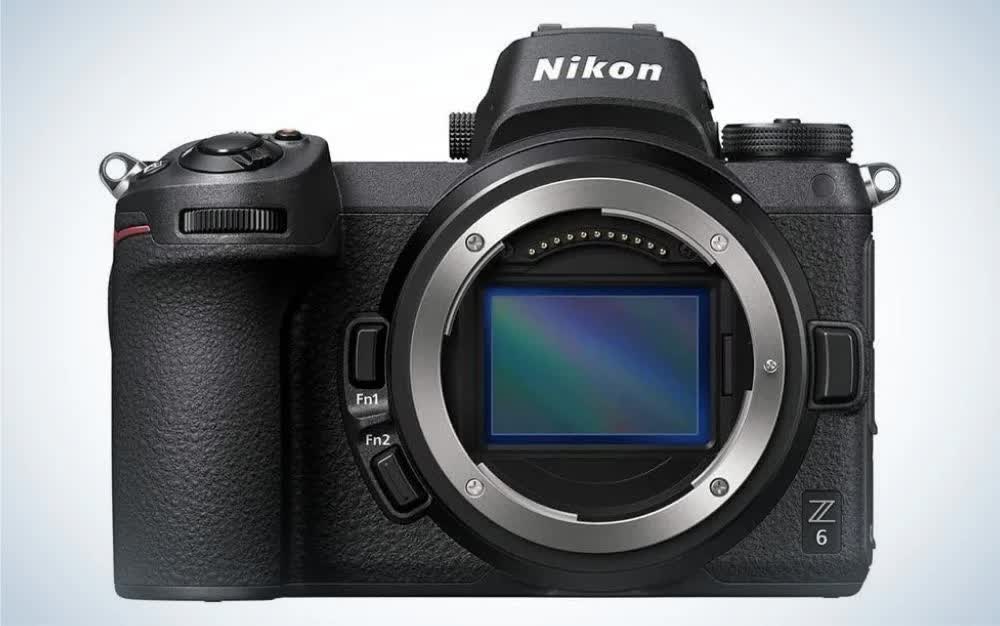
- Best mirrorless: Nikon Z6
- Best for budding astronomers: Fujifilm X-T4
- Best on a budget: Canon EOS 6D Mark II
Things to consider before buying a camera for astrophotography
If your main goal is to take still photos at night, there are a lot of features on modern cameras that will be irrelevant for your pursuit. Marketing will hype up features related to autofocus, extreme ISO ranges, video capabilities, and in-body image stabilization (IBIS), but in practice, these features are inconsequential to astrophotography, so take them with a grain of salt.
Mirrorless vs DSLR
Mirrorless cameras aren’t inherently better than DSLRs for astrophotography. More important to this debate is the actual lens mount on the camera you’re interested in. Sony, Nikon, and Canon have all switched their lens mount type to accommodate the new mirrorless technology. Unfortunately, this means that the newer Z and RF mounts have limited and pricier options than older legacy mounts. So a DSLR might be the better pick if you want a broader selection of potentially less expensive lenses.
Megapixels and sensor size
Generally speaking, cameras with larger sensors outperform those with smaller sensors in low light. But that’s only half of the story. The reason larger sensors generally perform better in low light is because of the ratio of pixels to sensor size, which can be measured by the individual pixel size. Larger sensors have more surface area to place individual pixels, and the larger the individual pixel size, the more efficient it will be at collecting light and dispersing thermals. So the key to low light performance is having a balance between megapixel count and sensor size.
Budget
Cameras that perform well for astrophotography can range from $500 to $3000. The main differences between cameras in this broad spectrum are going are photographer aid features, such as live view zooming, enhanced exposure, backlit buttons, etc. Yes, quality does get better the more money you throw down, but only incrementally. If your main focus is astrophotography, an increase in price doesn’t necessarily mean an increase in quality.
Best overall: Sony a7 III
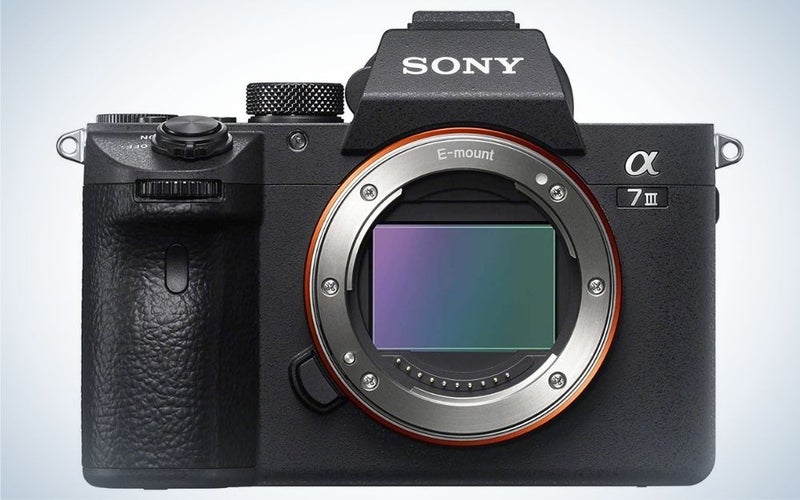
Why it made the cut: The Sony a7 III is the king of versatility with its low light performance, video capabilities, and advanced feature set.
Key Features
- Weight: 1.43 lbs / 650 g
- Sensor: 35.6 x 23.8 mm (Full-Frame) CMOS
- Resolution: 24.2 Megapixels (6000 x 4000)
Pros
- Incredible low light performance
- Advanced features for video and stills
- High dynamic range
- Dual card slots
Cons
- Questionable battery life
- Low resolution compared to the competition
Despite the a7 III not being the newest version (Sony introduced the a7 IVin late 2021), choosy consumers will still have a fantastic experience with this well-rounded mirrorless camera. For one, it will be easier to find stock of the a7 III (thanks to the pandemic). It’s also going to be much less expensive than the new model. And you won’t be missing much buying this older version, as many of the upgrades in the a7 IV wont help in astrophotography, and in the case of the megapixel jump, it might actually hurt it.
The a7 III is a versatile performer that can do it all. Its 24.2 megapixels might seem low for a full-frame camera, but that’s actually going to help it be highly competitive in low-light situations. This camera will exceed expectations in taking both stills and video when paired with a fast lens. Its high ISO performance means you can even capture usable video of the night sky. The a7 III is also very lightweight, meaning it will work just as well atop even the smallest star trackers or timelapse rotators. Couple that with its “Bright Monitoring” feature, which enhances the exposure in live view, and you’ll never again struggle to find compositions on a tracker or tripod.
Best DSLR: Nikon D850
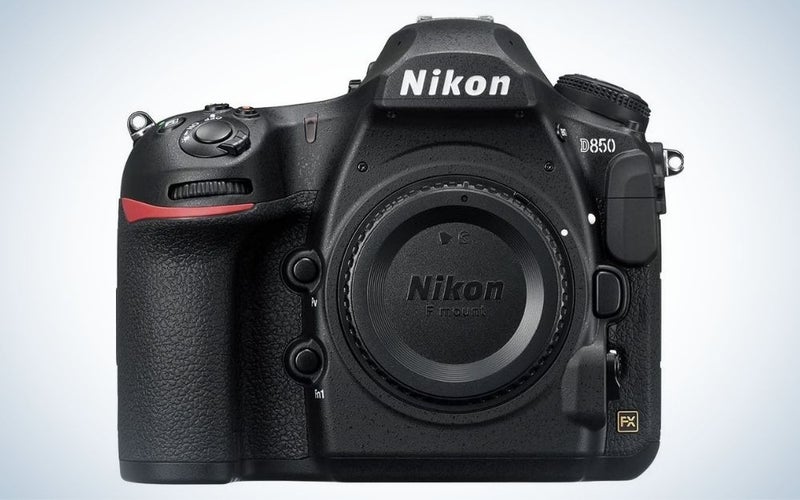
Why it made the cut: The Nikon D850 is a professional workhorse with substantial resolution, sturdy construction, and access to the entire F-mount lens range.
Key Features
- Weight: 2.21 lbs / 1005 g
- Sensor: 35.9 x 23.9 mm (Full-Frame) CMOS
- Resolution: 45.7 Megapixels (8256 x 5504)
Pros
- High resolution
- Exceptional battery life
- Access to F-mount lens range
- Backlit buttons
Cons
- Expensive
- Heavy with a large footprint
The Nikon D850 might be the last great DSLR in production today, and it’s likely the end of a generation of large, substantially robust cameras. In an era where most modern prosumer cameras feel like toys, the D850 stands out as a tool for the most rugged and extreme adventures. Its 45.7 megapixels and lack of an anti-aliasing filter help it achieve details other cameras only dream about. But its largest advantage over the competition is the F-mount. The ability of the D850 to natively support the hundreds of legacy F-mount lenses might be a boon to those who want to offset the cost of this camera by getting some inexpensive glass.
Although high-resolution cameras tend to suffer in low light photography, especially in deep-sky astrophotography, the D850 holds its own inhigh dynamic range, low read noise, and shadow detail at higher ISOs. It also has some pretty nifty features that the competition is lacking. For example, none of the other cameras on this list have backlit buttons. In fact, not many cameras in existence have this feature, which is a big deal if you’re doing a lot of night photography. And then there’s battery life, which will never be an issue when owning the D850. The only real downside to this camera is its size and price. Some consumers may not be able to justify the high cost for a camera system that is conventionally obsolete.
Best mirrorless: Nikon Z6
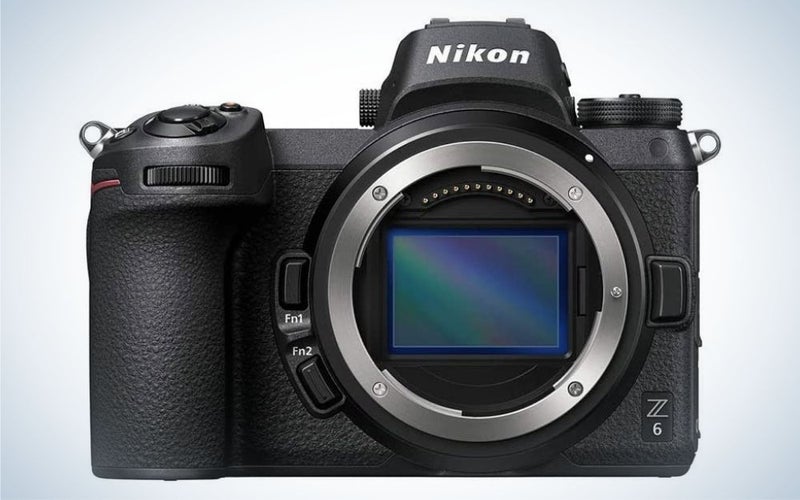
Why it made the cut: The Nikon Z6 strikes a perfect balance between sensible cost, low light performance, and high-end features.
Key Features
- Weight: 1.48 lbs / 675 g
- Sensor: 35.9 x 23.9 mm (Full-Frame) CMOS
- Resolution: 24.5 Megapixels (6000 x 4000)
Pros
- Best in class electronic viewfinder
- Impressive noise performance
- Light with small footprint
- Top mount OLED screen
Cons
- Single memory card slot
- Low resolution compared to competition
Less expensive than its replacement (Z6 II) and better performing than its big brother (Z7),the Z6 is a perfect choice for mirrorless astrophotography. The incremental changes between the Z6 and Z6 II are so minuscule as to wonder why Nikon bothered, especially considering that you can still buy the Z6 brand new. Those thinking that the 46 megapixels of the Z7 or Z7 II are enticing will have to pay nearly double for them, which shows what a bargain the Z6 is. You get a lot of camera for the money.
Nikon really struck gold with this camera. They included a large swath of features that are still impressive today. The viewfinder is ridiculously clear and bright, which is a huge plus as Nikons have traditionally offer a lackluster live view in the past. The top mount display is a welcome addition that makes seeing the settings at night a breeze. But what’s most impressive is that this camera packs a fantastic sensor with a very low noise profile thanks to the smaller megapixel count. It’s an achievement for Nikon to have their first Z mount camera (along with the Z7) still be relevant so many years after its debut. Read More...