Best Cameras For Astrophotography In 2022
-
 Loading...
 - Sergio Felix
- 30 Jun 2022
- 141 Views
- 0 Like
- 0 Comment
You’ll need a healthy dose of self-will and a hardy camera to boot in order to venture out in the sub-zero clear-sky nights to make pictures of the stars. Our buyers guide will take you through what to look for when buying a camera for astrophotography, as well as give some recommendations for the best cameras for astrophotography.
How to choose a camera for Astrophotography:
Ideally, your camera in hand will be weather-sealed, easy to navigate in the dark and even operate with gloved hands. Some high-end cameras feature illuminated buttons which can prove useful, but more importantly you’ll need a way to obtain sharp focusing.
Autofocus is less helpful for astrophotography and most well-practiced astrophotographers use manual focus with live view magnification to be sure, edging a fraction close than infinity to get those white blobs in the sky as small (sharp) as possible. You don’t need to worry about high frame rates in this slow photography discipline, either, so sports cameras are a little overkill.
You’ll want to attach a fast aperture, wide-angle lens to the camera in order to maximise image brightness and capture the night sky in its glory, plus shoot at a relatively high ISO and ideally in RAW format. A full-frame camera will in general perform better in low light than APS-C and micro-four-thirds cameras, plus there are more full-frame wide angle lenses to choose from than APS-C ones.
Otherwise, there’s a balance to strike between high-resolution for large-scale pictures, and lesser resolution for superior low-light image quality – a general rule of thumb for cameras of a similar age. A resolution in the region of 20-30MP is popular.
DSLRs remain the most popular camera type for astrophotography, though mirrorless cameras do have a few advantageous features, which we’ll cover in detail below. Along these lines, we’ve put together the best cameras from the big brands for astrophotography, including budget secondhand options and some with some dedicated astrophotography features that you may well have never heard of before.
Here’s our choice of the best cameras for astrophotography:
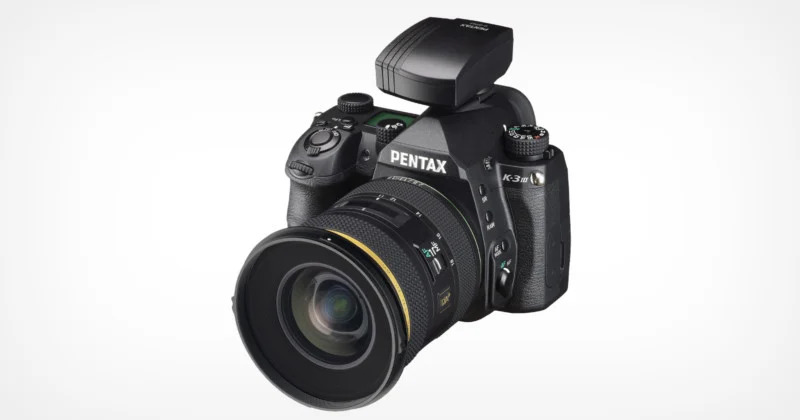
Best Pentax camera for astrophotography: Pentax K-1 II

At a glance
- 36.4MP full-frame sensor
- ISO 100-819,200
- 5-axis shake-reduction and GPS with Astrotracer
- Illuminated buttons
- £1,899 RRP
Everything about the K1-II is perfectly suited to low light workings. It’s a rugged, weather-resistant DSLR with vari-angle screen and illuminated buttons. It’s also a high-resolution 36.4MP full-frame stills-shooter boasting excellent dynamic range and low light performance. But there’s more to the K-1 II that makes it a top choice for astrophotography.
Pentax ingeniously paired sensor-based shake reduction and GPS to create a feature it calls Astrotracer. Astrotracer utilises GPS data to match the position of the stars in the sky and shift the camera sensor to counter for the Earth’s rotation accordingly, and therefore keep those stars nice and sharp rather than trailing. Simply put, no other camera feature designed for astrophotography can maximise image brightness and clarity better than Astrotracer.
The K1-II represented a modest update from the original Pentax K-1 which will also give you everything you need for astrophotography, including Astrotracer, for half the price. If there’s one common point of weakness, it’s limited choice of wide-angle lenses.
Best Micro Four Thirds camera for astrophotography: OM System OM-1

At a glance
- 20MP stacked micro-four-thirds sensor
- Stabilisation up to 8-stops
- IP53-rated weather-proofing
- Starry Sky AF
- £1,999 RRP
The flagship OM System OM-1 offers photographers the best low-light image quality capability of any Micro Four Thirds camera, and some clever features that aid astrophotography to boot. Most astrophotographers go slow and steady with manual focus and tripods, but the latest and greatest tech in the OM System OM-1 camera makes other methods possible, including Starry Sky AF.

Debuted in the E-M1 III, Starry Sky AF uses an algorithm to scan the scene for small points of light (the stars) to acquire focus. It’s night sky focusing made easy, and crucially we’ve found the mode entirely reliable in both speed and accuracy. Otherwise, you have all you need for nighttime adventures; an IP53-rated weather-proofed body, vari-angle touchscreen and the best image stabilisation around. And let’s not forget how much smaller and lighter the Micro Four Thirds system is compared to full-frame – those excellent wide-angle lenses come in at a fraction of the heft. Pixel peep and low light image quality won’t quite compare with full-frame cameras, though. Read More...