Biologists, chemical engineers collaborate to reveal complex cellular process inside petunias
-
 Loading...
 - Thompson Holmes
- 03 Mar 2023
- 56 Views
- 0 Like
- 0 Comment
Once upon a time, prevailing scientific opinion might have pronounced recently published research in Nature Communications by a team of Purdue University scientists as unneeded. Now, climate change implications have heightened the need for this line of research.
Flowers emit scent chemicals called volatile organic compounds (VOCs). Earlier this year, the Purdue team published the paper identifying for the first time a protein that plays a key role in helping petunias emit volatiles. The article was selected for the "plants and agriculture" section of the journal's editors' highlights webpage.
Natalia Dudareva, who led the study, and her longtime collaborator John Morgan had suggested years ago in grant proposals that molecular processes could be involved in VOC emission. Both times the grant reviewers said there was nothing to look for because simple diffusion was the answer.
"We failed twice because people did not believe us," said Dudareva, director of the Center for Plant Biology and Distinguished Professor of Biochemistry. "We decided we have to have proof that it's not simple diffusion, that molecular mechanisms are involved."
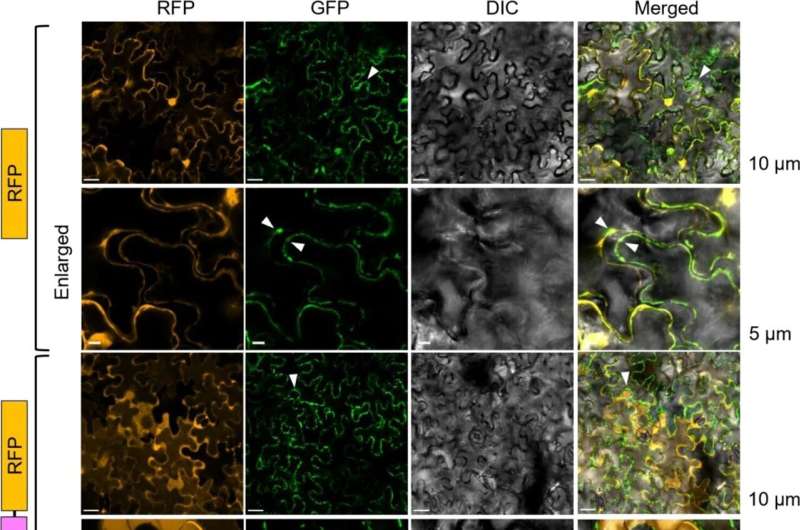
The new work builds on findings that the Dudareva-Morgan collaboration announced in 2015 and 2017 showing how biology helps control the release of scent compounds from plants. The latest paper focuses on how volatiles cross the cell wall, the barrier that separates the cellular interior from a plant's outermost protective layer, the cuticle. Read More…