Bolivia's Skull Festival
-
 Loading...
 - Chenzira Ayman
- 01 Jun 2023
- 71 Views
- 0 Like
- 0 Comment
Welcome to the captivating world of Bolivia's Skull Festival, a vibrant and awe-inspiring celebration that pays homage to life and death. This extraordinary event, deeply rooted in Bolivian culture and traditions, brings together locals and visitors alike to witness a spectacle like no other. In this article, we will delve into the fascinating details of Bolivia's Skull Festival, exploring its history, significance, rituals, and the captivating experiences it offers. Join us on this journey as we uncover the mysteries behind this remarkable celebration.
Bolivia's Skull Festival, also known as "Dia de los Natitas" or "Day of the Skulls," is an annual event held in Bolivia on November 8th. This traditional festival originated from the merging of indigenous rituals with Catholic traditions, creating a unique blend of spiritual beliefs. During this event, people gather to honor their deceased loved ones and seek blessings and protection from the skulls, which are believed to be intermediaries between the living and the dead.
The Origins and Cultural Significance
A Fusion of Indigenous and Catholic Traditions
Bolivia's Skull Festival finds its roots in the indigenous Andean culture, which had a profound reverence for the dead. With the arrival of Catholicism in the region, the indigenous people incorporated their existing customs into the newly introduced religious practices, resulting in the birth of this vibrant festival. This harmonious fusion of indigenous and Catholic traditions has contributed to the uniqueness and cultural significance of Bolivia's Skull Festival.
Honoring Ancestors and Seeking Blessings
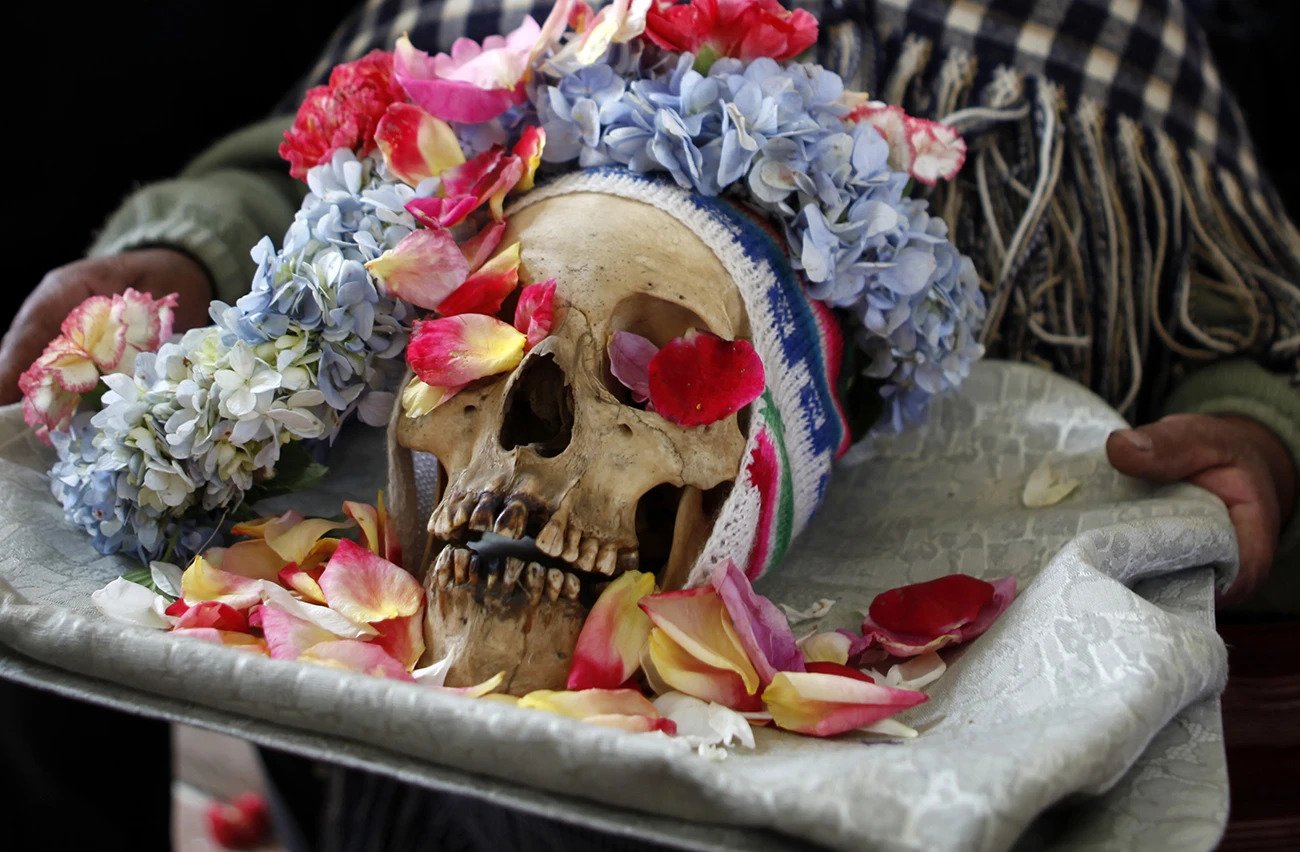
The festival serves as an opportunity for individuals to honor and remember their ancestors. Families bring the skulls of their deceased loved ones, carefully decorated and adorned with flowers, colorful fabrics, and traditional ornaments. These skulls are then placed on home altars or carried in processions, serving as a connection to the spiritual realm and a way to seek blessings, protection, and guidance from the departed souls.
The Rituals and Ceremonies
Skull Processions and Home Altars
A striking feature of Bolivia's Skull Festival is the elaborate processions that take place, showcasing the beautifully adorned skulls. These processions, accompanied by traditional music, dance, and vibrant costumes, create a visually stunning spectacle. The skulls are often paraded through the streets or carried by family members, emphasizing the strong bond between the living and the dead.
Offerings and Prayers
At the heart of the festival are the offerings and prayers made to the skulls. Families bring food, drinks, and symbolic items that were significant to their deceased loved ones, creating a sense of connection and remembrance. Candles are lit, incense is burned, and heartfelt prayers are recited, invoking the spirits of the departed and expressing gratitude for their presence in the lives of the living.
Cemetery Visits and Grave Decorations
Another integral part of Bolivia's Skull Festival involves visiting cemeteries to pay respects to the deceased. Families clean and decorate the gravesites with vibrant flowers, colorful fabrics, and personal mementos, transforming the cemetery into a place of beauty and reverence. These acts of devotion and remembrance strengthen familial bonds and reinforce the belief in the continuity of life beyond death.
FAQs about Bolivia's Skull Festival
Q: Where does Bolivia's Skull Festival take place?
Bolivia's Skull Festival takes place throughout the country, with various regions and cities hosting their unique celebrations. Notable locations include La Paz, Sucre, and Cochabamba, where the festival is particularly vibrant.
Q: Are visitors allowed to participate in the festival?
Absolutely! Bolivia's Skull Festival welcomes visitors from around the world to witness and engage in this cultural extravaganza. It is an incredible opportunity to immerse oneself in Bolivian traditions and gain a deeper understanding of the local culture.
Q: Are there any age restrictions for participating in the festival?
Bolivia's Skull Festival is an inclusive celebration, open to people of all ages. Families often involve their children, instilling in them a sense of heritage and the importance of honoring their ancestors.
Q: Is it necessary to have a personal connection to participate in the festival?
While having a personal connection to the deceased is not a requirement, respecting the significance of the festival and its rituals is essential. Visitors are encouraged to approach the festival with reverence and cultural sensitivity.
Q: Are there any specific customs or attire that participants should follow?
Participants are advised to dress respectfully, as the festival holds deep spiritual and cultural meaning. It is recommended to wear traditional clothing or attire that aligns with the festive spirit. Local markets offer a wide range of vibrant garments and accessories to enhance the experience.
Q: Are there any precautions to be taken during the festival?
As with any crowded event, it is essential to remain cautious and attentive to personal belongings. Additionally, respecting the privacy of families and their rituals is crucial. Always ask for permission before taking photographs and observe any restrictions in specific areas.
Bolivia's Skull Festival stands as a testament to the rich cultural heritage and spiritual beliefs of the Bolivian people. This captivating celebration intertwines indigenous traditions with Catholic customs, creating a profound experience that honors the cycle of life and death. The festival's vibrant processions, adorned skulls, and heartfelt rituals offer participants and spectators a unique opportunity to connect with the spiritual realm and pay homage to their ancestors. Bolivia's Skull Festival is an extraordinary event that embraces the beauty of life's impermanence and reminds us of the enduring connections between past, present, and future generations.