Brazilian galleries showcase the range of artists from South America's biggest country during Frieze New York
-
 Loading...
 - Carlos Costa
- 22 Jun 2022
- 187 Views
- 0 Like
- 0 Comment
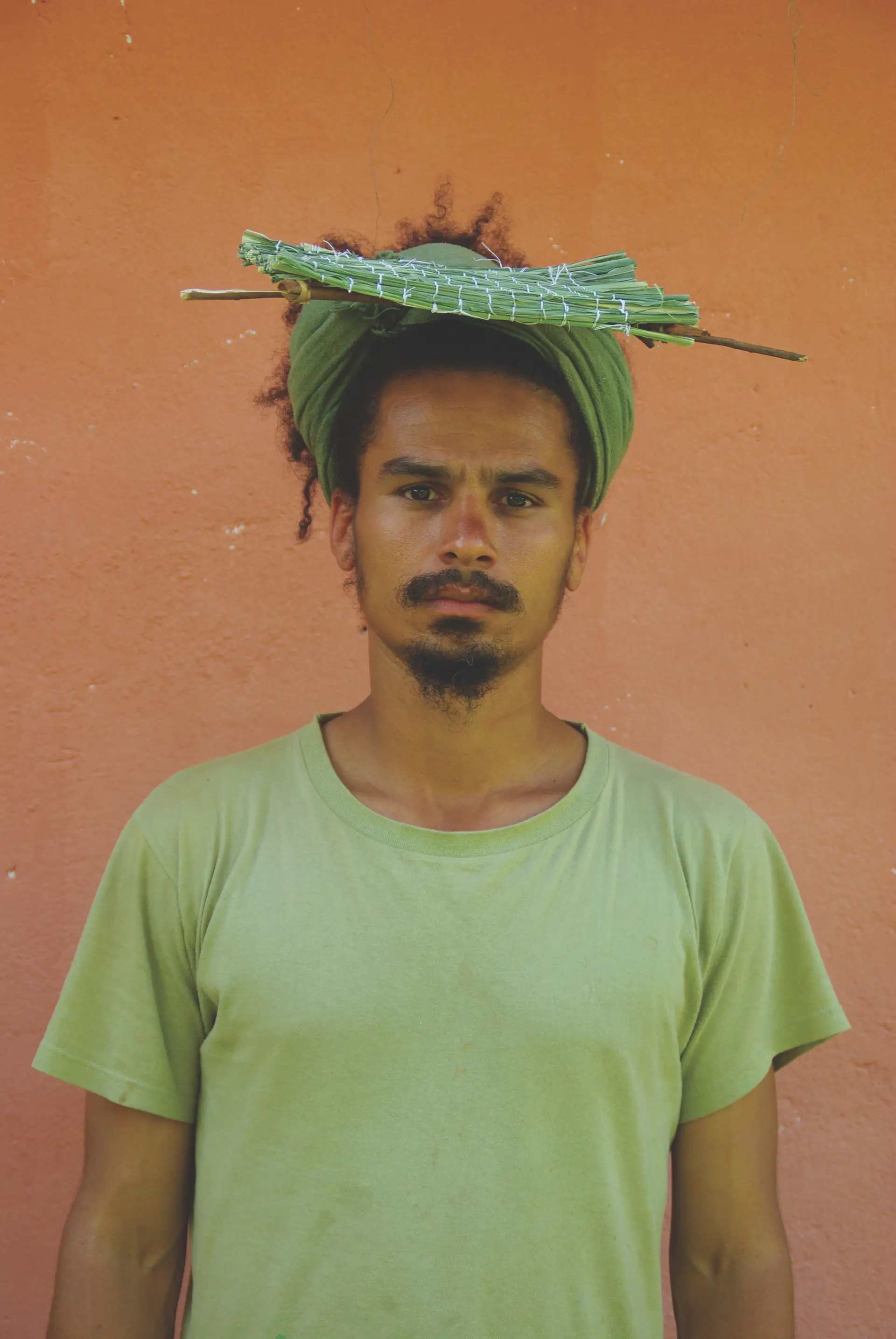
The Brazilian multimedia artist Paulo Nazareth traveled from Minas Gerais to New York on foot in his durational performance a decade ago and washed the dirt from his tired feet with the water from the Hudson River—only to walk back to his homeland to complete his artistic mission, Noticias de America. Nezareth is back in New York this week to inaugurate the Brazilian gallery Mendes Wood DM’s new Tribeca space with his thought-provoking photographs, sculpture and films on belonging, drift and endurance (until 10 June). The space was designed by the New York-based architecture firm Büro Koray Duman.
The work represents “multiple discourses about Americas, including Latin, Indigenous and Hispanic worlds, not only the United States”, says gallery co-founder Matthew Wood of the artist’s approach to border-crossing and meditative search. Nazareth was one of the first artists shown—“a guiding sprit”, the dealer says—when the gallery launched out of a small garage in São Paulo in 2010 before taking over the 1930s house in the front and, in 2017, a 19th-century house in Brussels.
The artist was an obvious choice to christen the North American space in a neighborhood that Wood considers an anthesis to the cookie-cutter, big-box gallery spaces in Chelsea. The dealer’s academic parents were opposed to the commodification of art and, in his teenage years, his visits to the gallery district were necessarily solo trips. “For me, Chelsea still has that association to the mainstream market,” Wood says.
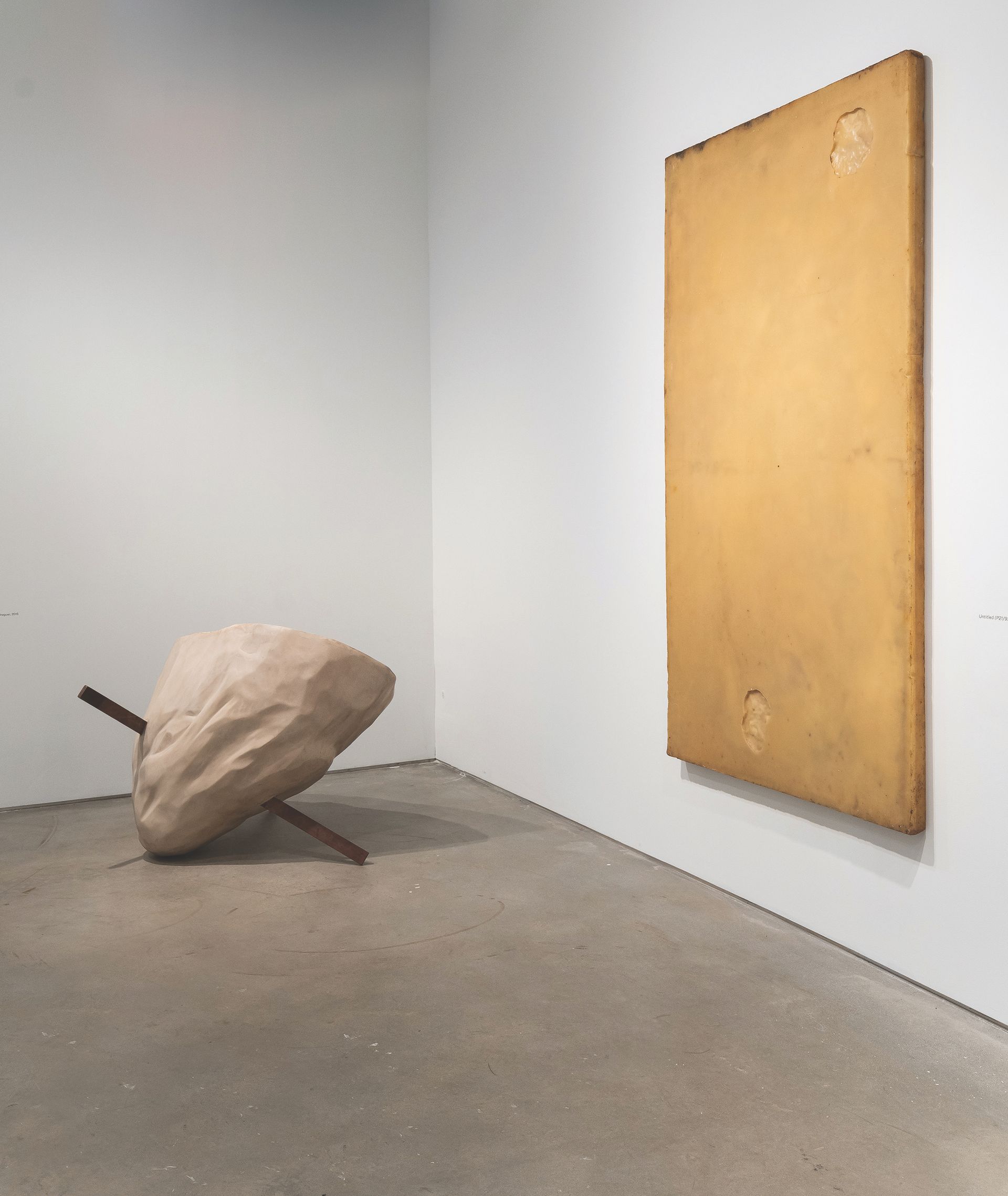
Nezareth’s arrival this time is not an isolated event, as a wave of Brazilian artists conquer the city during Frieze New York. Carlito Carvalhosa’s first posthumous exhibition (until 18 June) at Nara Roesler looks at the seminal Conceptualist’s repertoire between 1987 and his passing last year. Gallery curator Luis Pérez-Oramas delves into the tirelessly experimental artist’s material explorations in wax, porcelain, plaster and mirror to emphasize what he calls “a constant” in the work. Pérez-Oramas had organized the artist’s project at the Museum of Modern Art, Sum of Days, which had made him the first Brazilian to occupy the museum’s prestigious atrium in 2011, as well as inviting Carvalhosa back to the museum for a performance during a Lygia Clark exhibition three years later.
“Carlito believed the images emerge from within the materiality of the work rather than been imposed or inscribed into a tabula rasa,” Pérez-Oramas says, and “his entire work demonstrates that he thought of it as an ideological fiction”.
The vast archive of notes and drawings the artist left behind has been critical in honouring the artist’s legacy in collaboration with the estate spearheaded by Carvalhosa’s widow Mari Stockler. The Guggenheim has recently acquired one of his untitled installations of oil and wax paintings (from 2019-20). Read More...