Artist Glen Hayward on how a space shapes the art it contains
-
 Loading...
 - Amon Mostafa
- 31 May 2022
- 281 Views
- 0 Like
- 0 Comment
For this week’s artist’s Q+A we speak to Glen Hayward, who is exhibiting at City Gallery Wellington.
Tell us a little about yourself...
Both of my parents worked in the rag trade for 40 years, so my lullaby was industrial sewing machines in the house. I guess I took from that, not so much my fashion sense, but an appreciation for form. The ability for a garment, for example, to be broken into components and put together again. I’ve been making sculpture for more than 25 years, always with an interest in what it does for the mind and body in conversation.
I was a resident at the Rita Angus Cottage in 2012. It was an experience intimately connected to two major works in the current City Gallery show (‘I don’t want you to worry about me I have met some Beautiful People’ and ‘Rita Angus used to grow her own vegetables’). Wellington was always a spectre in my life. It was where my father studied fashion at Wellington Polytechnic, around 1970, and worked as a short-order cook at what is now Fidel’s.

What is the exhibition you’re involved with at City Gallery Wellington?
The show is called Wish You Were Here as this refers to a kind of call that all artworks are making – they desire viewers. It is a paradoxical statement and can only be said to someone who isn’t around. I suppose the question is, can we maintain the wish in the presence of the person? It came about because we saw a window of opportunity following Hilma af Klint’s exhibition, which had an otherworldly transcendent beauty to tease out – a sort-of concrete mystery. It has been exciting to work through the structures, attempting to diagram approaches to what could be called the beyond.

Can you talk a bit about the range of artworks on display?
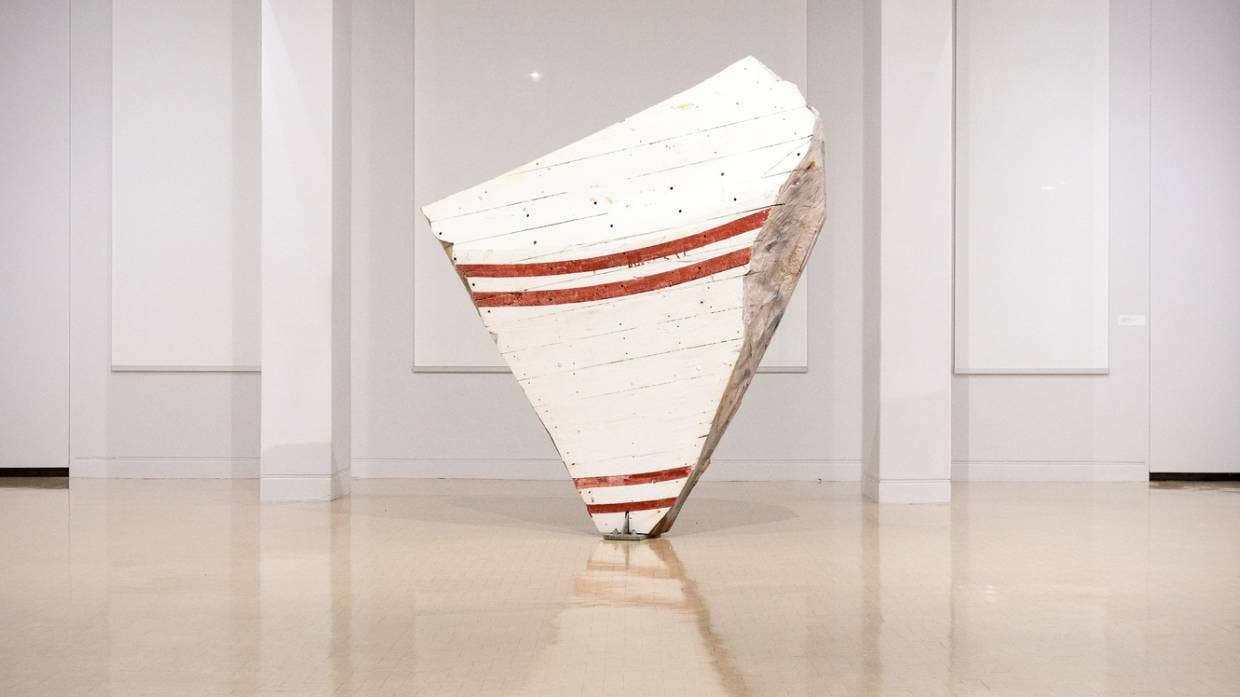
What could strike the viewer when seeing this show is the excess labour and the hidden-ness of this very fact. The sculptures, all in some sense, tease out a lot of hard yakka​ that is then disguised. We chose the works based on their ability to play with the container that is the gallery. In what way could we push and pull and carve the gallery container to suit the works?
What challenges have there been in curating a show that covers such a large period of your professional artistic life?
Aaron Lister, the senior curator at City Gallery and I have worked together for more than 10 years. This is the culmination. I knew I would want to keep putting artworks into the show, part of Aaron’s job is to say no. He also pulled out the initial threads and themes that drive the show.
Walk us through your artistic process – how, and why do you create?
In the studio I make things. Carved, painted, objects from the world. These are in some sense fragments, and it is really in the presence of the exhibition – how they’re displayed and how the space is organised – that they begin to operate. They rely on context and so can look very different, or serve very different ends, when installed.

What do you hope this exhibition makes people think about, or feel?
That is such a good question. It is one that I hope that the viewers have in their heads for themselves when they come to see the exhibition. Read More…