Brics ministers call for rebalancing of global order away from West
-
 Loading...
 - Avril Moulin
- 02 Jun 2023
- 57 Views
- 0 Like
- 0 Comment
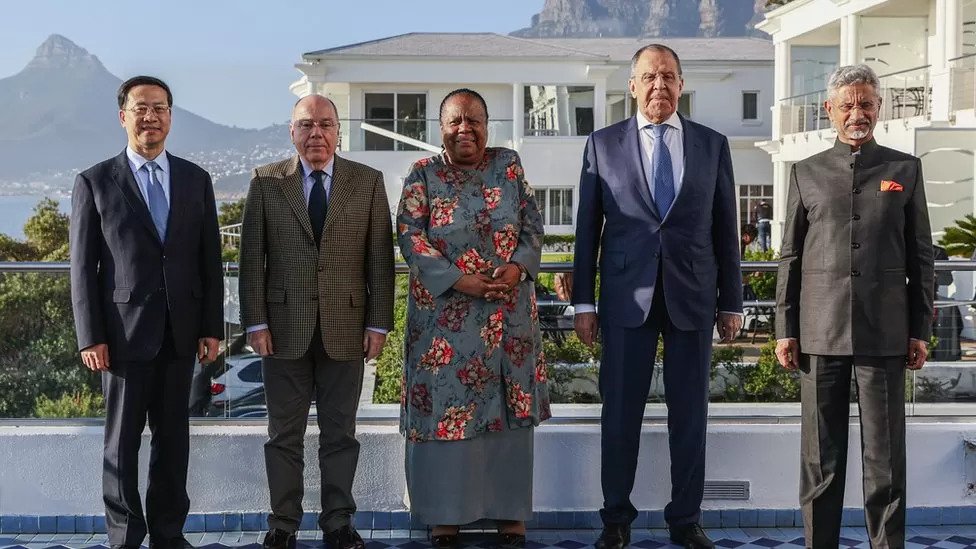
A gathering of foreign ministers from the Brics group of nations recently took place in South Africa, urging a reshuffling of the global order that shifts focus away from Western countries. Naledi Pandor, the Foreign Minister of South Africa, emphasized the group's vision of providing worldwide leadership in a world plagued by geopolitical tensions, inequality, and global insecurity. Brics is an abbreviation for Brazil, Russia, India, China, and South Africa.
Unfortunately, the talks were overshadowed by allegations of Russian war crimes in Ukraine. The International Criminal Court (ICC) has issued an arrest warrant for Russian President Vladimir Putin in relation to these accusations. As a member of the ICC, South Africa would be obligated to arrest Putin if he were to attend the Brics summit scheduled for Johannesburg in August.
Brics is often viewed as an alternative to the G7 group of developed nations, which recently held its annual summit in Hiroshima, Japan. Leaders from Brazil and India also attended the G7 summit. The G7 members have been highly critical of Russia and China, further emphasizing the divergent stance between the two groups.
Collectively, the Brics countries represent over 3.2 billion people, accounting for approximately 40% of the world's population of around 8 billion individuals.
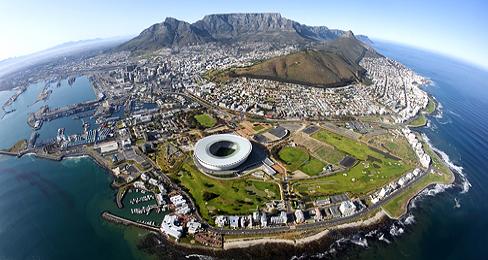
During the initial day of talks in Cape Town, Subrahmanyam Jaishankar, the Indian Minister of External Affairs, emphasized the need for the gathering to send a strong message about the multipolar world and the inadequacy of old approaches to address new challenges. He highlighted economic concentration as a fundamental issue, leaving many nations vulnerable to the influence of a select few.
Mauro Vieira, the Brazilian Foreign Minister, characterized Brics as an essential mechanism for establishing a multipolar world order that acknowledges and fulfills the aspirations of developing nations. Ma Zhaoxu, the Chinese Vice Foreign Minister, suggested that the Brics group could expand its role to provide assistance to developing countries and emerging economies.
Sergei Lavrov, the Russian Foreign Minister, expressed that several countries, including Saudi Arabia, have shown interest in joining the Brics group. However, Lavrov's presence at the event was met with protests, with demonstrators displaying a picture of him accompanied by the words "child murderer." One protester stated that it was distressing to witness South African officials shaking hands with an individual associated with systemic war crimes against Ukrainian children, referring to the ICC case against Putin.
The African National Congress (ANC), South Africa's governing party, has longstanding ties with Russia dating back to the era of white-minority rule prior to 1994. Consequently, the country has refrained from criticizing Moscow's invasion of Ukraine.
Recently, a deputy minister revealed plans to amend South African laws, granting the country the authority to decide whether or not to arrest leaders sought by the ICC. When asked if Putin would be arrested if he attended the August summit, Foreign Minister Pandor stated that the final position would be determined by President Cyril Ramaphosa. Privately, a senior official described the situation as a diplomatic predicament from which the South African government desperately seeks an escape. Moving the summit to another country is reportedly being considered as one potential option.