British scientist finds new species of rare leafhopper in Uganda
-
 Loading...
 - Lule Musisi
- 28 Jan 2022
- 427 Views
- 0 Like
- 0 Comment
A new species of insect has been found in the Ugandan rainforest that belongs to a group of insects so rare that its closest known relative was last seen more than 50 years ago.
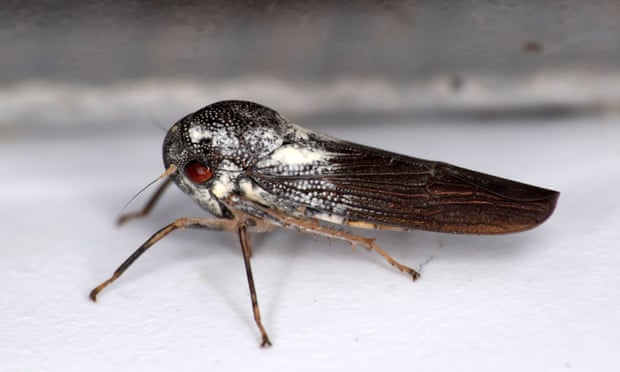
The species of leafhopper, named Phlogis kibalensis, was discovered by a British scientist doing field work in a national park in western Uganda.
The species has a metallic sheen and pitted body surface. It resembles other leafhoppers, particularly in its male reproductive organs, which are partly shaped like a leaf.
Before this discovery, the last recorded sighting of a leafhopper from the Phlogis genus was in Central African Republic in 1969.
Leafhoppers are closely related to cicadas but are smaller. They feed mainly on plant sap and are preyed on by invertebrates including spiders, beetles and parasitic wasps, as well as birds.
“It’s the first time I’ve ever discovered a newly described species. Personally, it’s one of those things you aspire to do as an entomologist and I’ve managed to do it now,” said Dr Alvin Helden of Anglia Ruskin University, who found the species and has published the findings in the journal Zootaxa.
“Phlogis kibalensis is a member of the leafhoppers. Most people are familiar with cicadas, and leafhoppers are related to cicadas. I usually describe them as much, much smaller. They all have the same overall structure; their head end is held slightly higher than their back end and they are quite colourful.
“Leafhoppers of this genus, and the wider tribe, are very unusual in appearance, and are rarely found. In fact, they are so incredibly rare that their biology remains almost completely unknown. We know almost nothing about Phlogis kibalensis, the new species I found, including what plants it feeds on or its role in the local ecosystem.” Read More…