Can Dogs Tell When You Are Lying To Them?
-
 Loading...
 - Ashley Walsh
- 24 Oct 2022
- 73 Views
- 0 Like
- 0 Comment
Recall a time you told a lie. Do you have a secret chocolate stash in your room that your parents know nothing about? Or did you ever tell false stories about your achievements to your friends? Most of us have lied at some point in our lives. It could have been because we didn’t want to hurt someone’s feelings or we perhaps we just didn’t want to face the consequences of failing our exams.
It is impossible to get out of all those lies without being caught. People usually only consider this when doing it to other people, but what about animals? Have you ever wondered if your dogs could tell when you’re lying to them? Would this make you think twice next time before you fake-throw the ball to your dog?
Interestingly, there seems to be a way to test this out in animals.
What is the Sally-Anne Test?
The Sally-Anne test involves a girl named Sally putting a marble inside a basket. Another girl named Anne then takes the marble and puts it inside a box when Sally isn’t there. We would assume that when Sally comes back, she will look into the basket, because she didn’t see what Anne did. This test is used to understand how children apply the concept of different perspectives and logic. Those who pass the test will expect Sally to look into her basket, even though they know the marble is in the box.
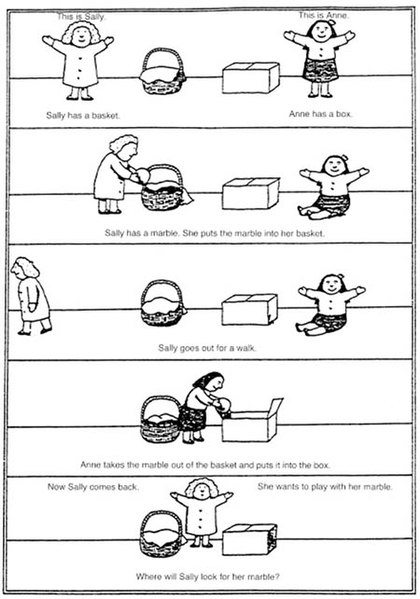
Researchers utilize this same concept in various ways to find out if animals can understand when someone is lying. One can only imagine that dogs might be good at this, as they seem to show a good understanding of human behavior. After all, a dog is “man’s best friend”.
To do this in dogs, scientists often use food as a motivator. They also change other parts of the test, since you can’t “ask” dogs to tell you what Sally thinks. In one study, researchers hid food inside one of two buckets and had person 1 (‘Sally’) show them the right bucket. They then changed things up by making person 2 (‘Anne’) switch the food either in front of Sally or when Sally wasn’t there. A lot of dogs went towards wherever the food was, irrespective of Sally’s advice.
Surprisingly, however, most dogs that followed Sally’s advice only did so if Sally wasn’t aware of this switch.
Accordingly, the authors of the study told Live Science, “Because more dogs refused to follow a human informant who knows where food is (in contrast to one who didn’t know), but still points to the empty cup, we thought the dogs might have understood her suggestion as ‘deceptive’.” Read More…