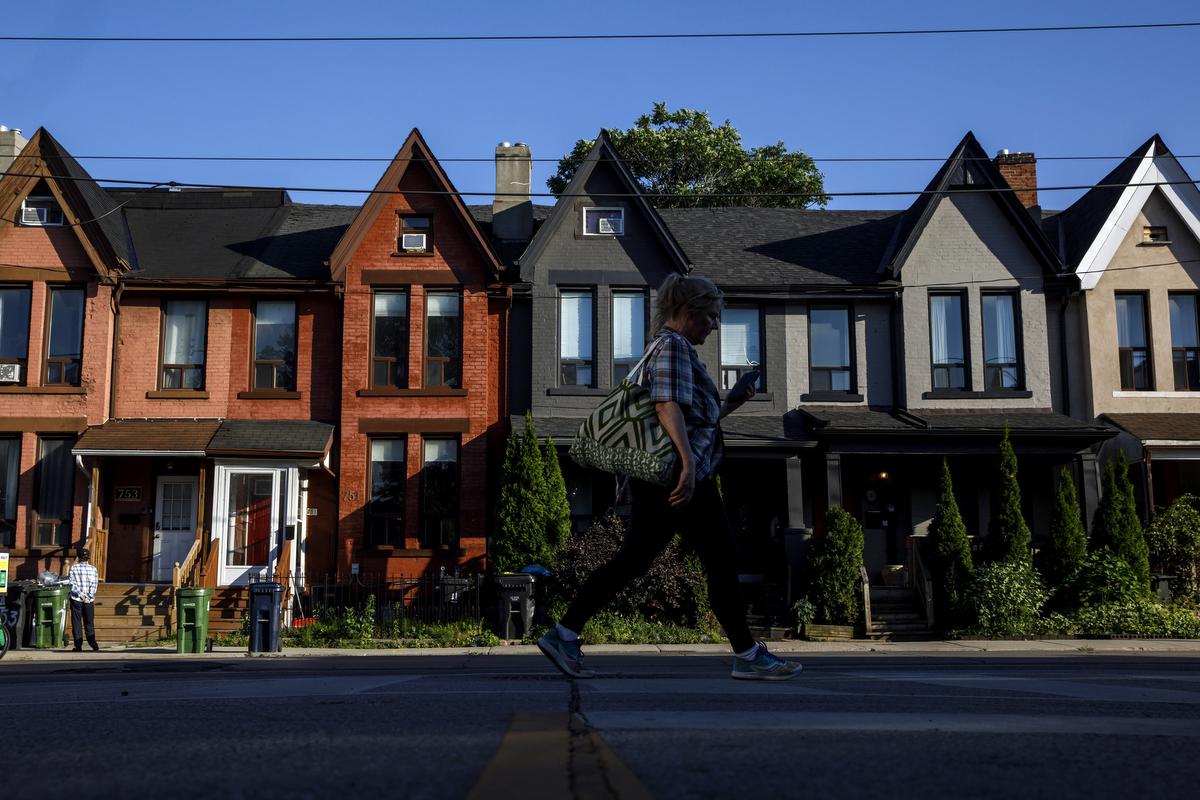
Canada's housing market is experiencing a resurgence after a significant decline in prices
-
 Loading...
 - Samantha Elliot
- 26 May 2023
- 70 Views
- 0 Like
- 0 Comment
Properties in Toronto are being snatched up on the same day they are listed, while open houses in Vancouver are drawing long lines of potential buyers. Surprisingly, homes are now selling for hundreds of thousands of dollars above their asking prices.
The source of this sudden influx of money remains a mystery.
Despite a nearly 16 percent drop in home prices over the span of 11 months, housing in Canada is currently at its least affordable point in over four decades, according to Oxford Economics. This is primarily due to mortgage rates rising at a faster pace than the decline in prices, resulting in a worsened affordability index. So how are buyers managing to bridge this gap? It appears that many are receiving financial assistance from their parents.
Jonathan Cooper, the president of Macdonald Real Estate Group, a Vancouver-based brokerage, reveals that the "bank of mom and dad" plays a significant role in the majority of transactions involving first-time homebuyers. He describes the current situation as an unprecedented transfer of wealth.
Approximately two-thirds of Canadians own homes, and with home prices skyrocketing by 553 percent over the past 25 years, many homeowners have accumulated substantial equity. Moreover, households have managed to save extra funds during the pandemic, leading to a significant pool of capital that can be passed down to the next generation.
While there is no current data available on the extent of financial assistance received by homebuyers, research conducted by the Canadian Imperial Bank of Commerce in late 2021 indicates that 30 percent of first-time buyers receive help, with the average gift amount increasing in line with rising home prices, reaching an average of $82,000.
Given the higher interest rates and resulting affordability gap, it is likely that gifts play an even more substantial role in the current housing market. Benjamin Tal, the economist who authored the report, believes that a significant amount of gifting is taking place. He points out that the additional $300 billion in savings accumulated by Canadians during the pandemic is likely contributing to larger and more frequent gifted down payments.
Statistics Canada data from 2019 shows that the average net worth of the baby boomer generation was already $1.2 million. This figure has likely increased due to the surge in home values during the pandemic, which the decline in prices in the previous year has not completely erased. Furthermore, many baby boomers have been shielded from the impact of nearly doubling interest rates over the past year because they have already paid off their mortgages.
For example, a baby boomer downsizing from a four-bedroom house to a condo could make the purchase in cash and then assist their adult child in buying a larger property without needing to involve a bank. The 2021 CIBC report also revealed that 9 percent of move-up buyers, those purchasing a larger home instead of their first, also receive financial support from their families.
Mike Majeski, a real estate broker in Toronto, has noticed that even people in their 40s are receiving help from their parents. He highlights that homeowners who have held their properties for more than a decade still have significant equity, even if interest rates were as high as 9 percent.
With prices once again on the rise (the benchmark price of a home in Canada increased by 1.6 percent in April), the concern arises regarding individuals whose families do not have home equity to tap into. Canadian banks typically do not lend more than five times a borrower's income, yet home prices in the country are roughly seven times the average income, according to a January report from the Bank of Nova Scotia.
This disparity could result in many people being forced to rent for an extended period or even permanently. Such a situation would exclude them from one of the traditional paths to attaining middle-class security in Canada and make their access to housing even more precarious. The Bank of Nova Scotia's report reveals that in 2021, over one-fifth of Canadians exceeded the government's affordability threshold for housing. However, among renters who have no hope of gradually reducing their monthly housing expenses through mortgage payments, this rate rose to one-third.