Central Bank of Egypt to Decide on Interest Rate Amid Expectations of Third Consecutive Hold
-
 Loading...
 - Jeffery Watt
- 05 Sep 2024
- 71 Views
- 0 Like
- 0 Comment
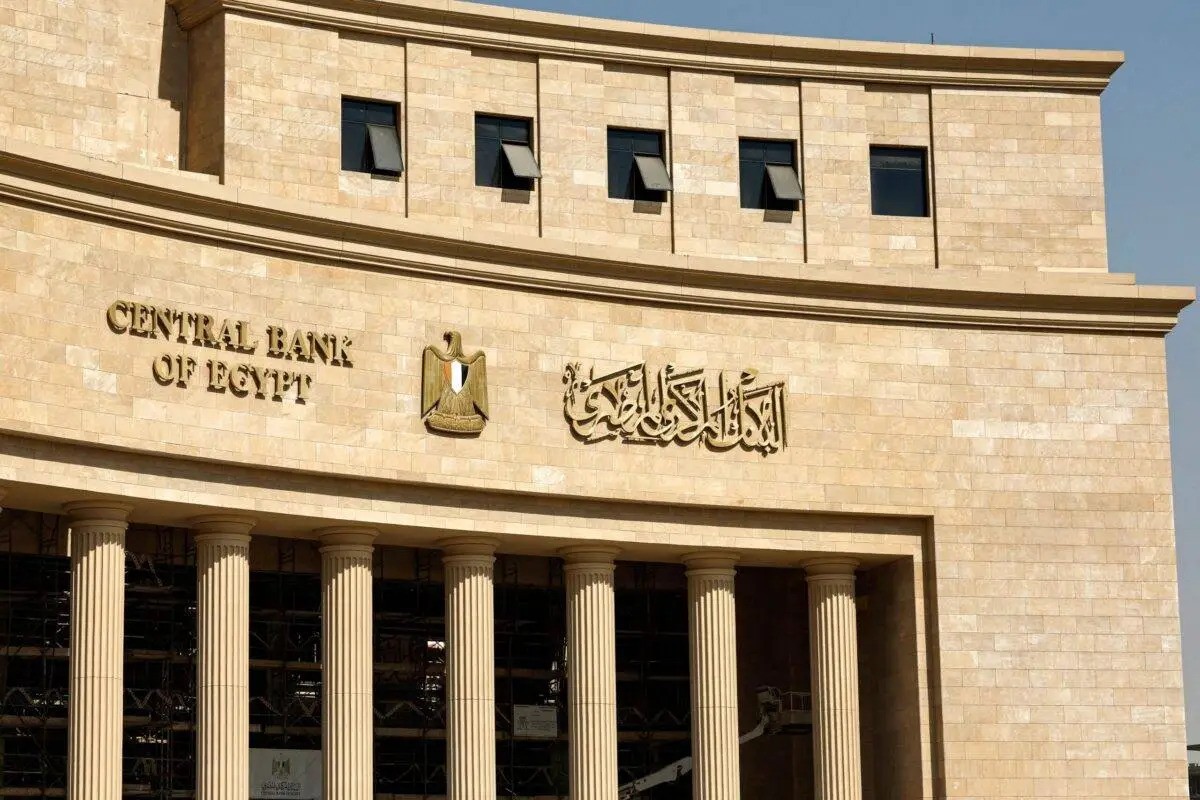
The Central Bank of Egypt (CBE) is set to announce its decision on the interest rate today, with market analysts widely expecting a third consecutive hold on the current rates. The Monetary Policy Committee (MPC) has maintained the key interest rates unchanged since March, citing the need to support a sustained downward trend in inflation.
The current rates stand at 27.25% for deposits, 28.25% for lending, and 27.75% for main operations, credit, and discount rates. The MPC has emphasized its commitment to monitoring economic developments closely and evaluating the risks to inflation expectations. The committee believes that maintaining these rates is appropriate at present, as it supports a sustained downward trend in inflation.
Market analysts, including EFG Holding, Beltone, and Naeem, among others, have predicted that the CBE will keep interest rates unchanged, given the continued decline in inflation. A Reuters poll also indicated that analysts expect the CBE to maintain interest rates during today's MPC meeting. The median forecast among 15 analysts surveyed by Reuters was that the CBE would hold the deposit rate at 27.25% and the lending rate at 28.25%. Only one analyst anticipated a rate cut of 100 basis points.
The decision to hold interest rates is largely driven by the CBE's commitment to reducing inflation sustainably and stabilizing prices in the medium term. The annual core inflation rate dropped to 24.4% in July 2024, down from 26.6% in June, while the monthly change in the core consumer price index (CPI) was -0.5% in July 2024, compared to 1.3% in July 2023 and 1.3% in June 2024. Additionally, the annual headline inflation for urban areas stood at 25.7% in July, down from 27.5% in June.
However, some experts, such as James Swanston of Capital Economics, believe that the momentum is heading in the right direction, and a sharp decline in the main interest rate is expected in early 2025. Swanston stated, "We expect the CBE to keep interest rates unchanged as inflation remains well above target. However, the momentum is heading in the right direction, and with a sharp decline in the main interest rate expected in early 2025, attention will shift to when the first rate cut will occur. We have identified the first quarter of 2025 as the likely timing."
Others, like Mohamed Abdel Aal, have pointed out that the CBE's MPC may consider a shift towards a more accommodative monetary policy, encouraging economic growth, but caution is needed due to various factors, including geopolitical risks, pressures from the International Monetary Fund, and the government's subsidy rationalization plan. Abdel Aal noted that both general and core inflation rates have consecutively declined for five months, and the US Federal Reserve and several European banks have openly begun transitioning from restrictive monetary policies to more accommodative ones, shifting their focus from containing inflation to targeting employment.
Despite the recent decrease in Egypt's stubborn inflation rate and the beginning of rate cuts in the US, Abdel Aal emphasized the need for caution due to four critical factors that could influence future interest rate decisions. These factors include new and ongoing geopolitical and geoeconomic risks in the Middle East, which could disrupt supply lines and drive prices higher; pressures from the International Monetary Fund to continue pursuing restrictive monetary and fiscal policies to combat inflation; the government's subsidy rationalization plan, which could trigger new inflationary waves; and the fact that current inflation rates are still far from the target range of 7% (±2%).
In light of these considerations, Abdel Aal suggested that, despite global trends in Europe and the US towards gradually easing monetary policies and reducing interest rates, the most likely outcome is that the CBE's MPC will decide to maintain current interest rates for another cycle.
The CBE's decision on interest rates will have significant implications for the Egyptian economy, influencing borrowing costs, consumer spending, and investment decisions. A hold on interest rates is likely to support the Egyptian pound, which has been under pressure in recent months. However, it may also limit economic growth, as high interest rates can discourage borrowing and investment.