Centro Cultural Borges re-opens in state hands after two-year closure
-
 Loading...
 - Luiz Almeida
- 20 Jul 2022
- 101 Views
- 0 Like
- 0 Comment
From the indoor balcony of the Centro Cultural Borges (“Borges Cultural Centre,” CCB) in Buenos Aires, one can see and experience culture, history and commerce all at once.
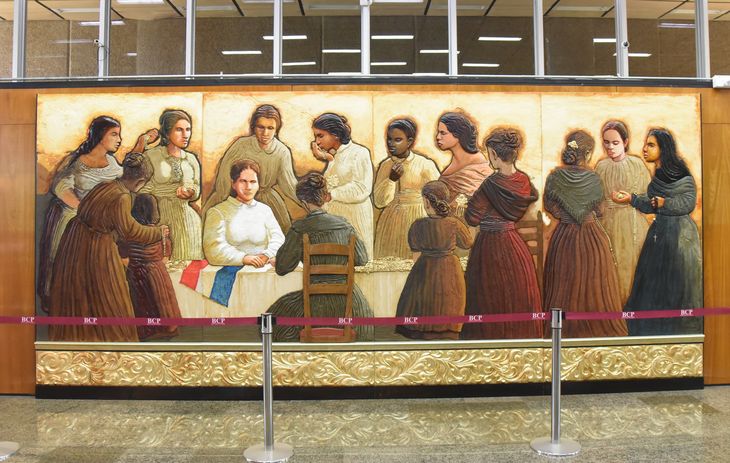
Below is the luxurious Galerías Pacífico shopping mall; nearby are the iconic murals depicting various scenes of family, nature and other sociocultural values. Artistic exhibits surround this midpoint on all sides, creating a meeting place where these three elements intersect.
The Centro Cultural Borges, bearing the name of Argentina’s most famous writer, reopened its doors this March after a two-year pandemic closure, this time in state hands.
The space is replete with 13 exhibition spaces, three performance halls and a small open library. The Parisian-style building, constructed in 1891, has long been recognised as a cultural meeting point — it was originally the first home of the Museo Nacional de Bellas Artes.
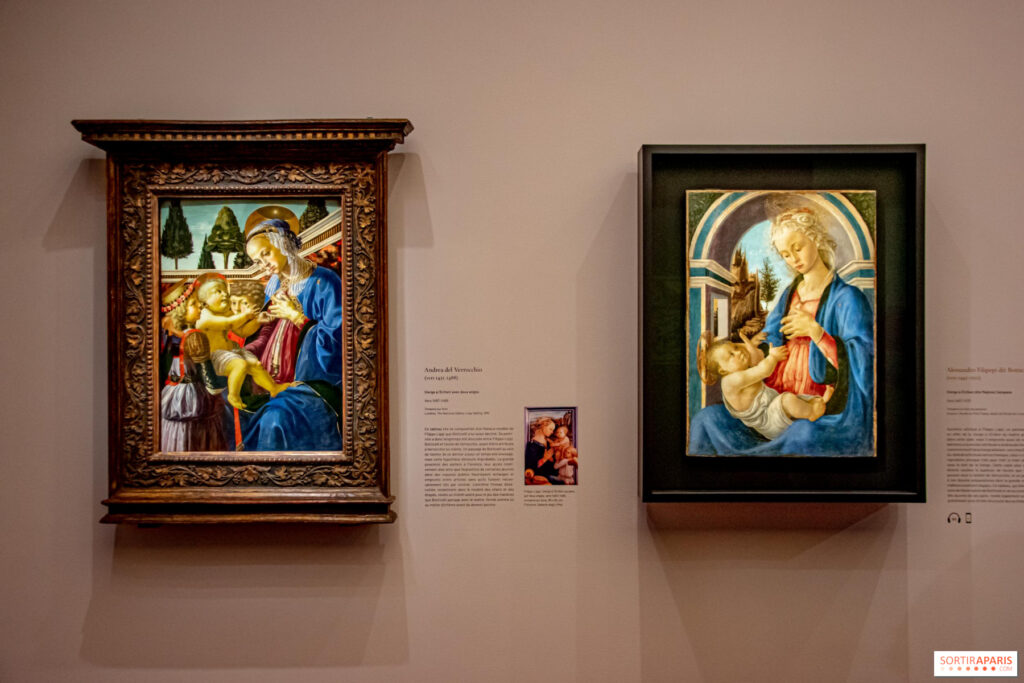
Under its new management, the four pavilions of the Centro Cultural Borges currently feature the Bon Marché hall of the Museo Nacional de Bellas Artes and a sprawling exhibit dedicated to legendary folk singer Mercedes Sosa, as well as multiple rotating tango and jazz concerts.
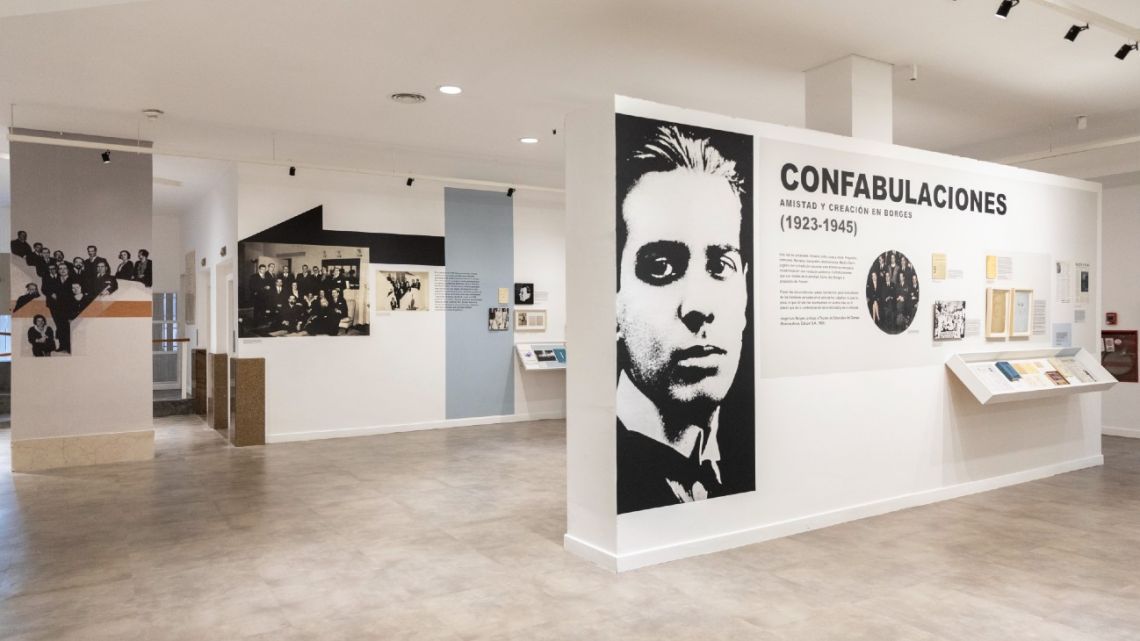
It also proudly displays multiple inaugural exhibitions as well as two exhibits that opened on May 11; one dedicated to the late Mexican novelist Carlos Fuentes, and another by Diana Schufer, Las palabras se las lleva el viento (“Words are carried by the wind”), presented in dialogue with the works of the legendary writer for whom the Centre is named: the incomparable Jorge Luis Borges.
Changing hands
During former president Carlos Menem’s administration (1989-1999), the historic building passed from the hands of Ferrocarriles Argentinos to hotel businessman Mario Falak for the purposes of creating the Galerías Pacífico shopping centre, according to Clarín. Part of the building was allocated to the Borges Cultural Centre, which, starting in 1995, was managed by the private Fundación para las Artes (“Foundation for the Arts”).
The group remained in charge of the Centre until its closure due to the pandemic, after which the National Culture Ministry recovered the space in early 2021, following negotiations between the two parties.
Ezequiel Grimson, former undersecretary of cultural policies for Buenos Aires Province and ex-culture director of the National Library, is the CCB’s new director.
“The Centro Cultural Borges had gone through some rather difficult last few years in its private management, and the arrival of the pandemic made it impossible for the project to continue,” he told the Times in an interview.
“The National Culture Ministry took charge [of the Centre] on the basis of an agreement that was made between the Fundación para las Artes and the National Culture Ministry,” he explained. After the changing of hands, Grimson and his team worked “for practically an entire year on its architectural transformation.”
According to a sharply critical column published by Infobae in August 2021, the process did not go quite so smoothly. Penned by Blanca Maria Monzón, the CCB’s director of the Audiovisual Department before the change in management, the article voiced complaints that not all employees were able to keep their jobs.
“During the pandemic, the Fundación para las Artes informed the staff of the Borges Cultural Centre that they had to transfer to the Culture Ministry, since the Fundación could not continue to absorb their salaries,” writes Monzón.
“The situation of the monotributistas [self-employed staff] — some with years, and decades, of sustained permanence in the institution — was much more uncertain. They promised that the Fundación would remain an appendage within the CCB, and would therefore continue to assume the commitment to pay their salaries: no-one would be left without work.”
“I found this argument dubious,” the article continues. “Since its inception — and for 26 uninterrupted years — the institution never enjoyed sufficient funds to place all its workers on permanent staff, particularly the hierarchical personnel. Unfortunately, time proved me right. A few days later, they told us: we have no more money, turn to the State.”
La Nación reported in March that the Culture Ministry absorbed about 20 employees from the Fundación para las Artes.
Monzón could not be immediately reached to comment on this issue.
‘The state must participate in culture’
Despite the complaints, many experts are supportive of the changing of hands, as well as the role of the state in this particular project.
Sebastián Hernaiz is an author and professor of Literature at the University of Buenos Aires. Though he had not yet visited the newly reopened CCB, he believes that the state has a responsibility to participate in such projects.
“Undoubtedly, it seems important to me — and it is part of their duties — that state institutions can participate in the preservation and dissemination of our cultural heritage,” Hernaiz told the Times via email.
“I understand that the management of the Cultural Centre, in the hands of the Culture Ministry, proposes to do so with the space dedicated to Borges in a way that the previous management did not have among its priorities,” he continued.
Victoria Verlichak, art critic and culture reporter for Noticias magazine, feels similarly about the role of the state.
"The state must participate in culture,” said Verlichak, who covered not only the Centre’s reopening this year but also its initial opening in 1995. “It cannot remain in private hands alone, although private participation is also essential." Read More...