The BCP Museum protects a rich and valuable cultural heritage
-
 Loading...
 - brookenew clara
- 03 Mar 2022
- 392 Views
- 0 Like
- 0 Comment
The Museum of Numismatics and Jewelry of the Central Bank of Paraguay opened its doors to ÚH to show what they offer, including relics, documents, batches of medals, coins, banknotes from all times and other objects of great relevance to our historical identity. . The motto is Economic, historical and cultural memory.
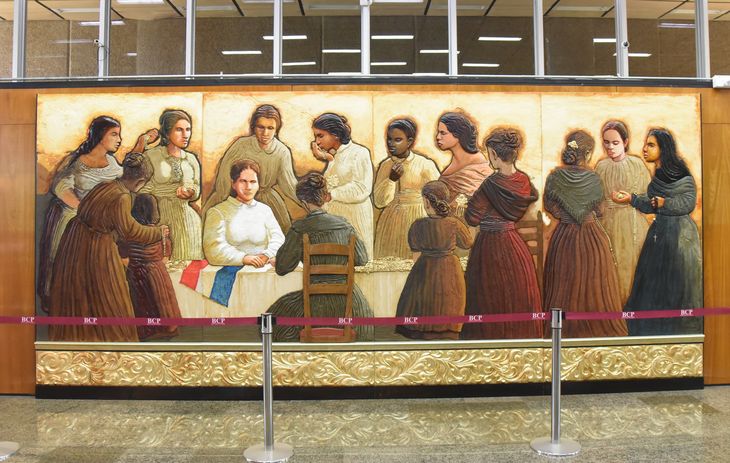
One of the recently installed attractions is a mural in homage to the Paraguayan women who donated their jewelry and belongings during the War against the Triple Alliance, created by the Paraguayan artist Koki Ruiz.
Another National Cultural Heritage Asset that arrived at the museum on Monday, February 14, is the emblematic Golden Book, which records the support of Paraguayan women during the War of the Triple Alliance, for its protection, custody and permanent exhibition. This book was given to Francisco Solano López on July 24, 1867, his birthday.
The Museum is located in the Russian Federation and Cabo 1° Marecos. Visits can be made from Monday to Friday, from 08:00 to 12:30. For large groups, they can be scheduled at (021) 619-2141.
Numismatics is the science that studies coins and banknotes. "Through these collections we can tell our story," says Luis Adolfo Ortiz, museum advisor.
Ortiz comments that the place was created in the year 2000, with a commission made up of Carmen Weber, Leonardo Figueroa and Luis Adolfo Ortiz. It began as a permanent numismatic exhibition and over time it became a museum, which aims to show economic history and enhance the values ​​of Paraguayan culture. The space also has an auditorium room.
Route. In one of the first showcases you can find signs of the first monetary system.
When the Spaniards arrived in America, yerba, linen, tobacco and eggs were exchanged. “Domingo Martínez de Irala, for example, would put a price on a knife in exchange for 6 eggs, because there was no iron in the area,” says Ortiz.
The adviser relates that since trade was already very intense, it was necessary to have a coin that consisted of a silver wafer that was hit with a hammer, these were called macuquinas. The lower value ones were smaller. At this time the "vivados" cut or filed the coins to melt them again. To counteract this situation, slots were made to identify whether they were filed or not. Read More…