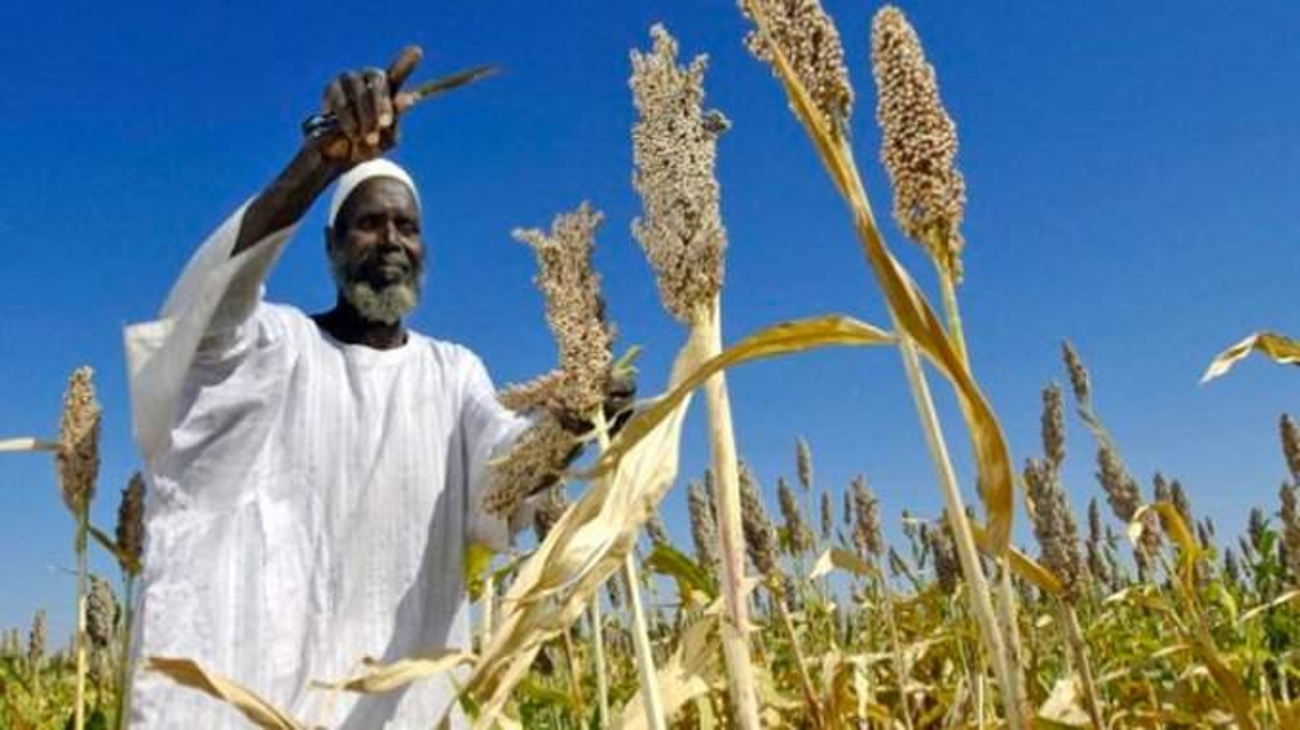
Cereal production improves in Sudan amidst persistent food insecurity: FAO

There has been a significant improvements in cereal production in the Sudan, a recent UN Food and Agriculture Organization (FAO) 2022/23 Crops and Food Supply Assessment Mission (CFSAM) report shows.
The assessment was conducted at the request of the Agriculture and Forests ministry in close collaboration with the World Food Programme (WFP), Famine Early Warning Systems Network (FEWSN) and the United States aid arm (USAID).
According to the new report, most agricultural inputs, including seed, fertilizer, herbicides, fuel and labour, were available in 2022, but at a very high cost compared to the previous season. As a result, most farmers had to utilize seeds they had saved from the previous year’s harvest due to high market prices. “Although overall cereal production at national level is impressively better than the previous season, food insecurity at the household level remains a serious challenge,” said Adam Yao, the FAO Representative in Sudan.
He added, “Communities are facing differing scales of vulnerabilities driven by soaring prices of staple crops, and the combined effects of economic downturn, high inflation, climate-induced hazards and conflict.” The reports says the 2022 national cereal production, which includes sorghum, millet, and wheat crops (harvested in March 2023), is estimated at about 7.4 million tonnes – 45% above that obtained in 2021. Sorghum production alone is approximately 5.2 million tonnes, a 50% increase compared to the previous year. Read More…