Chile's archaeologists fight to save the world's oldest mummies from climate change
-
 Loading...
 - Florencia Pizarro
- 28 Mar 2022
- 377 Views
- 0 Like
- 0 Comment
Jannina Campos walks up a sandy hillside in Arica, a port city on the edge of the Atacama desert, the driest place on the planet.
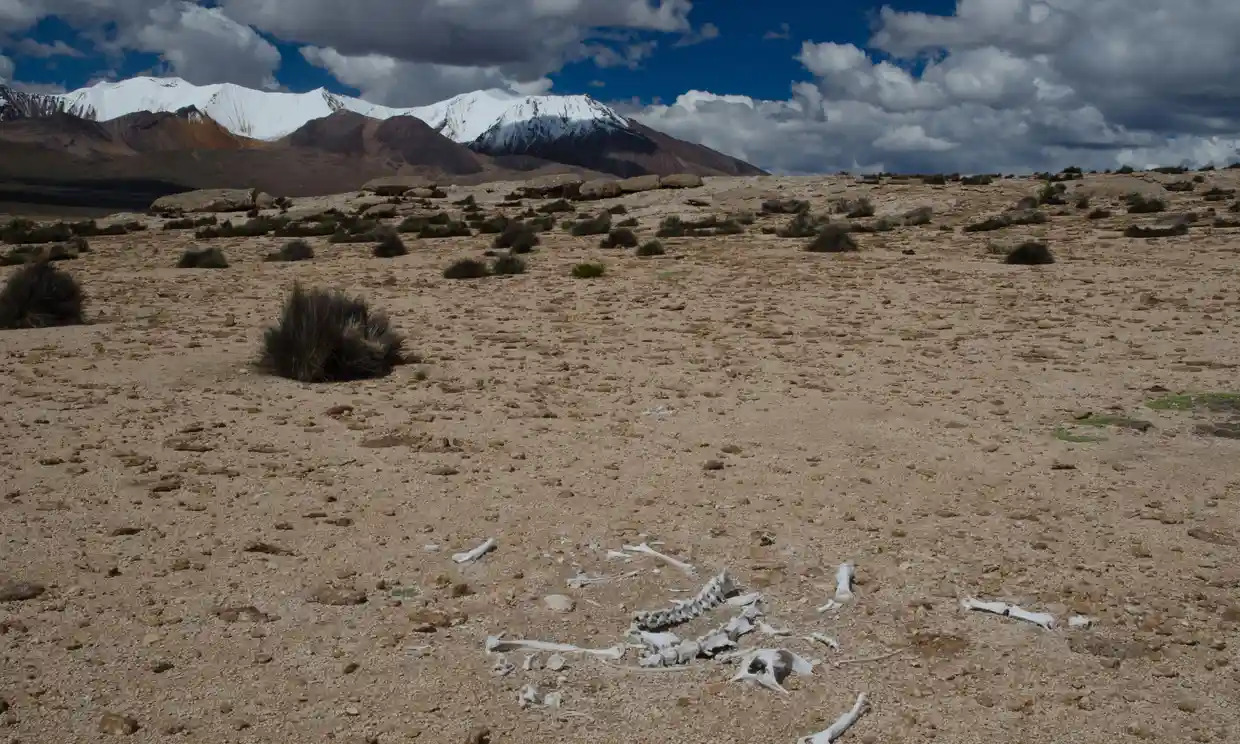
The slope is dotted with dozens of orange markers placed in December. Each indicates skeletal remains recently uncovered by unusually strong winds and increased rainfall.
“Every time a body appears we place a flag, and we bury it again,” said Campos, an archaeologist. “They’ve been preserved there for 7,000 years.”
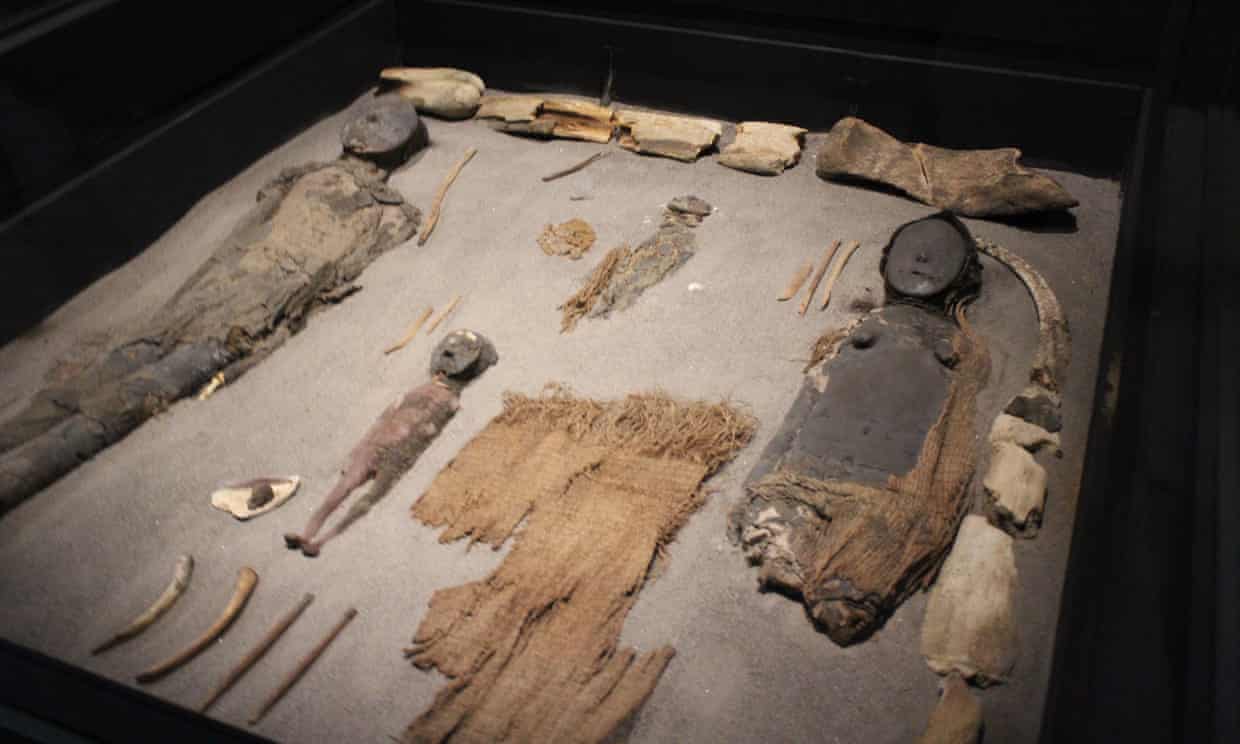
The sprawling cemetery belongs to the Chinchorro, an ancient culture of hunters and fishers who painstakingly mummified their dead. After stripping their loved ones of their skin and organs, they swaddled their skeletons in elaborate confections of reeds, sea lion skins, clay, alpaca wool, and wigs of human hair, trusting in the arid desert climate to preserve them for eternity.
But their gravesites, dotted around Chile’s far north, are increasingly being disturbed by abnormal weather linked to the climate crisis, and their remains left exposed to the elements.
This presents cash-strapped archaeologists with a dilemma: try to rescue everything they can, or simply cover up the cadavers and focus on conserving and studying already-excavated mummies.
“The museums are a bit overwhelmed with all this material,” said Bernardo Arriaza, a leading expert on the Chinchorro at the University of Tarapacá in Arica.
Increasing humidity in the Atacama is damaging the mummies already in collections. Some are sprouting with mould; others are succumbing to dry rot or being nibbled by insects.
Their eclectic mix of materials makes it hard to get storage conditions exactly right, he added. “There’s no magic solution.”
At a museum a short walk down the hill, Campos pointed through a glass floor to dozens of skeletal Chinchorro bodies below, the sand around them speckled with white fragments. “That’s the bones turning to dust,” she said.
A ray of hope came last July, when the Chinchorro mummies were inscribed on the Unesco World Heritage list after a laborious, 20-year application process.
Many anticipate that growing appreciation for the mummies – and the beginning of construction this year of a new, climate-controlled £14m ($19m) museum near Arica – could help arrest the disappearance of what Arriaza calls “a wonder of world prehistory”.
The Chinchorro mummies are the earliest examples of deliberate mummification anywhere in the world, say scholars.
They date back to 5,000BC – more than two millennia before Egyptian pharaohs were first embalmed and entombed in pyramids.
They also possess a striking aesthetic value – and a poignant human resonance.
The semi-nomadic coastal dwellers cast no pottery nor built any monuments. Instead, “the body becomes a kind of canvas where they express their emotions,” said Arriaza. “The Chinchorro transform their dead into genuine works of pre-Hispanic art.”
A clue as to why this remarkable outpouring of feeling may have first emerged lies in Caleta Camarones, 60 miles south of Arica.
Sitting at the mouth of a green, fertile river valley gouged through barren desert, the spot is an Eden-like oasis – and its fresh drinking water and teeming animal life probably enticed the first Chinchorro to settle here. But it had hidden dangers, said Arriaza.
The Camarones River carries 1000 micrograms per litre of arsenic: a hundred times the safe human limit. With every drink of water, the Chinchorro were unknowingly poisoning themselves, analysis of hair samples shows – and they suffered high rates of miscarriages and infant deaths as a result.
The earliest Chinchorro mummies come from here: tiny babies and stillborn foetuses, their fragile forms bolstered by sticks and adorned by sparingly carved masks of black manganese.
Over 3,500 years, Chinchorro mummification spread to adults and evolved – via ochre-daubed corpses stuffed with feathers to bandages of pelican skin.
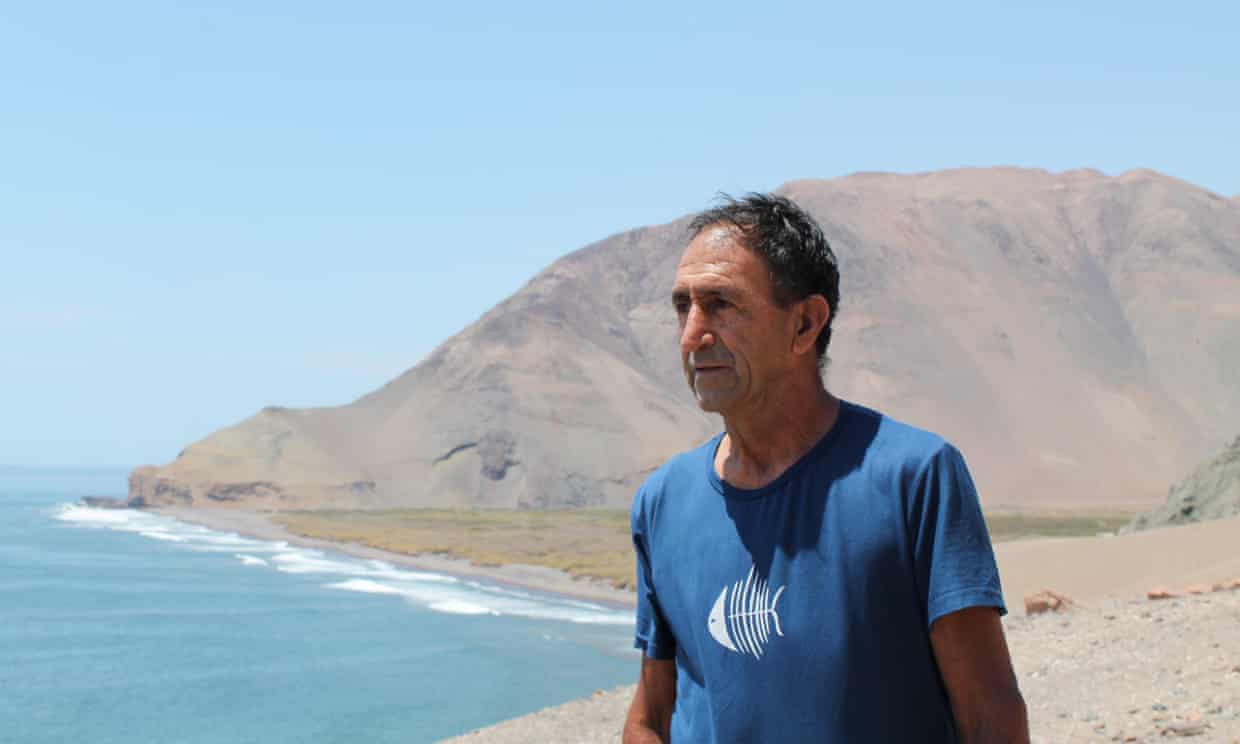
Today, residents of Caleta Camarones feel a strong affinity with the Chinchorro, said Jorge Ardiles, part of a group of artisanal fishing families who settled here 30 years ago.
“It’s not a genetic link, but a natural connection,” he said. “They were fishermen; so are we.”
Ardiles drove his battered truck along the shoreline, and pointed out deep excavations lined with dense banks of discarded mollusc shells.
“Right there is where they found the oldest mummies in the world,” he said proudly. “All this hillside is full of bodies.”
A few metres above the track, resting on ancient reed mats, several skeletons jutted out of the scree, uncovered by wind and rain and now at the mercy of grave robbers and the elements.
“The authorities don’t care,” Ardiles lamented. “We’re the ones looking after the area.”
The fisher argued that a basic site museum should display Chinchorro artefacts found by locals: quartz arrowheads, fish hooks, combs made of cactus spines.
But efforts to get small-scale tourism initiatives off the ground have stalled, partly because the community is the subject of a decades-long land dispute.
Visitors are often disappointed not to find pristine cadavers in Inca-style palaces, said Cristian Zavala, the local mayor.
“If you go to Machu Picchu, it’s obvious,” he said. “But here, the history is below the ground.”
Zavala expressed hope that UNESCO status, and Chile’s current redrafting of its dictatorship-era constitution, could force the government to better protect and promote the mummies. Read More...