China's FAST detects fast radio burst from 3b light years away

An international team led by Chinese scientists discovered and located the first persistently active repeating fast radio burst (FRB) with the help of the world's largest radio telescope, China's Five-hundred-meter Aperture Spherical Radio Telescope (FAST), which indicated the evolution of FRBs and may help scientists understand the origin of the brightest radio waves emanating from billions of light years outside the galaxy.
The new FRB, named FRB190520B, was discovered in a metal-poor dwarf galaxy 3 billion light years away.
The initial discovery was made by Niu Chenhui, a research fellow from the National Astronomical Observatories of the Chinese Academy of Sciences (NAOC) through FAST from May 20, 2019. Law Casey, a scientist with the California Institute of Technology who led a Jansky Very Large Array (JVLA) program, did so in July 2020.
The study led by FAST chief scientist Li Di and titled "a repeating fast radio burst associated with a persistent radio source" was published in Nature on Wednesday.
FRBs are mysterious radio flashes lasting milliseconds from deep space, though little is known about their origins. Some scientists suggest that they could be evidence of advanced alien life.
So far, less than 5 percent of all the hundreds of FRBs detected have been seen to repeat. Only a few are active and only the FRB190520B is persistently active, thus providing a precious glimpse into their secrets.
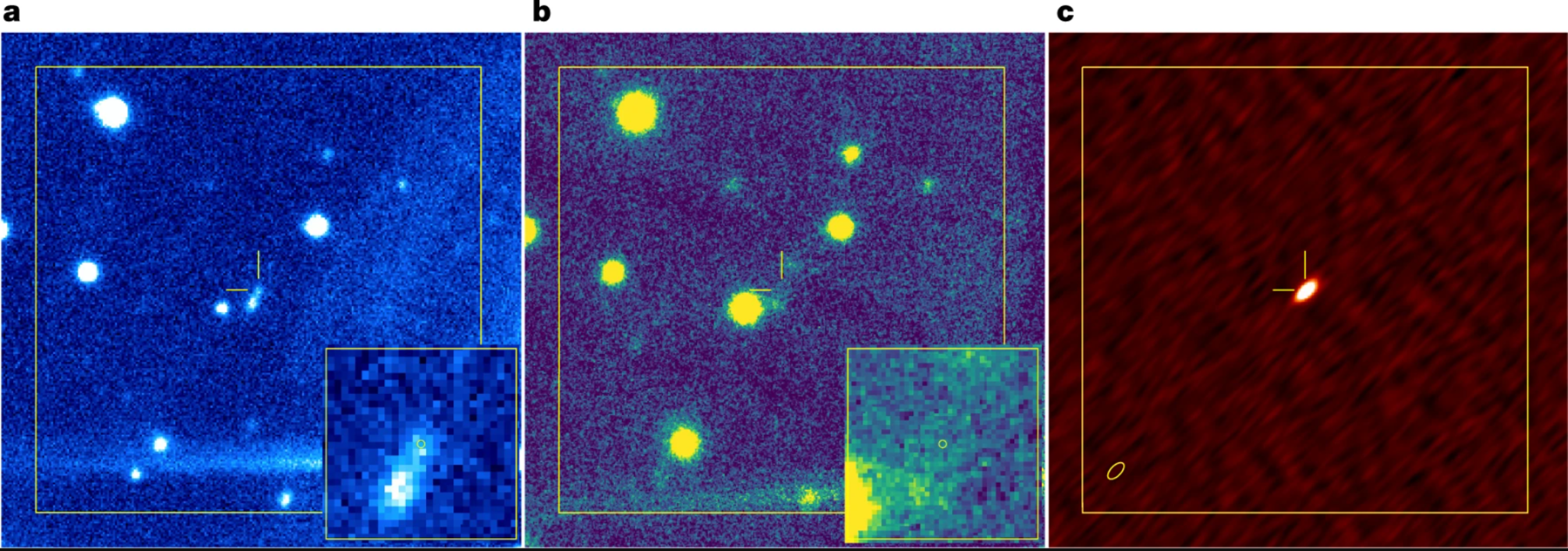
The FRB190520B has the highest ambient electron density of all FRBs and shows reliable bursting behaviors which can be detectable every month. Four bursts were detected during the initial 24 seconds.
The characteristics of FRB190520B indicated that it may be a "newborn." This discovery hints at an evolutionary picture of FRBs, according to the team.
Niu said FRB190520B is the first repeating FRB detected by FAST, and is only the second repeating FRB with a compact persistent radio source after the discovery of the first repeater FRB121102A by America's Arecibo Radio Telescope in 2016.
The new finding of the FAST suggested the FRB phenomenon in general is likely due to a number of source populations, said Duncan Lorimer, a professor at West Virginia University who discovered the first FRB.
Further results that are anticipated in the coming years as the FRB sample continue to grow will allow us to elucidate the details of this intriguing population, Lorimer added.
Li said that astronomy is a common pursuit of all mankind and FAST is used by international scientists including from the U.S., Europe and Australia. Read More...