China unveils its top 6 field archaeological discoveries of 2021
-
 Loading...
 - Muyang Liang
- 18 Mar 2022
- 389 Views
- 0 Like
- 0 Comment
Six field archaeological excavation projects in China were selected as the country's major archaeological discoveries in 2021 by a forum hosted by the Chinese Academy of Social Sciences in Beijing on Friday.
Piluo site, Sichuan Province
Piluo is by far the best preserved archaeological site from the Paleolithic period found in the country, which dates roughly from 2.5 million to around 10,000 years ago. It is situated in the Qinghai-Tibet Plateau in southwest China's Sichuan Province.
Over 6,000 stone and earthen artifacts were discovered at the site in September, including Acheulean axes previously found mainly in prehistoric sites across Africa and the western coast of the Eurasian continent. It is generally believed that these relics represent the highest level of tool manufacturing of the time.
Huangshan site, Henan Province
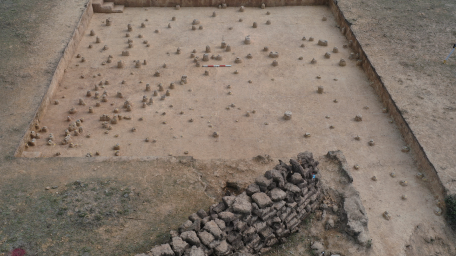
The ancient site of Huangshan in Nanyang, central China's Henan Province, is known for cultural relics from the Neolithic period. So far, Chinese archaeologists have excavated around 2,400 square meters of the 300,000-square-meter site and discovered cultural relics from various times throughout the Neolithic period such as house sites, workshops and tombs of the Yangshao culture, a Neolithic culture that existed extensively along the Yellow River in China from around 5,000 to 3,000 BC.
Sanxingdui site, Sichuan Province
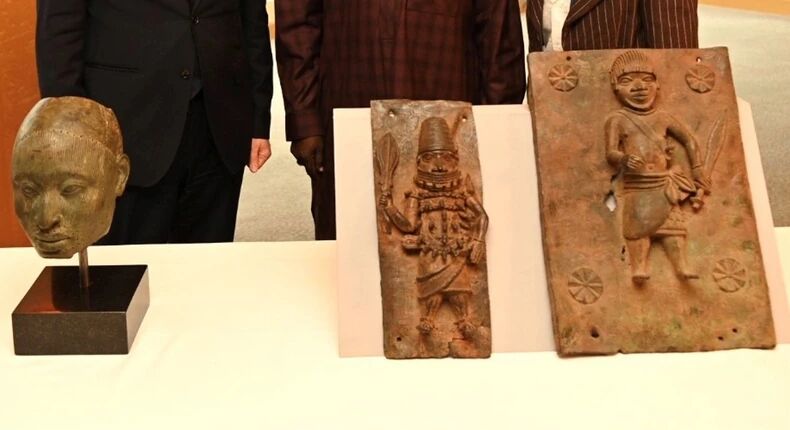
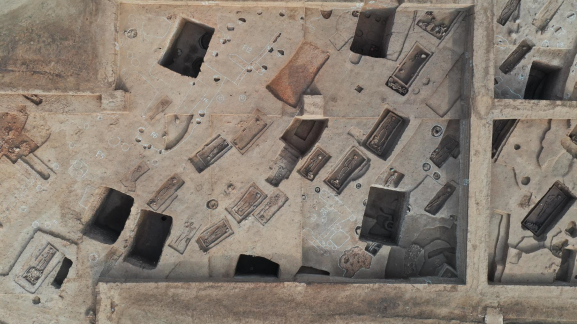
The Sanxingdui Ruins site is considered one of the most important archaeological discoveries in the 20th century. The excavation has lasted nearly 100 years since the first discovery in the late 1920's.
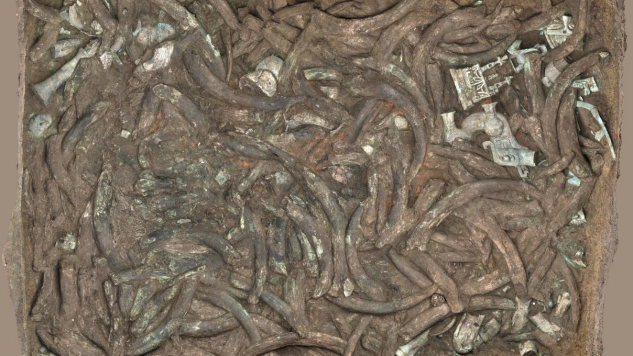
Since March 2021, Chinese archaeologists have made major breakthroughs at the site's six newly-found sacrificial pits. More than 500 artifacts, such as ivory, bronze, gold and jade items, dating back about 3,000 years to the Shang Dynasty (1600-1046 BC) were discovered.
Guozishan Tomb, Jiangxi Province
Guozishan, an ancient tomb in east China's Jiangxi Province, has been identified as belonging to the royals of the State of Yue in the Warring States Period (475-221 BC), where a large number of wooden lacquerware, jade, musical instruments and weapons, among others, have also been excavated.
Two dagger-axes with inscriptions are the highlights among over 2,600 pieces of relics unearthed from the tomb site in Zhangshu City. Judging from the inscriptions, archaeologists believe that the tomb's owners were descendants of Goujian, an outstanding king of the Yue state. Read More...