Classic Dutch Pea Soup
-
 Loading...
 - Sylvie Payet
- 11 Jul 2022
- 129 Views
- 0 Like
- 0 Comment
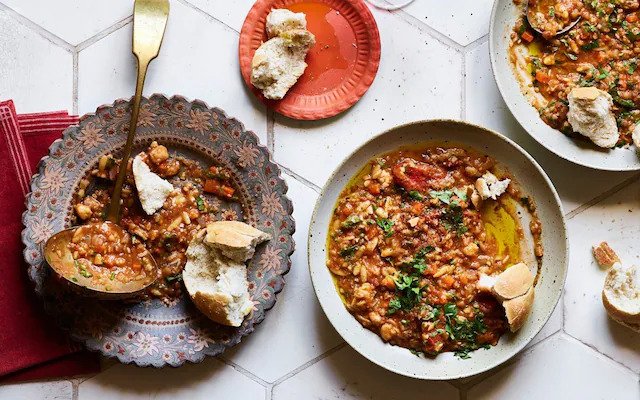
Pea soup is a Dutch institution and a national treasure. Like the British Sunday roast and the American Thanksgiving dinner.
We’re not talking about some namby pamby first course soup here, daintily decorated with a sprig of parsley and a swirl of cream.
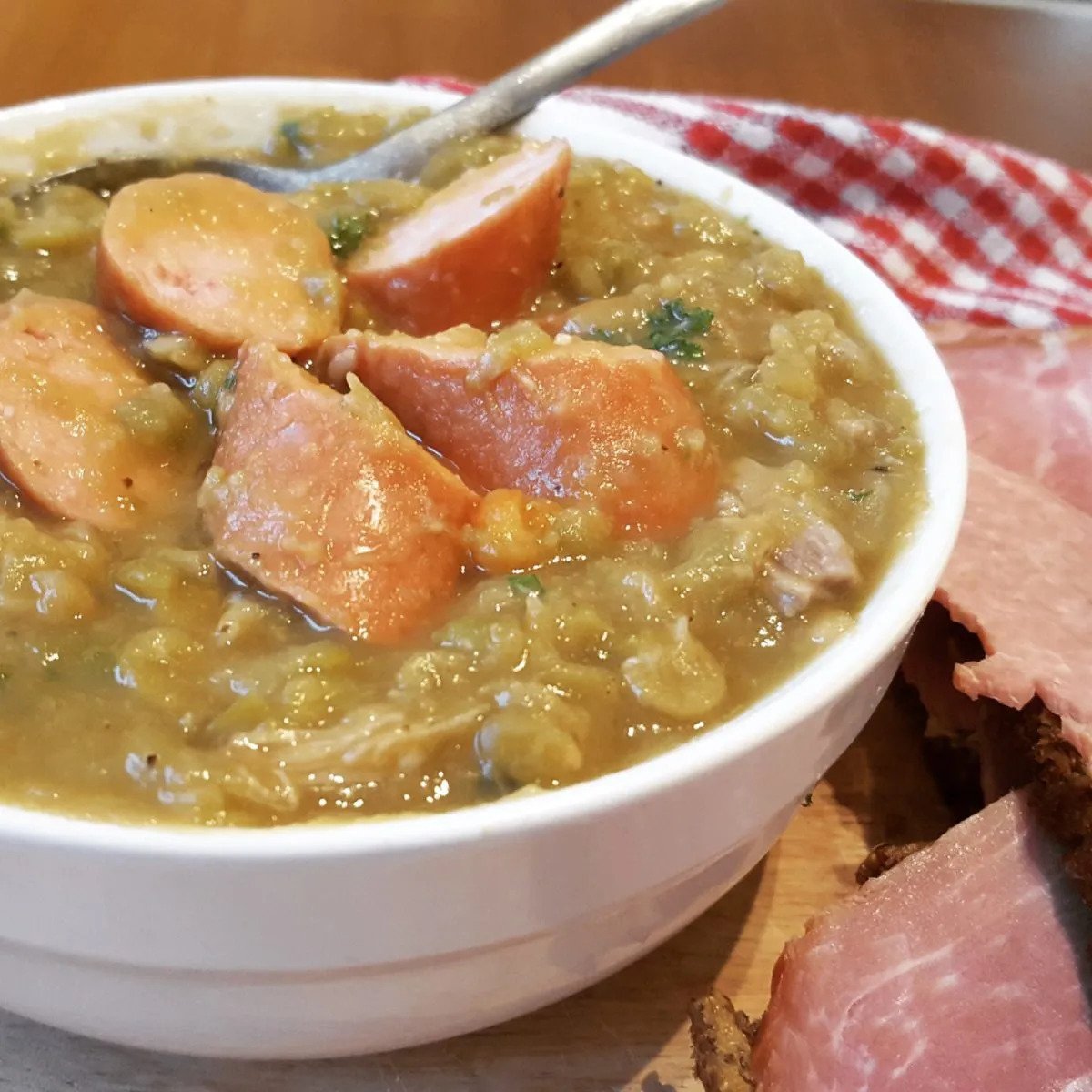
No. This is a rib-sticking manly main course, rich with all matter of pork and so thick you should be able to stand a wooden spoon upright in it without it falling over. Traditionally served with slices of solid dark rye bread slathered with butter and topped with, well, more pork.
Many cultures around the world have a history of pea soup since as early as 500 BC. The English have their pea and ham soup for instance. But none serve it quite as porridge-like as the Dutch.
Pea soup references in old Dutch literature indeed confirm this is supposed to be a very thick soup where the peas are cooked to mush.
There is however no consensus as to why this soup is also commonly referred to as “snert”. The word likely hails from the native language of the Northern province of Friesland, where the word “snert” or “snirt” is said to be recorded to mean a thick soup as early as 1768. Alternatively, it is possibly related to drinking, as “to take a sneirt” or a “snars” means to take a swig. Perhaps both are true. Perhaps a wholesome cheap soup was served in the local drinking holes in Friesland to line the stomach in between drinking sessions.
In the beginning, split peas and water would likely have been the only ingredients. Later cheap cuts of pork were added, the kind that’s not much good for anything else. And cheap veggies that were readily available such as celeriac, onion, potato and carrot.
Traditionally “snert” is followed by pancakes. It’s a staple combo in Sweden and Finland too. On Thursdays. Apparently.

Some Dutch folk take it a step further and serve pancakes alongside the soup. Not the lacy French-style crepes, but proper rustic pancakes (either au naturel, with apple or topped with “stroop” a sweet concoction akin to treacle or golden syrup). Elsewhere, they are a smaller plumper style with raisins, made with 3 tablespoons of pancake batter each and cooked 3 at once on a cast iron skillet. Hence their name “three in the pan”.
However it is served, this is not a dish for a scorching summer’s day. But it’s utterly satisfying in the colder winter months. So much so that temporary food shacks called “Koek en Zopie” (roughly translates to “cookie and sippy”) used to pop up next to frozen canals, lakes and rivers all over Holland, selling steaming pea soup, coffee and mulled wine to the ice skaters. Originally these shacks sold a strong alcoholic concoction of warm beer, rum, egg and spices called a “zopie” (meaning a sip ) and stood on the actual ice, because the stringent alcohol laws didn’t apply on the waterways. I’m assuming not much skating was done after that.
It took some digging around to find English cuts that would achieve similar results. I’m providing the original Dutch names and descriptions here, so that depending on what country you’re in, it may help you to find a local equivalent.

The Dutch use any or a combination of the following, around 500-700 gr in total depending on the meat to bone ratio. Ideally something smoked, something un-smoked and something with bone in:
“Varkenspoot” – This can either be translated as a pig’s trotter or a pork knuckle AKA ham hock. I tend to opt for 1 of each if I can get them, the trotter for its flavour and gelatinous properties, the knuckle for lots of tender meat to add back into the soup. If you’d like this to be your “smoked” element in the soup, use a smoked but raw pork knuckle/ham hock.
“Zuurkoolspek” – literally translates as “sauerkraut bacon”, a solid piece, not in thin slices. This is a leaner cut from the pork belly, brined for days, but not smoked. Pancetta would be the nearest equivalent, but it’s hard to come by in one piece and too expensive for this purpose. A thick slice of pork belly would be a better option. Cut the thick layer of top fat off and save and freeze that to make crackling to go with your next pork roast.
“Ham schijf” – a thick slice of pork leg, cut from the thigh end part of the leg, bone in. You can sometimes find it at a butcher if you ask for a ham slice (but we’re talking raw, not cooked ham).
“Krabbetjes” – pork ribs cut from the belly side rather than the back/loin side. They’re around, but most labels don’t mention where the ribs are cut from. You could ask your butcher or substitute back ribs or spare ribs. Bone in.
“Ontbijtspek” – boned and brined pork belly, then rolled and smoked over birch or oak chippings (depth of smoke and type of wood differ regionally). Sliced after smoking. A slab of smoked bacon or smoked pork belly could substitute.
In the spirit of looking for healthier alternatives with less fat, some now opt for lean bacon lardons and bone in shoulder pork chops.
As you know, I’m usually looking for healthier ways of cooking. But as I cook and eat Dutch pea soup but once a year (if that), I prefer it to be the full-fat version on that blissful rare occasion. The healthier alternatives simply don’t deliver that satisfying taste and texture I’m looking for here.
The rye bread to accompany the soup is often topped with “katenspek”, a cut from the pork belly area which is boiled, then smoked and very thinly sliced to be eaten as charcuterie. The term “kate” apparently comes from the old Germanic word for “hut or “shed”, referring to where the cuts were being smoked. Haven’t found anything to replace this yet, so I usually opt for a good quality smoked or cured ham if I happen to have some in the fridge
You could of course use a lighter style of bread, omitting the butter and ham. Or forget about the bread, as the soup is hearty enough by itself.
 I mention Maggi Liquid Seasoning as optional for seasoning and serving in the ingredients list. For me, it is not optional. It is essential. Maggi to a Dutch person of a certain age doesn’t mean the brand, but the seasoning. It’s still popular today, in either powder or liquid form. I regularly smuggled it into hospital at mum’s request when she was there for extended periods, as it was the one thing she knew would secretly perk up bland hospital food.
“Back home” we always added a few shakes to our bowls of pea soup. So I have it in the cupboard just for that very purpose. Gotta be done.
THE RECIPE

This soup is unique in that the split peas are cooked to mush while you draw stock from the pork and vegetables at the same time in the same pan.
The pork is then removed from the pan, bones, rind and any other inedible bits removed, the edible bits roughly chopped and added back to the pan.
The smoked sausage is already cooked, so can be heated through in the soup just before serving. Personally I like to heat the sausage in a separate pan of simmering water first, as I find it juicier that way.
It is not essential to soak the split peas overnight, but the soaking helps the texture and reduces the cooking time. I also find that just rinsing the split peas in several changes of water does not clear quite as much potential scum as soaking overnight and changing the water a few times during the soaking process.
You can prep and chop all the veg while the peas and meat get their first simmer, and then add each vegetable as and when you’re done chopping.
There are recipes out there that call for blending the soup before putting the meat back in. Anathema. If the split peas are soaked and cooked long enough, they will fall apart with a few firm stirs. What texture remains gives the soup character. This soup is not intended to be smooth and glossy, but hunky and chunky.
If you ask me how many servings this quantity makes, I kinda like what I read somewhere “it serves 4 hungry people generously on a normal day. But if it’s boxing day, it will feed 12”
Ingredients
- 500 gr green split peas
- 250 gr smoked pork belly or smoked bacon in one piece, excess fat removed
- 1 pig’s trotter (optional)
- 1 pork knuckle or 400 gr pork ribs or a large pork leg slice
- 2 large carrots, peeled and chopped or sliced into half moons
- 2 onions, peeled and chopped
- 1 leek, sliced
- ½ celeriac, peeled and chopped
- 2-3 potatoes, peeled and chopped
- 1 clove of garlic (optional), peeled and crushed or finely chopped
- A few bay leaves
- A few sprigs of fresh thyme
- 1 tsp black peppercorns (not white ones as you won’t find them until you bite into them)
- Maggi Liquid seasoning, Worcestershire sauce or a stock jelly tub if you feel it needs something extra savoury
- 1 large cooked smoked pork sausage ring (250-300 gr)
- A handful of parsley, finely chopped. Read More...