Colossal winged reptile is the largest known flying animal ever to live on the planet
-
 Loading...
 - Patricia Turner
- 13 Dec 2021
- 498 Views
- 0 Like
- 0 Comment
But increasingly, you don't have to be a professional astronaut to go to space (Japanese billionaire Yusaku Maezawa soared into orbit this week) and space agencies are, in some cases, rethinking what astronaut training means.
The European Space Agency is, for example, exploring whether it's possible to train a person with physical disabilities. Here's to a future when us ordinary mortals can experience space travel.
This is Katie Hunt, filling in for Ashley Strickland, in this edition of Wonder Theory.
Trailblazers
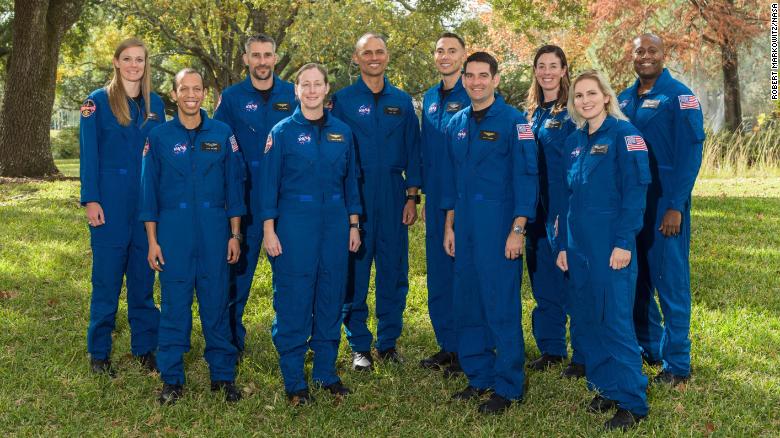
Meet NASA's Artemis generation.
The latest batch of astronaut candidates are an impressive bunch -- the cream of some 12,000 applicants.
The six men and four women include a pilot who led the first all-woman F-22 formation in combat, a former member of the national and Olympic cycling teams, and an emergency medicine physician who served as a first responder during the 2010 Haiti earthquake.
The grueling two-year training course includes developing robotics skills, flying NASA's T-38 training jets, and training underwater for spacewalks. Among those who pass may be the next humans to lift off to the moon and, perhaps, the first to set foot on Mars.
The night sky
You don't have to be an astronaut to be awed by space. Find a dark corner of your neighborhood and look up.
December offers the last chance to see a new, ultrafast comet swing by Earth -- and it's the best and brightest of the year.
The comet was first discovered in January by astronomer Greg Leonard. The celestial object has likely spent the last 35,000 years traveling toward the sun. Once it makes a close pass of our star on January 3, we won't be seeing the comet ever again.
As the comet nears the sun, it brightens, which is why the weeks leading up to this event make the comet easier to see.

A striking steel box perched on a granite plain in the Australian state of Tasmania will tell future civilizations how humankind created the climate crisis -- and whether we failed or succeeded to address it.
Designed to have thick steel walls, battery storage and solar panels, the bus-size structure will be indestructible and is meant to outlive humans, the developers of "Earth's Black Box" say. It will collect and store climate research, data sets, news reports and interactions relating to the health of our planet -- even tweets. Read More…