Cooperative sperm outrun loners in the mating race
-
 Loading...
 - Sienna Gray
- 28 Oct 2022
- 72 Views
- 0 Like
- 0 Comment
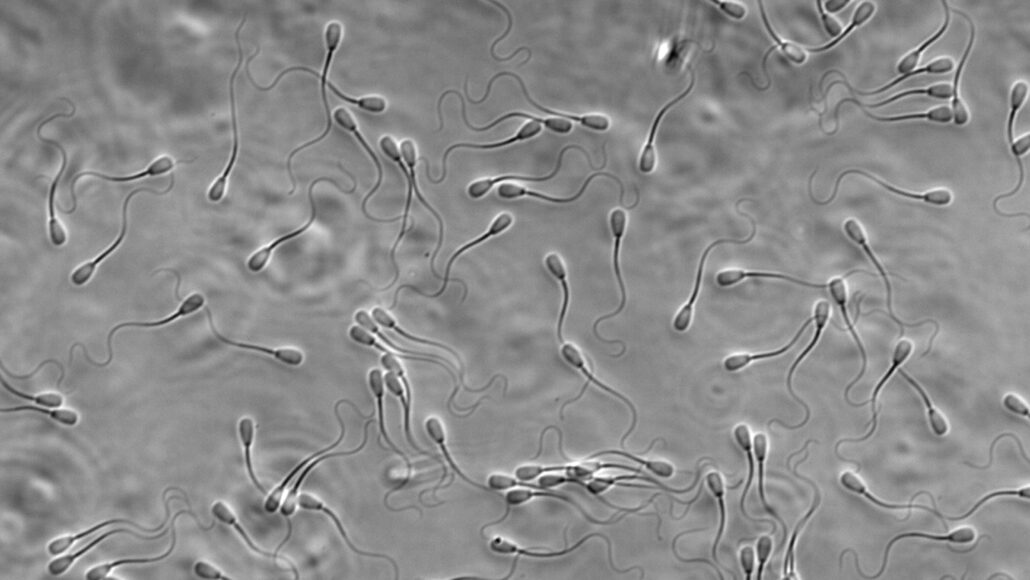
Bull sperm swim more effectively when in clusters, a new study shows, potentially offering insight into fertility in humans. In simulated reproductive tracts of animals like cattle and humans, the behavior increases the chances that groups of cooperative bovine sperm will outpace meandering loners as they race to fertilize a female egg cell, physicist Chih-kuan Tung and colleagues report September 22 in Frontiers in Cell and Developmental Biology.
The benefits of clustering don’t come down to flat-out speed. “They are not faster,” says Tung, of North Carolina Agricultural and Technical State University in Greensboro. “In terms of speed, they are comparable or slower” than sperm traveling alone. Like the sperm equivalent of herds of tortoises racing individual hares, the winners are not necessarily the swiftest but rather the ones that can stay on target.
On their own, sperm tend to follow curved paths — which is a problem, because the shortest distance between two points is a straight line. But when sperm gather in groups of two or more, they swim along straighter routes. It’s behavior that a couple of the same researchers noted in a previous study where they tracked sperm swimming in stationary fluids (SN: 3/17/16). Although that might give sperm clusters an advantage, it would only help if they happen to be going the right direction. Other benefits of sperm clustering weren’t clear until the researchers developed an experimental setup that introduced flowing fluid into their experiments.
In creatures like humans and cattle, sperm make their way to the ovum by swimming against a current of mucus that streams through the cervix and away from the uterus. It’s difficult to study what benefits clustering might confer while swimming upstream inside living beings. So Tung and colleagues created an analog in their lab: a shallow, narrow, 4-centimeter-long channel filled with a thick fluid that mimics natural mucus and flows at rates the researchers could control.
Whether alone or in groups, sperm naturally tend to swim upstream. However, clusters of sperm in the experiment did a better job heading upstream into the mucus flow, while individual sperm were more likely to head off in other directions. Despite the speedier travels of some individual sperm, a poorer ability to point upstream hampered the progress of sperm loners compared with slower moving clusters. Read More…