Croatian Food: 40 Traditional Dishes to Look For in Croatia
-
 Loading...
 - Alice Robinson
- 03 Jun 2022
- 261 Views
- 0 Like
- 0 Comment
The source of Croatian food’s intricacy and multi-layered character might be best captured by one of the country’s winemakers, Ivica Matosevic, who told The Huffington Post, “My grandfather lived in Austria, my father was born in Italy, I was raised in Yugoslavia, and my daughter was born in Croatia, yet nobody ever moved.”
Like the country itself, Croatian cuisine has absorbed multiple influences, from the highlights of the Mediterranean diet to the hearty fare of Eastern Europe. Add to that the bounties of the Adriatic Sea, and you have one of the most remarkable arrays of gastronomic riches.
While no list can be comprehensive enough to do justice to the incredible experience in store for epicures in Croatia, here are forty of the tastiest examples of traditional Croatian food to whet your appetite before your next visit to the Balkans.
WHAT IS TRADITIONAL CROATIAN FOOD?
Traditional Croatian food dates back to ancient times and can vary greatly from region to region.
In the mainland, its characterized by Slavic influences and the more recent interactions with Hungarian and Turkish cuisine. Lard is often used for cooking while some of the most common spices include garlic, black pepper, and paprika.
Along the coast, Croatian food bears a closer resemblance to Greek and Mediterranean cuisine. Seafood is abundant and olive oil is commonly used. Coastal Croatian food seems to be more varied in its seasonings with herbs and spices like rosemary, bay leaf, oregano, sage, cinnamon, clove, and citrus zest making their way into many Croatian recipes.
Croatian food is so heterogenous that it can be divided into several distinct regional cuisines – Dubrovnik, Dalmatia, Lika, Gorski Kotar, Istria, Zagorje, MeÄ‘imurje, Podravina, and Slavonija. Each region has its own distinct characteristics and cooking traditions though most dishes can usually be found throughout the country.
THE BEST OF TRADITIONAL CROATIAN CUISINE
This article on Croatian food has been organized by category to make it easier to digest. Click on a link to jump to any section of the guide.
Starters / Side Dishes
Soups / Stews
Bread / Pastries
Meat / Seafood
Desserts / Drinks
Croatian Food Tours
Croatian Cooking Classes
STARTERS / SIDE DISHES
1. Paški Sir (Pag Cheese)
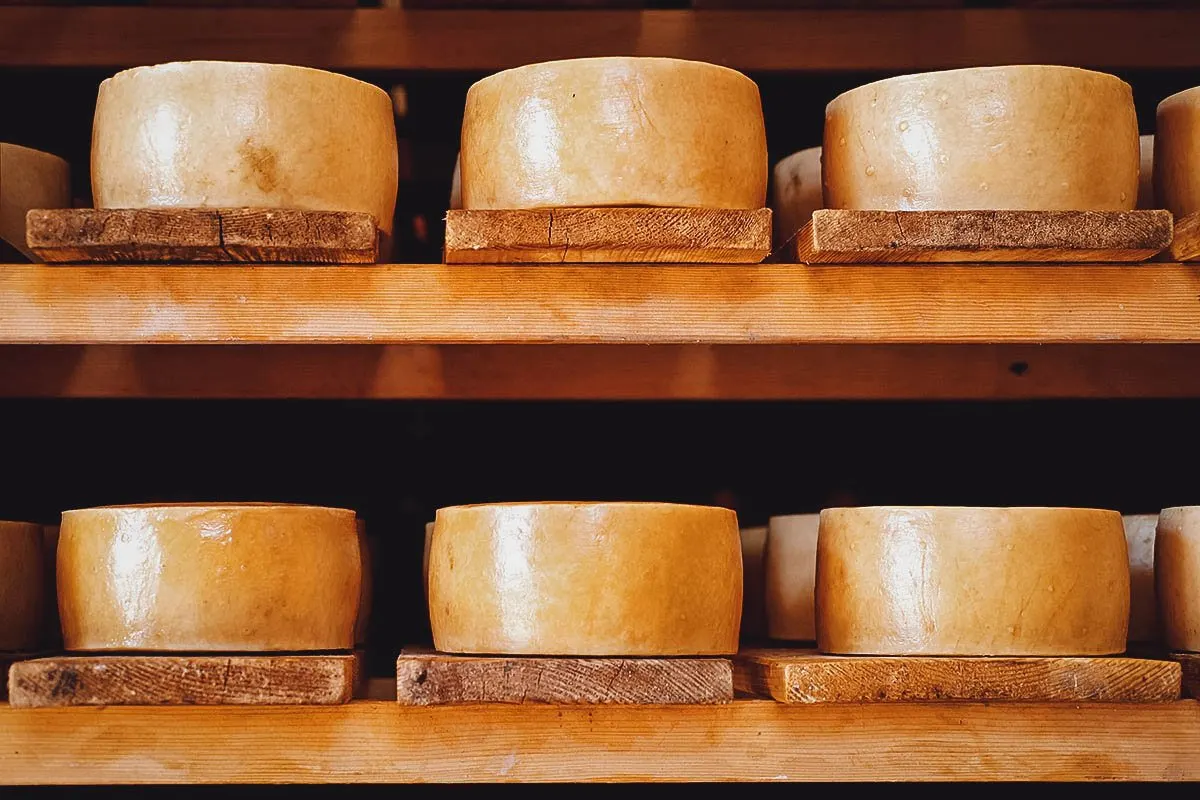
Pag is an island off the Croatian coast. It’s the fifth largest Croatian island and home to a sheep population that outnumbers humans by over four to one. With that many sheep on the island, it’s no surprise that Pag produces some of the world’s best and most sought after sheep milk cheese.
Known in Croatian as Paški sir, what makes Pag cheese special is the size and diet of the local sheep. Pag sheep are among the smallest in the Mediterranean and thus produce a small milk yield. However, the milk they do produce is the result of a diet heavy in aromatic herbs crusted with salt swept up from the Adriatic Sea. This leads them to produce a milk that’s uniquely flavored and naturally salty and needs no additional salt to turn into cheese.
Paški sir can be aged for anywhere between two weeks to over a year, though it’s so highly regarded that it’s often sold after just a few months of maturation. A firm type of cheese, young Pag cheese resembles young Manchego in taste and texture while aged versions are reminiscent of Pecorino Romano. The former is often used as a topping for pasta and risotto while the latter is typically eaten on its own with Croatian olive oil.
Pag cheese is of such high quality that even the curd, known locally as puina, is considered a first-class specialty. It’s commonly served with polenta or pasta and enjoyed as a dessert with Pag honey.
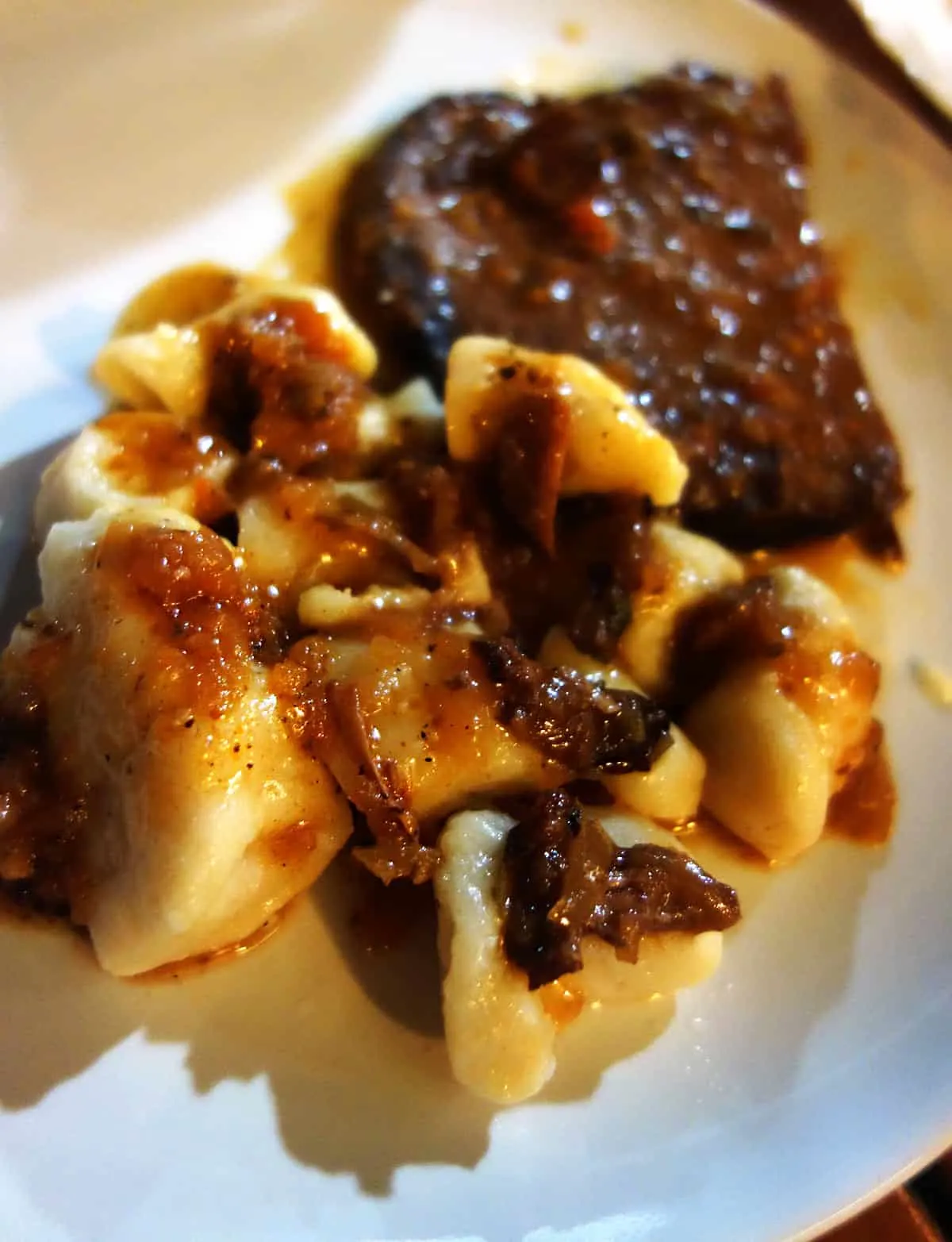
2. Njoki
Njoki is the Croatian version of gnocchi, a type of dumpling made with potato dough. It’s especially popular in the coastal regions of Croatia where it’s served as a first course or side dish with pašticada (braised beef).
3. Fuži
The Croatian region of Istria is known for its pasta. Pljukanci, ravijoli, lazanje, and pasutice are among the most common though the best known is fuži.
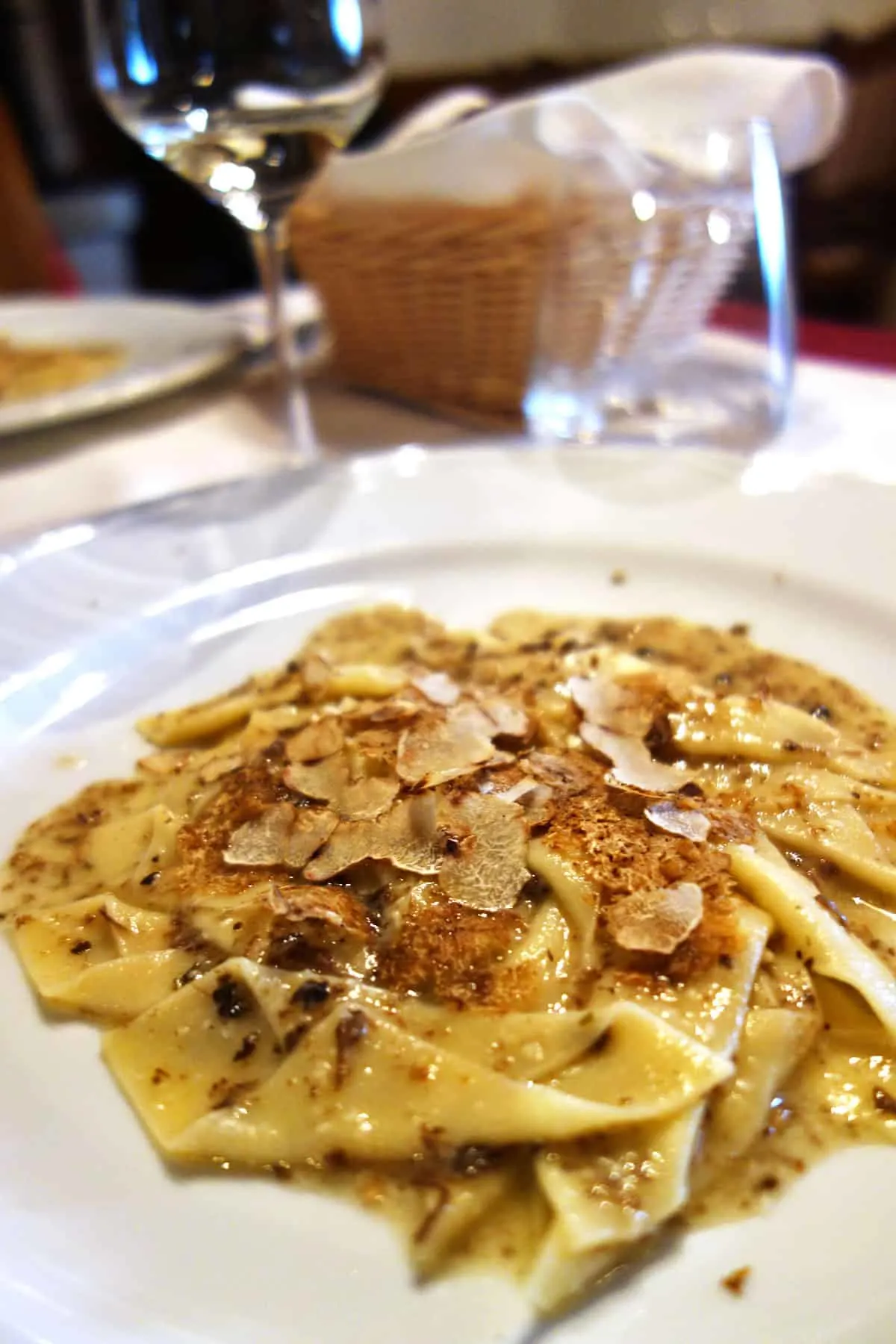
Fuži refers to a type of traditional Istrian pasta shaped like a tube. It’s made with thin, diamond-shaped sheets of pasta dough that are folded and pinched together to resemble small flutes or spindles. The name fuži is derived from fusus, which is Latin for “spindle”.
Fuži can be served with many Croatian dishes. It’s often paired with a mild red veal sauce or chicken goulash though it can be served with any type of sauce or Croatian stew. Pictured below is a plate of fuži topped with olive oil and shaved white truffles. Both are delicacies of the Istrian region.
4. Abšmalcane Mahune
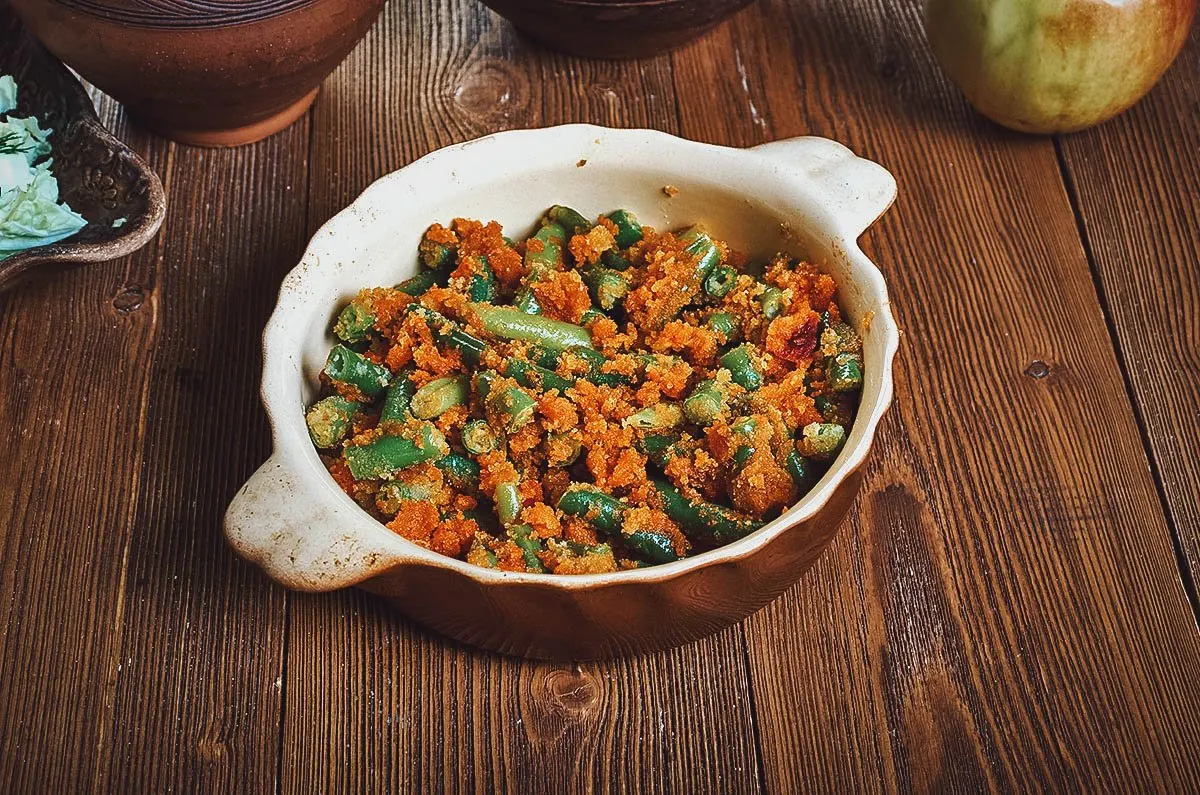
Abšmalcane mahune refers to a traditional Croatian dish made with boiled green beans, butter, garlic, and breadcrumbs. It can be made with or without bacon and is often served as a side dish with meat or fish dishes.
Abšmalcane is derived from the German word abschmalzen, meaning “fried with butter”, while mahune refers to the green beans.
5. Žganci
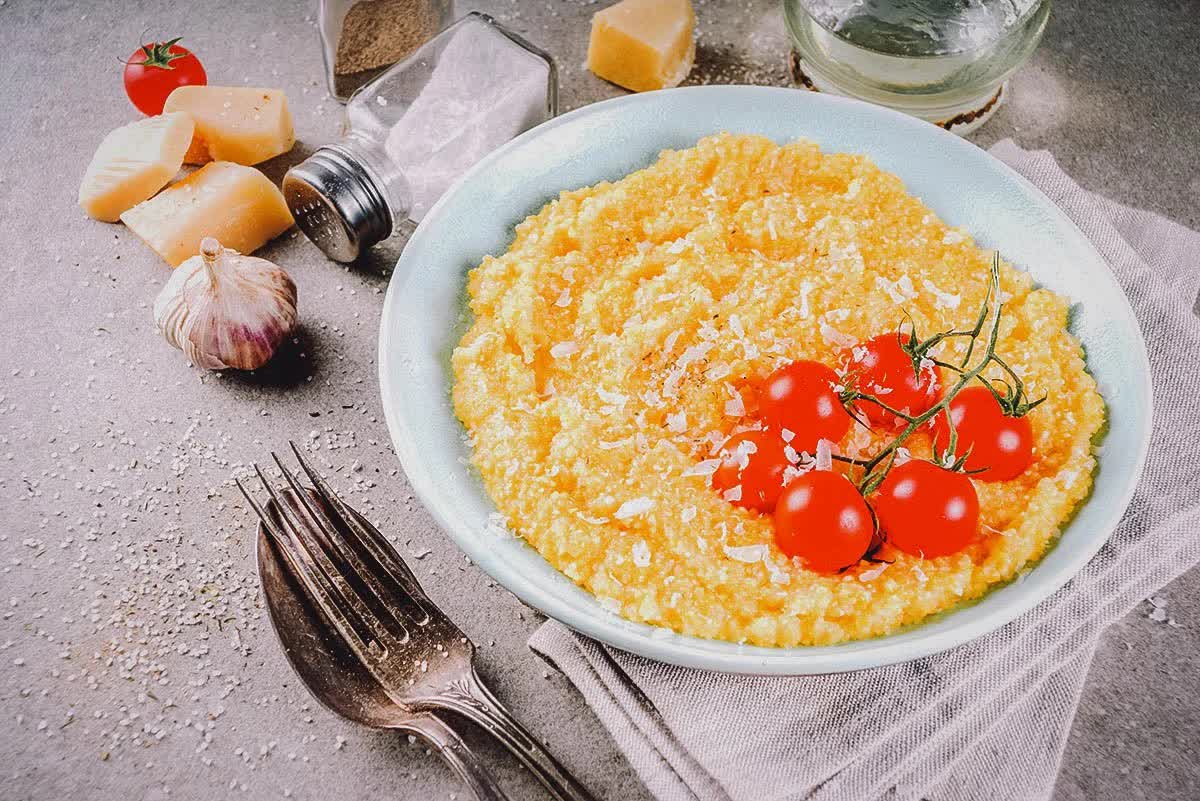
Žganci refers to a polenta-like dish made with cooked corn grits or corn flour. It’s popular in Croatian and Slovenian cuisine and was historically regarded as a type of “poor man’s food” consumed by peasants as a substitute for bread.
Žganci is a simple dish made with corn flour mixed with water, salt, and some butter. It’s typically eaten for breakfast or as a side dish with milk, yogurt, honey, lard, or bacon. Read More...