Cropping is the Single Most Important Photo Edit You Can Do
-
 Loading...
 - Lucas Silva
- 20 Jun 2022
- 230 Views
- 0 Like
- 0 Comment
We’re sold software on the basis that what we can’t get right in-camera, we can fix and improve after the event. Even with all the fancy algorithms that are available to us, the single best thing you go do to your image is a simple crop.
Editing seems to be a bit of a Marmite activity — you either love it or hate it. There are those professionals who only want to be behind the camera and outsource all their editing to a production house that has a style they favor. Then there are those that see shooting as only half of the equation; you capture the image, but have a responsibility to turn it into the creation you envisioned. Of course, some shooters believe that you should get an image as close to the finished article in-camera, before a few automated tweaks in Photo Mechanic sees it winging its way to the client. Others are more inclined to view the memory card as a medium to store as much information about the scene as possible before extensive post-production manipulation.
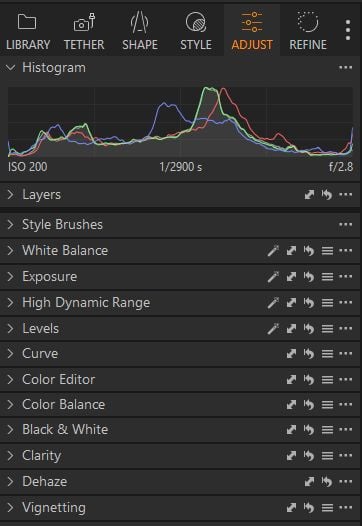
In truth, most of us sit somewhere between those two extremes because we don’t have the luxury to outsource, don’t get it right in-camera every time, and because some things you just can’t do in-camera. This is no more true than when shooting with a smartphone where the camera’s weaknesses are brutally exposed, to then be deftly covered up by some clever automated post-production which goes completely unnoticed on a heavily over-saturated, over-sharpened, selfie on Instagram.
Core Image Edits
For the more subtle eye, editing is a far more nuanced practice that has deep roots in the film world. Whereas a smartphone shooter may well take one image, touch it up, and post it before moving on to the next, film required that there was a pregnant pause between shooting and editing that necessitated focusing on one before the other.
This created a dilemma: did I capture the image I wanted? The solution was to shoot multiple images — both repeats and variations — on the same theme. This then gave you something to work with in the dark room. Read More...