Crypto Nation Switzerland tackles workforce shortages

Blockchain is the digital system that powers bitcoin and other cryptocurrencies. The code is designed to replace traditional gatekeepers, such as banks and technology providers. Decentralised finance promises blockchain trading without the friction and fees of intermediaries.
The number of blockchain companies has risen from 300 in 2017 to around 1,200, employing more than 6,000 staff in Switzerland. New domestic start-ups are being supplemented with a growing list of foreign-based companies establishing a Swiss base, such as Fireblocks, BitMEX and FTX Europe.
The southern Swiss city of Lugano has recently announced ambitious plans to boost the local blockchain sector and create more jobs. But there’s a problem. “Blockchain companies need a skilled workforce. Currently, demand in this sector greatly exceeds the offer,” said Pietro Poretti, Lugano’s Economic Development Director.
One company that would like to set up in Lugano is Tether, known for creating the world’s most widely used stablecoin – a cryptocurrency that pegs its value to the US dollar.
Struggling to fill posts
Tether and its sister company, the Bitfinex cryptocurrency exchange, have staked out Lugano as a potential base from which to capture the wealth of financial expertise in Switzerland, says Paolo Ardoino, who is Chief Technology Officer of both enterprises.
“We are struggling to find talented developers, customer support agents, compliance officers and marketing experts,” said Ardoino. “Tether and Bitfinex have opened up plenty of new jobs recently – we are looking for tens, up to hundreds of people.”
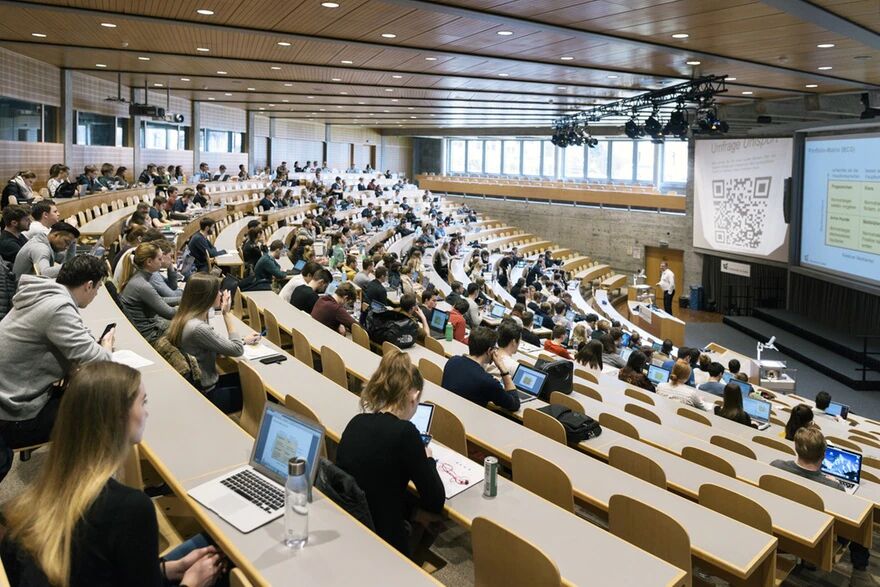
Lugano and Tether are attempting to tackle this mismatch by coordinating with the city’s three higher educational establishments and aim to provide up to 500 scholarship grants for students.
The message is also leaking out to other Swiss universities, which has resulted in a patchwork of specialist courses springing up around the country. A survey by the blockchain incubator company CV VC and PwC has identified 20 Swiss higher education establishments that incorporate blockchain into their curricula.
One of the first establishments in Switzerland to offer blockchain courses was the University of Basel. Initial semester-long courses in 2017 have grown into 11 separate offerings from bachelor to PhD level, covering a wide range of fields from finance and law to project management.
They currently attract almost 500 students, along with more than 2,000 people who have signed up to two core courses that are offered free online to the general public.
Podcast job offer
University of St Gallen lecturer Alexander Bechtel knows what it takes to land a top job in the world of blockchain finance. Since 2020, he has also been Head of Digital Assets at Germany’s largest bank, Deutsche Bank.
While completing a PhD in monetary theory at St Gallen in 2019, Bechtel started a podcast on the unrelated subject of cryptocurrencies. “It got a lot attention and became one of the most popular German-speaking podcasts on the topic,” he said. “I made a name for myself as being an expert, which led to Deutsche Bank asking if I would support them on their digital assets and blockchain journey.”
However, Bechtel acknowledges that this is not a sustainable way for the industry to fill positions, particularly given the fierce competition for the best talent between banks, fintech start-ups and other technology companies. Read More…