Debate in Spain on Great Apes: Why Breed Them if They Are Not Reintegrated into Their Natural Habitat?
-
 Loading...
 - Farida Reda
- 31 Jul 2024
- 45 Views
- 0 Like
- 0 Comment
After the announcement by the Ministry of Social Rights, Consumption, and the 2030 Agenda to initiate procedures for a preliminary draft of a law on great apes, rescue centers for these species in Spain have called for their expertise in the care and well-being of these primates to be considered in its drafting. Months after the deadline for its submission, as stipulated in the Animal Welfare Law, the Government has opened a public consultation for future regulation that will establish clear rules for the protection of gorillas, chimpanzees, orangutans, and bonobos.
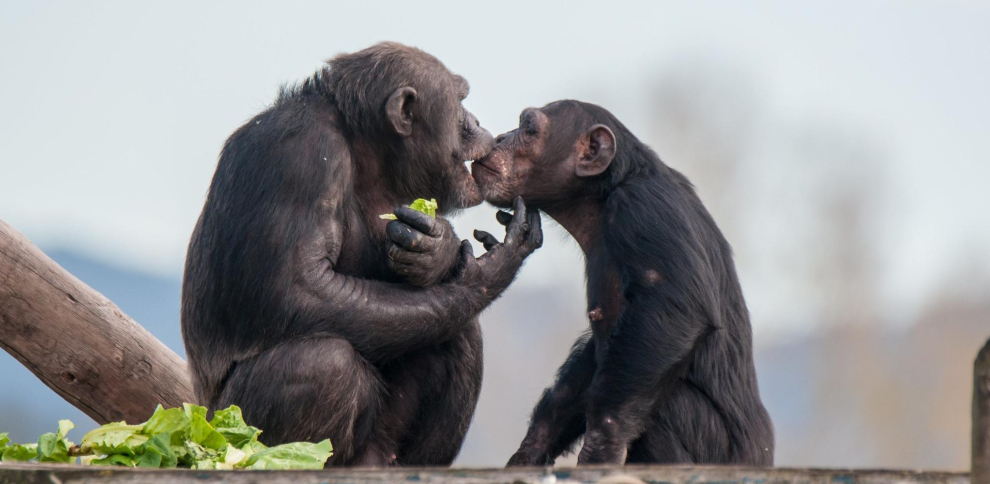
There are no exact official figures, but the Mona Foundation estimates that there are over 70 rescued chimpanzees owned by the state, as they have been the most trafficked large primates in Europe. The total number of chimpanzees under custody is 84. The Mona Foundation, located in Girona, houses 14 chimpanzees and expects to receive three more from the Canary Islands, where they were living in poor conditions. “The issue is that the rescue centers are already saturated in Spain and throughout Europe, so it is not possible to remove all those in custody in zoos. Instead, there is a need to better regulate their conditions and prevent them from reproducing to avoid increasing a population that would continue to be held captive for life,” says Olga Feliú, the foundation’s director.
Despite the ban on their presence in shows or as pets for years, current regulations for keeping great apes in captivity, according to sanctuaries such as Primadomus in Alicante and Rainfer in Madrid, are inadequate. They argue these regulations haven't been updated to reflect scientific discoveries about these hominid relatives. “It is known that they are sentient beings like us, that they cannot live in solitude and can live up to 60 years. The government doesn't even know how many there are or where they are. Many are left in zoos and reproduce uncontrollably. That cannot be,” Feliú asserts.
Since primatologist Jane Goodall discovered in the 1960s that chimpanzees used tools, numerous findings have highlighted their similarities to humans. Today, it is known that humans share 99% of their DNA with chimpanzees, that they can remember their relatives for decades, understand up to 5,000 words from their caregivers, and have the ability for cumulative learning and distinct cultures depending on where they live. They can also experience depression.
The preliminary project document from Social Rights acknowledges these cognitive abilities, stating that any experiment or research that harms them and does not benefit them should be prohibited. It calls for strict rules regarding their possession or guardianship, always considering their conservation and never as pets or for profit. International commitments like the Declaration of Kinshasa for the defense of great apes signed in 2005 and the United Nations Great Apes Survival Partnership should be included in the legal framework.
“This is a very preliminary step, but we have been waiting for decades, and as far as I know, there is no law in the EU regarding great apes like the one being proposed, so we will be pioneers. There are regulations that protect them in general, but not a specific one,” says Marta Merchán, head of the AAP (Animal Advocacy and Protection) Foundation in Spain.
The Primadomus rescue and rehabilitation center, opened in 2000 by primatologist Jane Goodall in Villena, Alicante, currently houses seven other rescued chimpanzees, although most of the rescued primates are Barbary macaques. The problem is that, while centers care for and rehabilitate them, these primates can't return to the wild. It is very difficult for them to readapt. Despite many great apes in Spain living in good conditions, there are still zoos that keep them isolated or fail to properly monitor their reproduction.
Feliú emphasizes the importance of birth control and denounces that the European Association of Zoos and Aquariums (EAZA) maintains a group dedicated to researching the reproduction of two subspecies of chimpanzees that can never return to Africa. “Why breed them when the centers there, like the Tchimpounga sanctuary of the Jane Goodall Institute in Tanzania, cannot accommodate them either because they are full? They already have 100, and each reintroduction takes 10 years. In Europe, there could be up to a thousand. Some end up having serious problems, even self-mutilation. It is essential to regulate this,” the expert asserts.
From the Great Ape Project, which has advocated for this law for two decades, its director, Pedro Pozas, celebrated on social media that the Government is finally legislating “for our evolutionary brothers.” Pozas also calls for the long-term goal to be the cessation of transfers between zoos for great apes and advocates for relocating these animals to sanctuaries like the three existing ones in the country.
Rescue centers play a key role in this process, setting a new standard for how primates living in captivity should be treated. They are eager to offer their expertise “to address the needs of great apes in a comprehensive manner.”
Once the public consultation phase is completed on July 31, the next step will be the development of the draft bill with more specific details. “This will be the moment when we hope to specify our recommendations,” concludes Olga Feliú.