Home Upload Photo Upload Videos Write a Blog Analytics Messaging Streaming Create Adverts Creators Program
Bebuzee Afghanistan Bebuzee Albania Bebuzee Algeria Bebuzee Andorra Bebuzee Angola Bebuzee Antigua and Barbuda Bebuzee Argentina Bebuzee Armenia Bebuzee Australia Bebuzee Austria Bebuzee Azerbaijan Bebuzee Bahamas Bebuzee Bahrain Bebuzee Bangladesh Bebuzee Barbados Bebuzee Belarus Bebuzee Belgium Bebuzee Belize Bebuzee Benin Bebuzee Bhutan Bebuzee Bolivia Bebuzee Bosnia and Herzegovina Bebuzee Botswana Bebuzee Brazil Bebuzee Brunei Bebuzee Bulgaria Bebuzee Burkina Faso Bebuzee Burundi Bebuzee Cabo Verde Bebuzee Cambodia Bebuzee Cameroon Bebuzee Canada Bebuzee Central African Republic Bebuzee Chad Bebuzee Chile Bebuzee China Bebuzee Colombia Bebuzee Comoros Bebuzee Costa Rica Bebuzee Côte d'Ivoire Bebuzee Croatia Bebuzee Cuba Bebuzee Cyprus Bebuzee Czech Republic Bebuzee Democratic Republic of the Congo Bebuzee Denmark Bebuzee Djibouti Bebuzee Dominica Bebuzee Dominican Republic Bebuzee Ecuador Bebuzee Egypt Bebuzee El Salvador Bebuzee Equatorial Guinea Bebuzee Eritrea Bebuzee Estonia Bebuzee Eswatini Bebuzee Ethiopia Bebuzee Fiji Bebuzee Finland Bebuzee France Bebuzee Gabon Bebuzee Gambia Bebuzee Georgia Bebuzee Germany Bebuzee Ghana Bebuzee Greece Bebuzee Grenada Bebuzee Guatemala Bebuzee Guinea Bebuzee Guinea-Bissau Bebuzee Guyana Bebuzee Haiti Bebuzee Honduras Bebuzee Hong Kong Bebuzee Hungary Bebuzee Iceland Bebuzee India Bebuzee Indonesia Bebuzee Iran Bebuzee Iraq Bebuzee Ireland Bebuzee Israel Bebuzee Italy Bebuzee Jamaica Bebuzee Japan Bebuzee Jordan Bebuzee Kazakhstan Bebuzee Kenya Bebuzee Kiribati Bebuzee Kuwait Bebuzee Kyrgyzstan Bebuzee Laos Bebuzee Latvia Bebuzee Lebanon Bebuzee Lesotho Bebuzee Liberia Bebuzee Libya Bebuzee Liechtenstein Bebuzee Lithuania Bebuzee Luxembourg Bebuzee Madagascar Bebuzee Malawi Bebuzee Malaysia Bebuzee Maldives Bebuzee Mali Bebuzee Malta Bebuzee Marshall Islands Bebuzee Mauritania Bebuzee Mauritius Bebuzee Mexico Bebuzee Micronesia Bebuzee Moldova Bebuzee Monaco Bebuzee Mongolia Bebuzee Montenegro Bebuzee Morocco Bebuzee Mozambique Bebuzee Myanmar Bebuzee Namibia Bebuzee Nauru Bebuzee Nepal Bebuzee Netherlands Bebuzee New Zealand Bebuzee Nicaragua Bebuzee Niger Bebuzee Nigeria Bebuzee North Korea Bebuzee North Macedonia Bebuzee Norway Bebuzee Oman Bebuzee Pakistan Bebuzee Palau Bebuzee Panama Bebuzee Papua New Guinea Bebuzee Paraguay Bebuzee Peru Bebuzee Philippines Bebuzee Poland Bebuzee Portugal Bebuzee Qatar Bebuzee Republic of the Congo Bebuzee Romania Bebuzee Russia Bebuzee Rwanda Bebuzee Saint Kitts and Nevis Bebuzee Saint Lucia Bebuzee Saint Vincent and the Grenadines Bebuzee Samoa Bebuzee San Marino Bebuzee São Tomé and Príncipe Bebuzee Saudi Arabia Bebuzee Senegal Bebuzee Serbia Bebuzee Seychelles Bebuzee Sierra Leone Bebuzee Singapore Bebuzee Slovakia Bebuzee Slovenia Bebuzee Solomon Islands Bebuzee Somalia Bebuzee South Africa Bebuzee South Korea Bebuzee South Sudan Bebuzee Spain Bebuzee Sri Lanka Bebuzee Sudan Bebuzee Suriname Bebuzee Sweden Bebuzee Switzerland Bebuzee Syria Bebuzee Taiwan Bebuzee Tajikistan Bebuzee Tanzania Bebuzee Thailand Bebuzee Timor-Leste Bebuzee Togo Bebuzee Tonga Bebuzee Trinidad and Tobago Bebuzee Tunisia Bebuzee Turkey Bebuzee Turkmenistan Bebuzee Tuvalu Bebuzee Uganda Bebuzee Ukraine Bebuzee United Arab Emirates Bebuzee United Kingdom Bebuzee Uruguay Bebuzee Uzbekistan Bebuzee Vanuatu Bebuzee Venezuela Bebuzee Vietnam Bebuzee World Wide Bebuzee Yemen Bebuzee Zambia Bebuzee Zimbabwe
Blog Image

Deep-sea fish choose habitat according to genotype, new research says

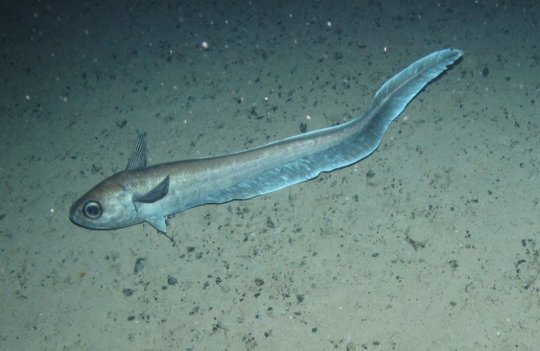
This is a roundnose grenadier at 1,300m off the Hebrides, Scotland. The photo is from a towed camera. Credit: Marine Scotland Science

Scientists have found evidence of natural selection in a deep-sea fish species adapting to the depth of ocean that it inhabits.

The team of researchers, led by Professor Rus Hoelzel in Durham University's (UK) Department of Biosciences (together with collaborators from the Department of Earth Sciences in Durham, the University of Liverpool and Marine Scotland), studied a species of fish called the roundnose grenadier.

They say this is the first evidence of natural selection maintaining separate specialised types of the same species of fish, each adapting to different habitat depths within a single population spanning two kilometres of depth in the deep sea.

Their study is published in the journal Nature Ecology & Evolution.

The researchers said that an important transition in the deep sea is where the penetration of light ends dividing the relatively vibrant mesopelagic from the dark bathypelagic part of the ocean below approximately 1,000m.

The roundnose grenadier has a remarkably broad habitat range in the deep sea, from 180-2,600m in depth.

The research looked at a section of ocean inhabited by this species running from 750m to 1,800m at a single location, crossing the boundary between the "light" and "dark" parts of the ocean.

They sequenced the entire nuclear genome of this species, and identified all of the genes within that genome that code for biological functions. They then sequenced 60 more genomes, 15 from each of four depths (750m, 1,000m, 1,500m and 1,800m). This revealed adaptation to depth at functional genes, with all of the 1,800m fish different from the others that lived at shallower depths.

Those adapted genes were associated with the building of different body forms and functions as the individual matures. Furthermore, they found strong evidence for ongoing natural selection such that either extreme form was favoured at the expense of the intermediate type.

This "disruptive" selection can lead to the evolution of new species when the different types also mate preferentially with their own type.

However, in this case, there was no clear evidence for mating with one's own type. Instead, the young ('fry') fish stay at approximately1,000m until they mature, and then segregate to different depths according to their genetic makeup.

This provides a uniquely clear example of how different specialists within the same species, in this case adaption to life at different habitat depths, can be maintained even within the same geographic population. This might help prepare a species for a rapid response to a changing environment, such as rapid climate change.

Differentiation among ecotypes may be driven by the distinction between a resource rich environment in shallower water, and a relatively resource poor environment deeper down the slope.

Lead author, Professor Rus Hoelzel, in Durham University's, Department of Biosciences, said: "The oceans represent vast expanses across which there are few obvious barriers to movement.

"As in the environment above the sea, we tend to think about movement in a horizontal dimension, across the breadth of the oceans, but at sea there are perhaps even greater habitat boundaries and gradients as species move vertically with depth.

"Our research shows that these fish have adapted to life at different depths, and that they segregate by depth as they mature, based on their genetic makeup."

The research was funded by the Natural Environment Research Council (NERC)

Previous Post

Cambodia's last leopards on brink of extinction

Next Post

Unique diamond impurities indicate water deep in Earth's mantle

Comments