Digitalisation and high-speed broadband rolls into small town Germany
-
 Loading...
 - Lucas Foster
- 13 Dec 2021
- 515 Views
- 0 Like
- 0 Comment
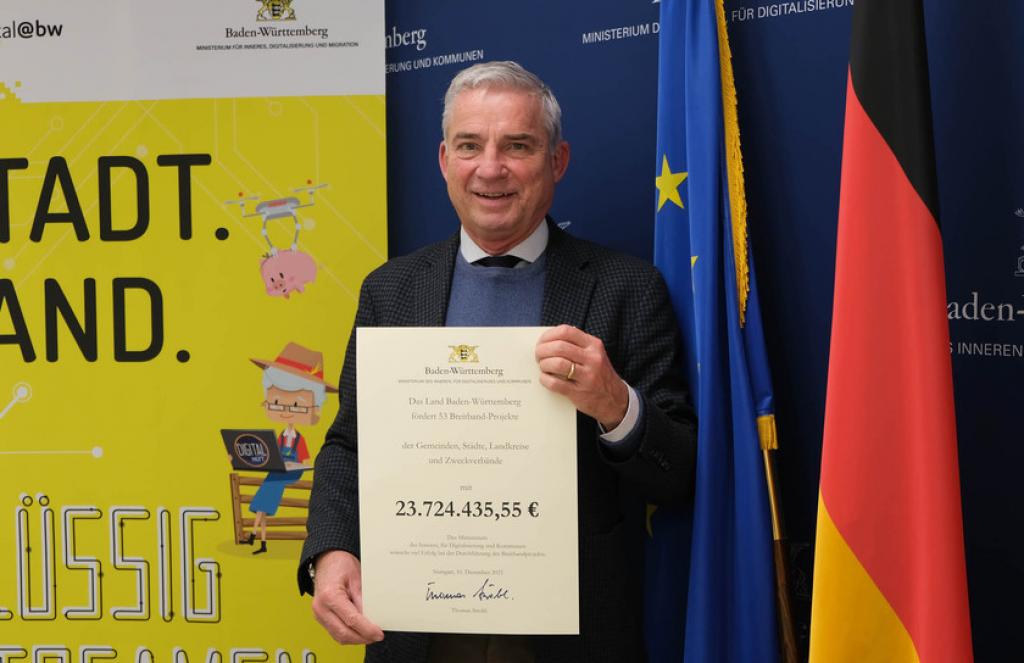
Today, the Digitalisation Minister in the German federal state of Baden-Württemberg, Thomas Strobl, announced a new financial package aimed at aiding rural areas in expanding their fibre optic network. In particular, the package focuses on giving over 23 million euros to the administrative districts of Freiberg and Karlsruhe, which both have big universities.
Minister Strobl explained that the government’s mandate in Baden-Württemberg was to expand the digitalisation strategy and increase citizens’ access to high-speed internet. He was quoted in a press release, saying that by 2025, citizens should have high-speed internet across the board.
He also stressed that a lack of broadband should not become the bottleneck preventing widespread digitalisation in a state like Baden-Württemberg, as high tech products and services are a major focus. Rural communities, especially, need access to a reliable internet connection.
Broadband funding to fill in the grey areas
The administrative district of Freiburg will be the big winner from the new funding package, as it will get the lion’s share of the money – 20.4 million. Karlsruhe, in its own right, will use the remaining 3.3 million. Despite the disparity, when all proposed 53 projects by the two districts are complete, they will be able to offer over 3,000 new broadband connections.
One such place is the town of Lörrach and the surrounding rural communities, located on the border with Switzerland and the city of Basel, will receive 9.6 million to construct a district-wide backbone for a gigabit expansion.
Another beneficiary of Baden-Württemberg’s rural broadband expansion is the town of Neckargemünd, where the Max Born-Gymnasium will be connected to the fibre optic network. This broadband bridge will cost around 68,000 euros, but it will allow nearly 900 students to access high-speed internet at school.
Minister Thomas Strobl explained that the big and flashy internet expansion projects are mostly finished; however, there are countless rural and small-town communities that still need access to quality internet. He called them the ‘grey areas’. Read More…