Discovery of the World's Rarest Whale on New Zealand Beach
-
 Loading...
 - Mila Braun
- 23 Jul 2024
- 50 Views
- 0 Like
- 0 Comment
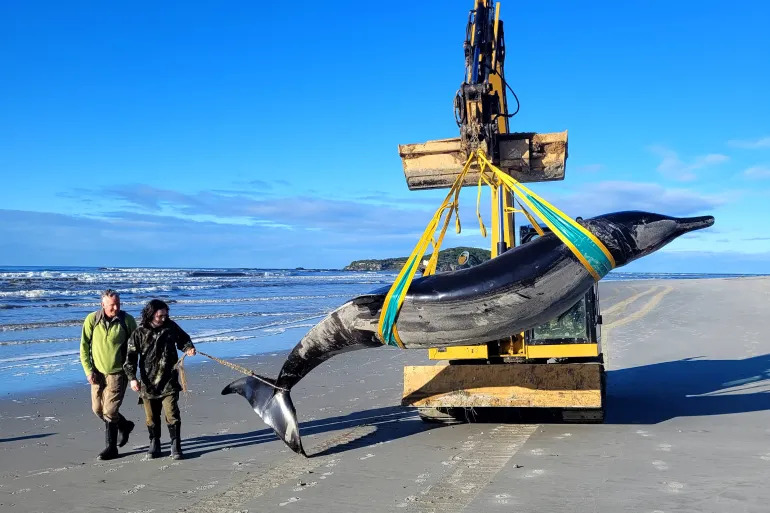
In an extraordinary discovery, the carcass of an exceedingly rare whale species has washed ashore on a New Zealand beach, providing scientists with a unique opportunity to study the elusive creature.
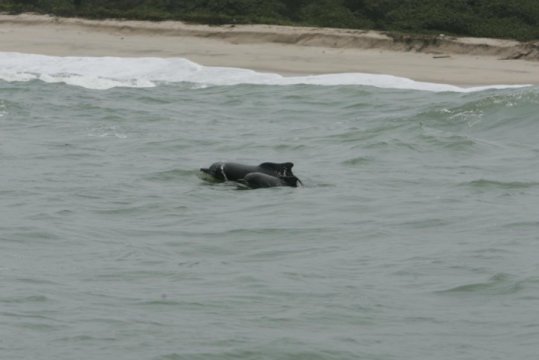
The body of the spade-toothed whale, a species so elusive it has never been observed alive, was discovered near a river in Otago, in New Zealand's southern province, on July 4. Measuring approximately 5 metres (16.5 feet) in length, the beaked whale was identified as a male by marine mammal experts from New Zealand’s Department of Conservation and the national museum, Te Papa.
A DNA investigation has been initiated to confirm the whale's classification, marking the first time researchers have had the chance to dissect a spade-toothed whale. "Spade-toothed whales are one of the most poorly known large mammalian species of modern times," stated Gabe Davies, operations manager at the Conservation Department in Otago. Since the 1800s, only six samples have been documented worldwide, all but one originating from New Zealand, making this find of significant scientific and conservation importance.
Given its rarity, the whale's discovery is considered of "international importance," according to the Conservation Department. The whale's body has been placed in cold storage, and genetic samples have been sent to the University of Auckland, which curates the New Zealand Cetacean Tissue Archive. Processing the DNA and confirming the final identification is expected to take several weeks or months.
Researchers are set to examine the whale's stomach contents, genetics, and compare this specimen with previous samples. The species was first described in 1874 from just a lower jaw and two teeth collected from the Chatham Islands off New Zealand's east coast.
This unexpected find offers a rare and invaluable opportunity for scientists to gain insights into one of the least understood whale species, advancing both scientific knowledge and conservation efforts.