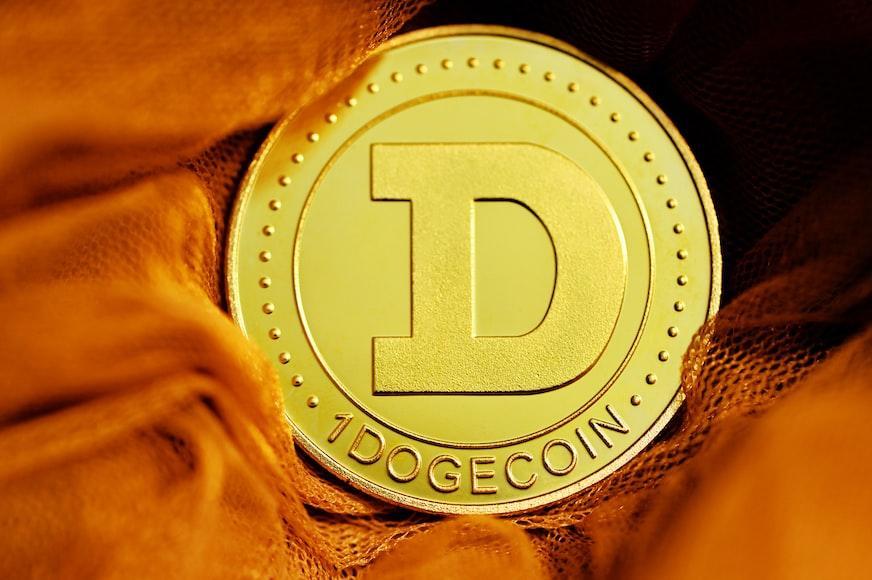
Dogecoin (DOGE) vs. Ethereum (ETH): The ultimate comparison
-
 Loading...
 - Siti Lestari
- 23 Sep 2022
- 71 Views
- 0 Like
- 0 Comment
At a time when no financial news is complete without cryptocurrencies, it's no surprise if you're tempted to try your hand. But for your dabbling in cryptocurrencies to have a reasonable chance to succeeding, you must choose them according to your risk-return tradeoff.
You're mistaken if you think all cryptocurrencies have the same kind of applications. Rather, each has its distinct applications, advantages and disadvantages, and the right coin for you depends on your specific circumstances. To understand these applications better, let’s understand how Dogecoin (DOGE) and Ether (ETH), two popular coins popular, work.
What is Dogecoin?
Created as a spoof of Bitcoin (BTC) and the doge meme, Dogecoin was created by software engineers Billy Marcus and Jackson Palmer in late 2013. The word “doge,” which describes a Shiba Inu dog, was deliberately misspelled while naming the cryptocurrency.
The rise of Dogecoin’s value is generally attributed to the sentiments of its fan club and the tweets of Elon Musk. Unlike other frontline coins, Dogecoin lacks any actual use case advantage and is accepted at few merchant outlets.
Dogecoin is mined through a proof-of-work (PoW) consensus algorithm, although it has plans to make the transition to the proof-of-stake (PoS) consensus mechanism. Miners are rewarded with DOGE for their contribution; namely, creating blocks. Unlike Bitcoin, there is no restriction on the number of coins that can be mined every day, making it an inflationary cryptocurrency instead of deflationary crypto like BTC.
Though Dogecoin uses the PoW mining mechanism, it works a bit differently than that in BTC. Dogecoin uses Scrypt, a hashing algorithm that is less complex than SHA-256, which is used in BTC mining. A hashing algorithm is a kind of random code generator that uses a specific technique to generate a fixed-length code. Moreover, Dogecoin and Litecoin (LTC) share a common algorithm, which enables “merged mining,” allowing miners to simultaneously mine both coins without impacting operational efficiency. Read More...