Donkey Kicks: What They Are and How to Do Them

Donkey kicks are a funny-sounding exercise that offer serious benefits. Clearly, the move is inspired by the manner in which the horse-like animal kicks, thrusting their hind legs back in the air. If you haven’t already made donkey kicks a regular part of your workout routine, you should, as the simple move packs a definite punch. Ahead, discover everything you need to know about donkey kicks, from proper form to common modifications, straight from fitness experts Tanya Becker and Kailee Martin.
What Is a Donkey Kick?
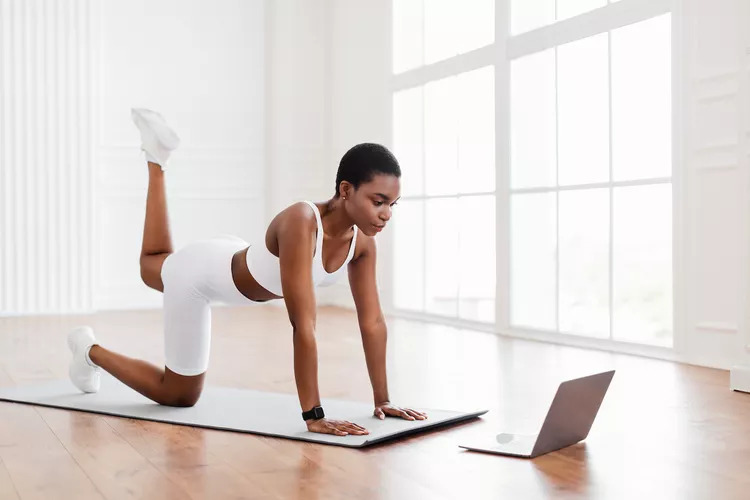
A donkey kick is a quadruped bent-knee hip extension designed to isolate the glute muscles, explains Martin. “This exercise works your gluteus medius and maximus,” she explains. “The technical term is quadruped bent-knee hip extension, but considering it looks like a donkey—as it involves being on all fours, lifting one heel toward the ceiling in the bent-knee position while keeping the back and neck in proper alignment kick—most fitness regimens call it a donkey kick so clients can easily remember.”
Becker adds that they are also a great way to sculpt and strengthen your core and hamstrings. “One of the biggest benefits of this exercise versus using machinery, is that you have to engage your entire body-weight bearing on your supporting leg, core stabilization, arm strength, and balance,” she adds.
They even help strengthen your postural muscles. “Sitting too long, poor posture from prolonged periods of time on electronic devices, and a weak abdominal wall can all lead to lower-back pain. All of these conditions can be greatly improved by making this exercise a staple in your strength-training routine,” she notes.
Benefits of Donkey Kicks
1. They Are Great for the Glutes: Donkey kicks are the perfect way to isolate your glutes, “specifically gluteus maximus and medius,” says Martin.
2. They Strengthen Your Core and Hamstrings: Tanya Becker adds that they are also a great way to sculpt and strengthen your core and hamstrings. “One of the biggest benefits of this exercise versus using machinery is that you have to engage your entire body-weight bearing on your supporting leg, core stabilization, arm strength, and balance,” she says.
3. They Can Help Improve Posture: They even help strengthen your postural muscles, says Becker. “Sitting too long, poor posture from prolonged periods of time on electronic devices, and a weak abdominal wall can all lead to lower back pain. All of these conditions can be greatly improved by making this exercise a staple in your strength-training routine,” she notes.
4. They Can Be Easily Modified: After you have mastered the donkey kick, it can easily be modified. “Including different variations of the move (by adding a weight or a band) can make it more challenging, helping to increase strength and stability,” Martin explains.
5. They Can Help Prevent Injury: Martin notes that performing this simple movement can even help progress your everyday movement patterns “and help prevent overall injury, since stability and strength are key to our body functioning safely.”
6. They Also Activate the Shoulders: “The shoulder and core muscles are also working to hold stability and posture through the movement, which is an added bonus!” says Martin.
Proper Donkey Kick Form
Becker demonstrates how to do a donkey kick.
1. Come to an all-fours, with your hands directly below your shoulders and knees directly below your hips. Keep your neck and spine neutral.
2. Keeping your arms straight, core engaged, and knees bent 90 degrees, raise your one knee off the floor and lift so that it is line with your torso.
3. Reverse the move, lowering your knee to the starting position.
4. Repeat movement for 30–60 seconds (or until fatigue) on both legs.
How to Modify a Donkey Kick
There are a few ways to modify donkey kicks. If you have sensitive wrists, you can lower down to your forearms, suggests Becker. If you have knee injuries, make sure to add an extra cushion on the floor, she advises.
Want to make a donkey kick more challenging? Try adding a band behind the foot or shoe or add a dumbbell behind the knee or ankle weight at the ankle, suggests Martin. “Be sure to maintain proper form, with no sinking of the back as the weight or tension is increased.”
Donkey Kick vs. Supine or Glute Bridge
The donkey kick is most similar to the supine or glute bridge, says Martin. “The donkey kick is going to isolate the gluteal muscles whereas the glute bridge is going to target the hamstrings as well as glutes,” she explains. Although both can help any client with back injuries, bridges are usually the safer route to go here for injuries. Read More...